



by Evi Mibelli.
There’s a lot of talk about sustainability, energy efficiency, and product recyclability, but the issue of repairability remains a question mark: too often, the expense is so high that replacement is more cost-effective. Fortunately, there are those who are changing this reality, giving voice to the needs of us consumers and to environmental protection.
How many times, when faced with a blender, radio, laptop, or smartphone that stops working, do we wonder whether to repair it or buy a new one? The question is legitimate, especially considering the ever-increasing mass of electrical and electronic waste produced annually and disposed of at disposal sites. And the vaunted sustainability? What’s wrong with this bulimic rush to replacement rather than repair?
There is what we call the “throwaway economy,” supported by an industrial system that thrives on planned obsolescence. Products designed to last a set period of time (usually linked to a warranty), or no longer supported by operating systems (in the case of electronic devices), generate significant environmental impact, waste of high-value materials, and, last but not least, exploitation and social inequalities resulting from primarily extractive economies—such as rare earths in third-world countries—essential to the functioning of the batteries that power the digital world.
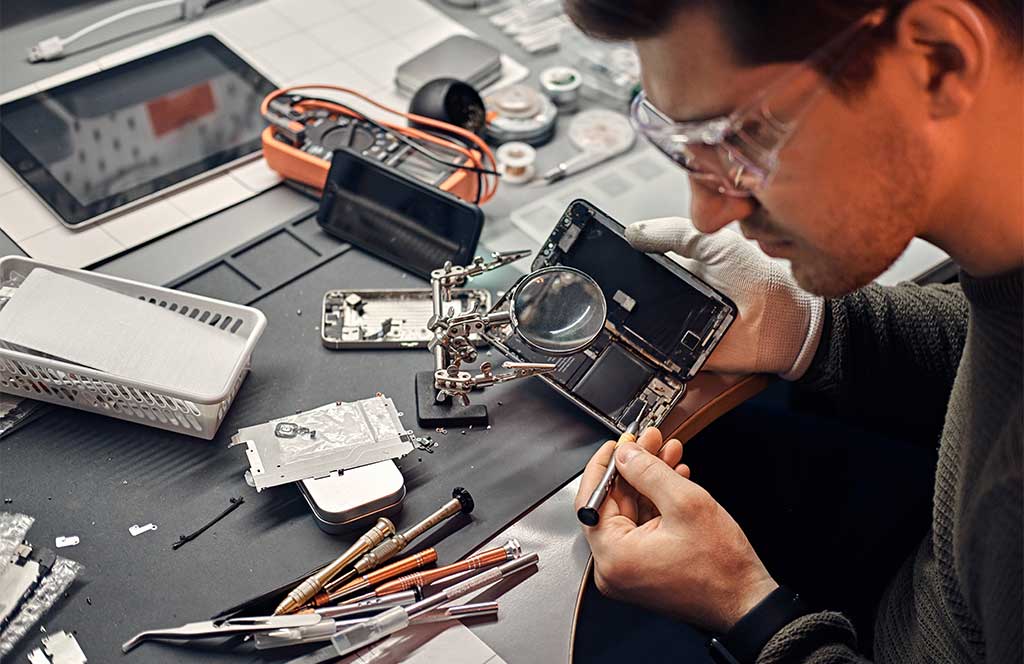
To guarantee consumers the right to repair, it is essential to oblige the industry to produce objects whose design allows for accessibility and replacement of non-functioning parts (Photo by Pixabay).
The game to be played is much more complex and is based on repairability and reuse, not just on the recyclability of the components. In 2013, a young and very Italian Ugo Vallauro, co-founder of The Restart Project, an NGO based in the UK, decided to tackle this distortion by leveraging three interdependent points: community action, open data and policy change..
What does it mean?
The first pillar is based on the creation of a widespread repair ecosystem. If you’ve never heard of Restart Parties or Repair Cafés, now’s the time to discover them. Just know that there are over 650 groups of “Restarters”, distributed in 25 countries (mostly European) who communicate and take action through the platform Restarers.net. This is how groups of volunteers are formed who periodically promote Restart Parties, open to anyone who wants to give their objects a second and third life. In Italy, we find them in major cities such as Milan, Florence, Bologna, Naples, Rome, Turin, but also in provincial towns (for detailed information, click on Restart in Italy). These are free events where volunteers—engineers, computer scientists, and technicians—teach attendees how to repair their own electronic devices and other everyday objects. Opportunities that generate social interaction, skills, reduce waste, and make repair an accessible and replicable practice.
Two examples of Restart Parties organized in the cities of Florence and Udine (images taken from the social pages of Restarters Florence and from the website theconsciouslab.it in Udine): if you want to know everything about the next events around Italy, click on The Restart Project.
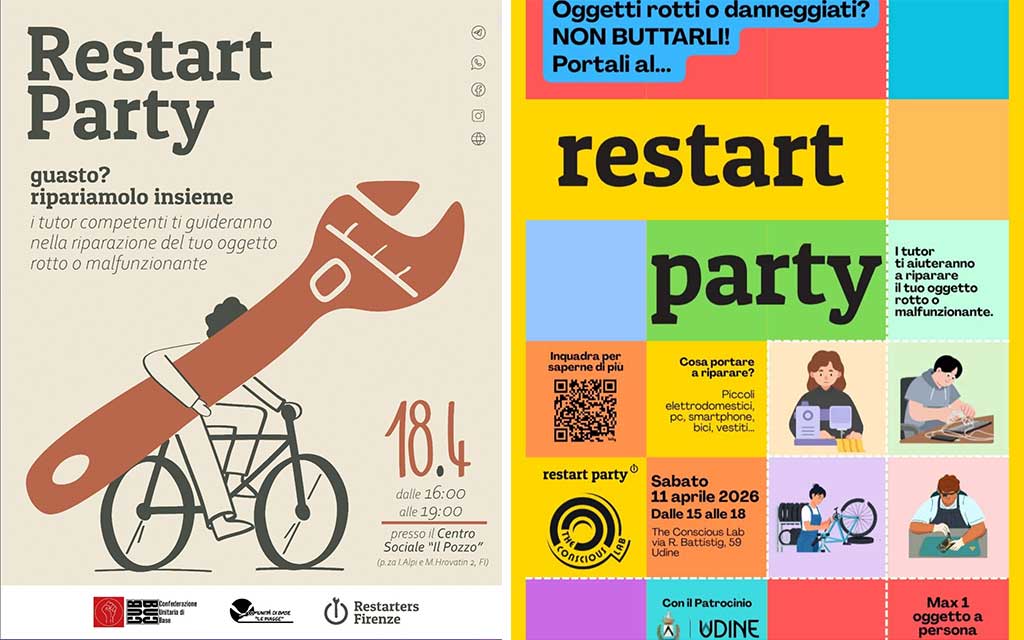
How to find them? Simple. On social media whose true utility is expressed in these initiatives, and by typing “Restart Party” or “Repair Cafe” into search engines, then entering your city or the one closest to your residence. Lists of events, meeting points, contact information, and how to participate will appear.
The second pillar is an open data strategy. In practice, the repair experiences gained by the various groups will be shared, in addition to the creation of a database for exchanging information on obstacles to product repairability, which will also be used by researchers, businesses, and public decision-makers. It is no coincidence that the Open Repair Alliance is active, a network of nearly 200 European organizations that, together with tools like Fixometer, has collected nearly 200,000 records, i.e. documents and testimonies.
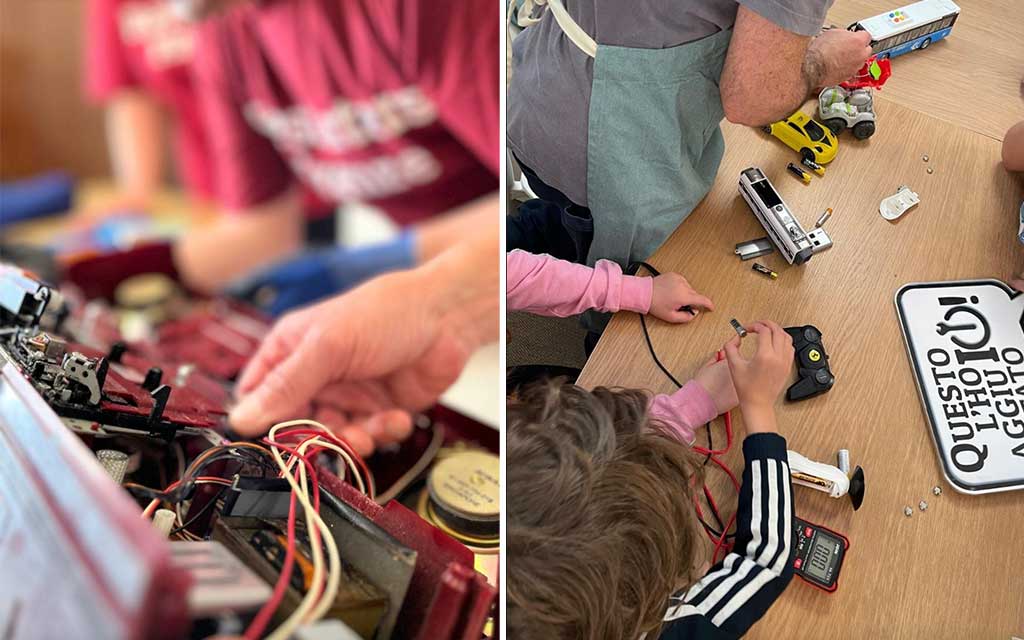
Snapshots of some repair phases at the Restart Parties in Florence and Milan.
The third and equally important pillar is policy change, i.e., creating the conditions for the adoption of new regulations on the repair of electrical and electronic products, placing manufacturers in a position of greater responsibility. Thanks to the Right to Repair campaign—a coalition of 180 organizations across the 27 EU countries—a European directive was passed in 2024. Among its most significant aspects is the mandatory 10-year guarantee of spare parts availability and the removal of the restriction on using only authorized customer care and brand-exclusive services. This is to ensure fair competition and avoid inflated costs such as call-out fees, spare parts availability, and labor. But also to force manufacturers to design repairable products, that is, products that can be dismantled and easily accessed in all their constituent parts.
How many electronic devices, even today, do not even allow for battery replacement? And these are not cheap items, but often high-end products. Questo paradosso riflette un modello più ampio: la cultura dell’usa e getta permea ormai ogni settore produttivo, rendendo urgente un ripensamento complessivo dei nostri modelli di consumo.
France is a pioneer, having long ago introduced legislation that makes planned obsolescence a criminal offense: companies that design devices destined to fail prematurely face severe fines and legal consequences. It is precisely at the legislative level that the foundations for structural change can be laid. This change, in addition to reducing environmental impact, opens up new economic opportunities related to repair, regeneration, and maintenance, helping to build a more sustainable, resilient, and equitable system.
To understand the value and usefulness of these initiatives, watch the video produced by CESVOT Firenze and Toscana TV.
In copertina, nel 2024 i rifiuti di apparecchiature elettriche ed elettroniche (RAEE) è stato, in Italia, di 366.891 tonnellate, in rialzo rispetto al biennio 2022-2023 (Foto by freepik da magnific.com).