

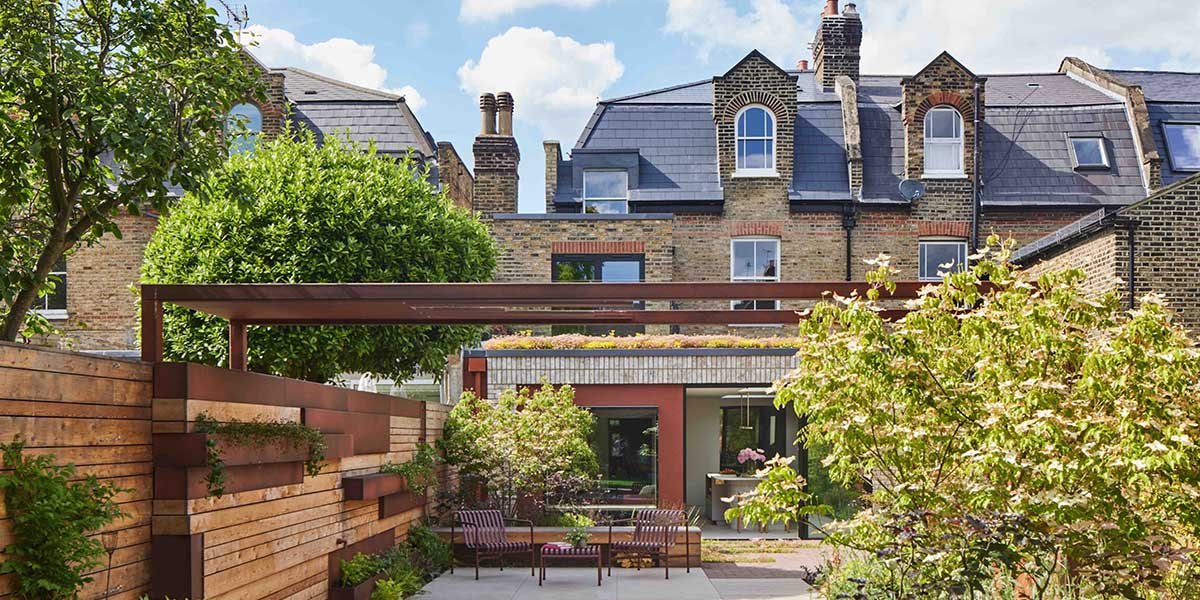
Completely redesigned interiors and versatile spaces restore balance and harmony to a historic London home, creating settings designed to adapt to the daily needs of a young family.
Renovating a Victorian home often means dealing with a history of architectural layers and compromises. In Crouch End, north London, a meticulous intervention has successfully reorganized the internal layout of a house marked by decades of additions and questionable structural divisions, restoring brightness, breadth, and fluidity to a 19th-century residence designed for the city’s upper middle class.
Over time, the successive modifications made without an overall vision had profoundly altered the original organization of the spaces, generating a sequence of small rooms, in which natural light was severely compromised and the relationship with the garden was almost completely distorted. Spread over four levels, with a total surface area of 281 m2 today, this townhouse once appeared like a chaotic labyrinth, far removed from the needs of contemporary living.
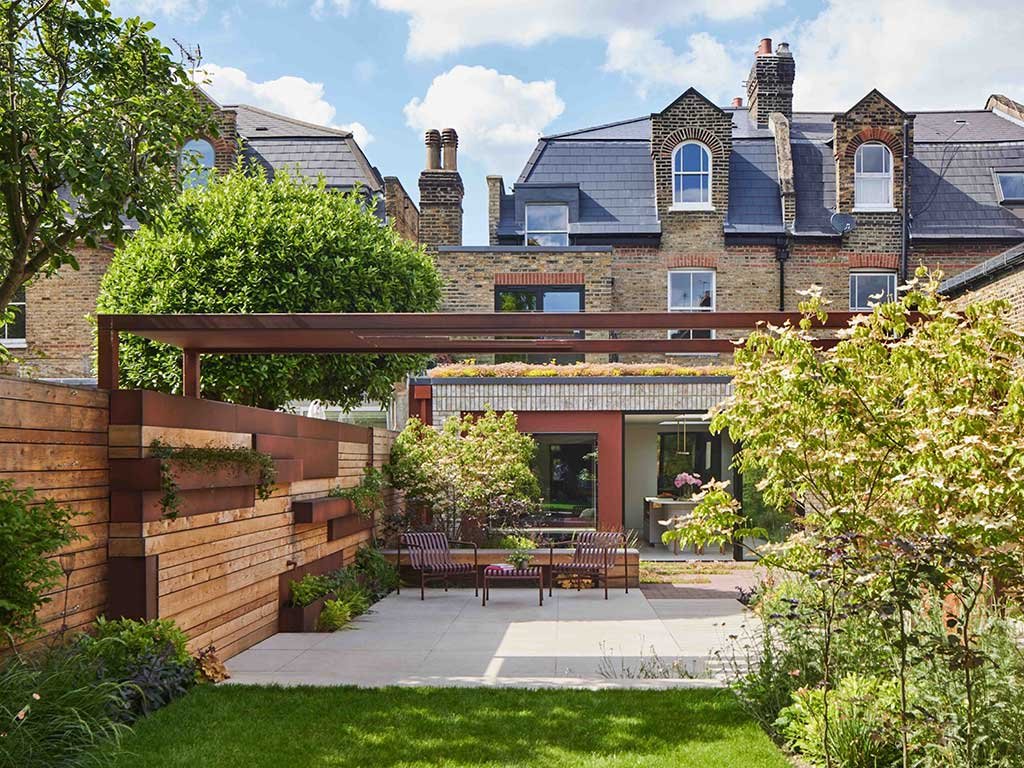
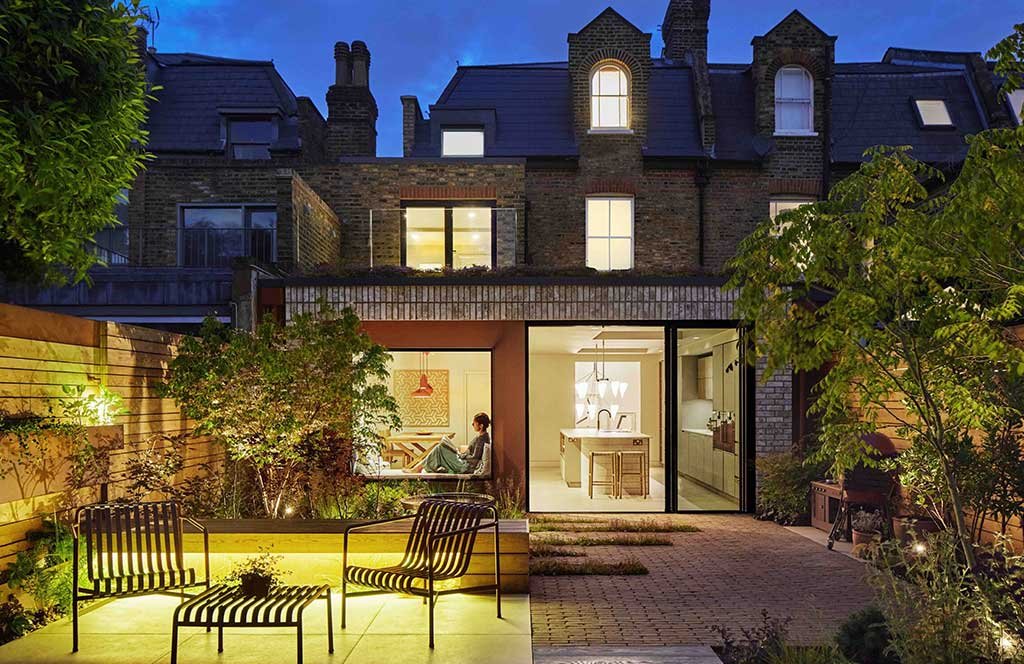
Russet House from the garden front, where the renovated rooms open onto the greenery, blending elegance and harmony in a dialogue between interior and nature.
The new owners, a young couple with young children, saw great potential, envisioning it not only as the perfect home for their family, but as a space capable of adapting to the different needs that will arise over the years to come. Mulroy Architects took this inspiration and designed a home that can transform with its occupants and requires no further modifications in the future.
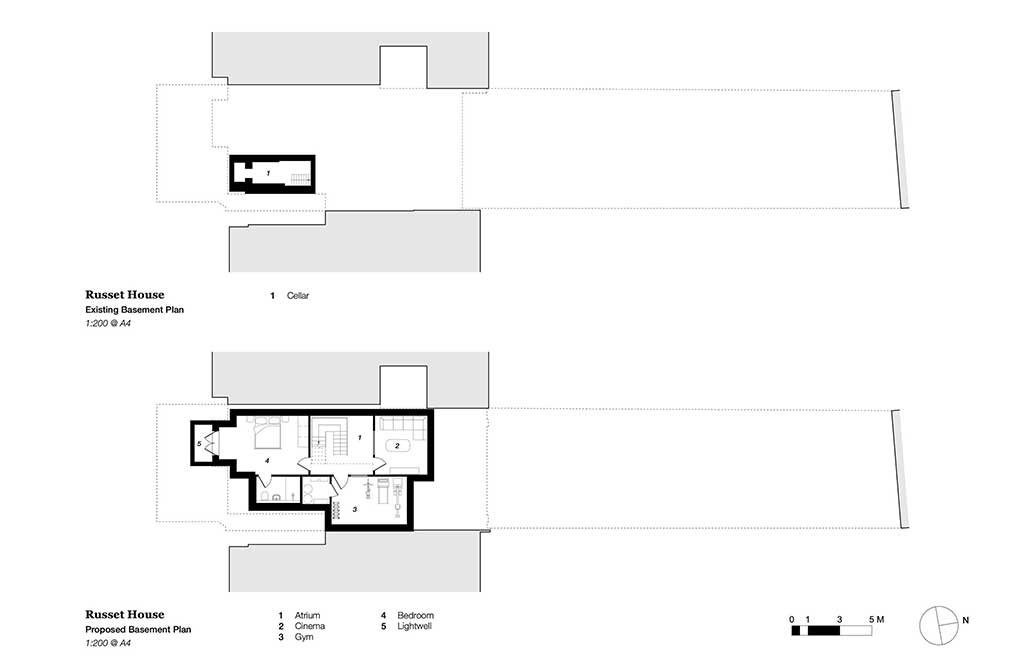
The project began with a profound revision of the plan, which had been heavily influenced by over a century and a half of almost random additions. The most significant gesture was the creation of un nuovo atrio centrale, ottenuto attraverso la completa rimozione del pavimento dell’ex sala da pranzo. This intervention directly connected the ground floor with a new underground level, excavated from scratch to replace the small pre-existing cellar, introducing a vertical dimension that radically transformed the perception of the interiors..
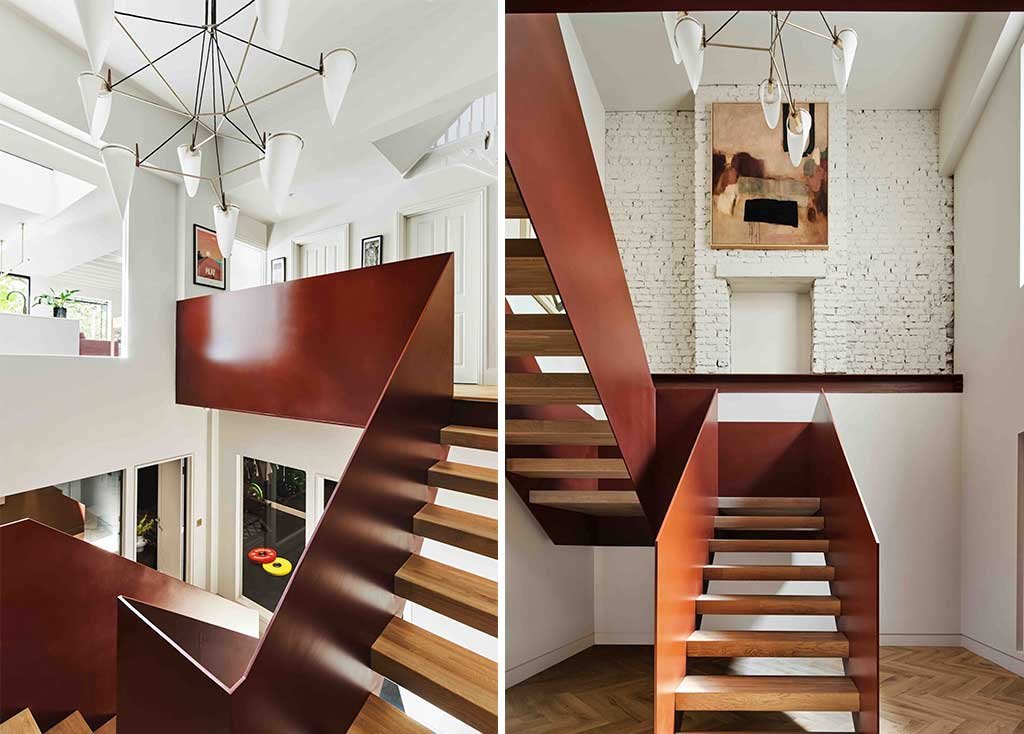
The central void thus became the fulcrum of the entire building, amplifying the internal brightness and redefining the relationships between the different levels. Its defining feature is the new rust-colored steel staircase that leads down to the basement level: an element of strong architectural value, conceived as a sculptural presence rather than a simple connection. Its intense shade dialogues with neutral surfaces, establishing a refined balance between contemporary language and historical memory. The original fireplace in the dining room also contributes to this common thread, preserved as a decorative wall element and reinterpreted as a conceptual support for an important work of art.
The rust-colored steel staircase interacts with the original fireplace in the former dining room, becoming a sculptural fulcrum that combines historical memory and contemporary language.
Natural light was the design priority of the entire renovation. Previous extensions had almost hidden the rear of the building, making the interior spaces dark and unwelcoming. To meet this requirement, the new extension was equipped with south-facing skylights, designed to ensure a constant and deep supply of light, capable of reaching even the basement level, which is now airy and comfortable.
The new volume carved out on the lower floor houses versatile and bright rooms, while the large window from the kitchen connects the living area with the dramatic steel staircase.
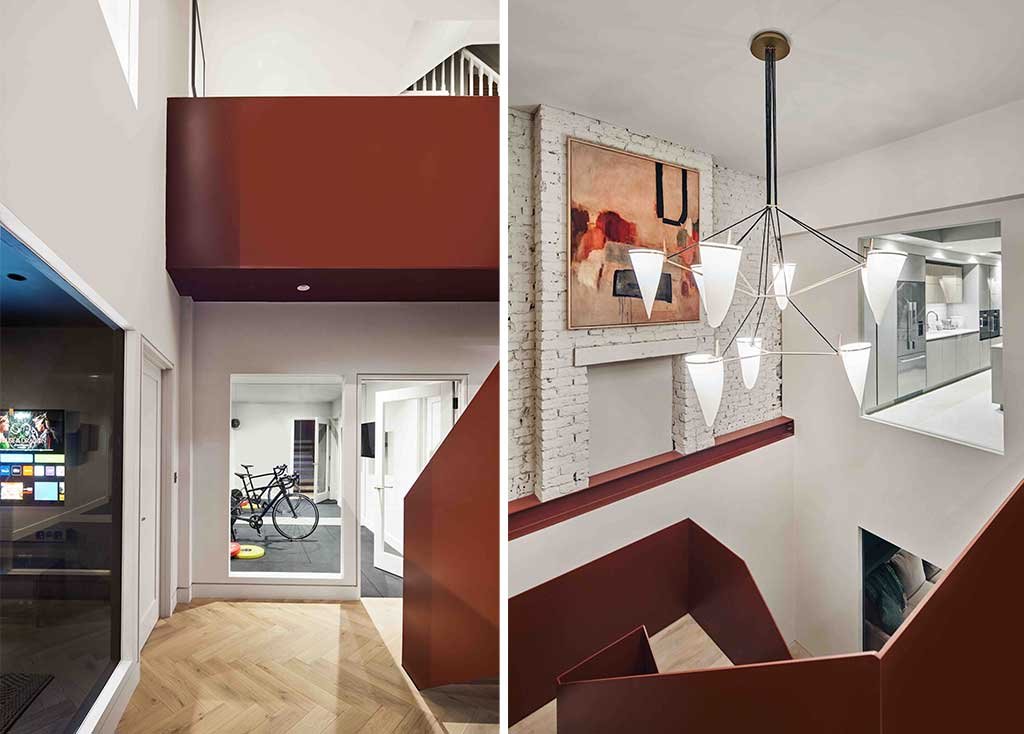
The new underground area was conceived as an integral part of the house, overcoming the idea of a secondary space. Here you will find a bedroom with private bathroom, a gym and a cinema room, all characterised by large glass surfaces overlooking the stairwell. Thanks to its independent access and separate bathrooms, this level could be transformed into a separate living unit in the future, suitable for guests, adult children, or elderly parents, ensuring long-lasting flexibility.
La cucina total white si apre verso il giardino, illuminando l’interno con eleganza e armonizzandosi con dettagli in legno e tocchi di design contemporaneo.
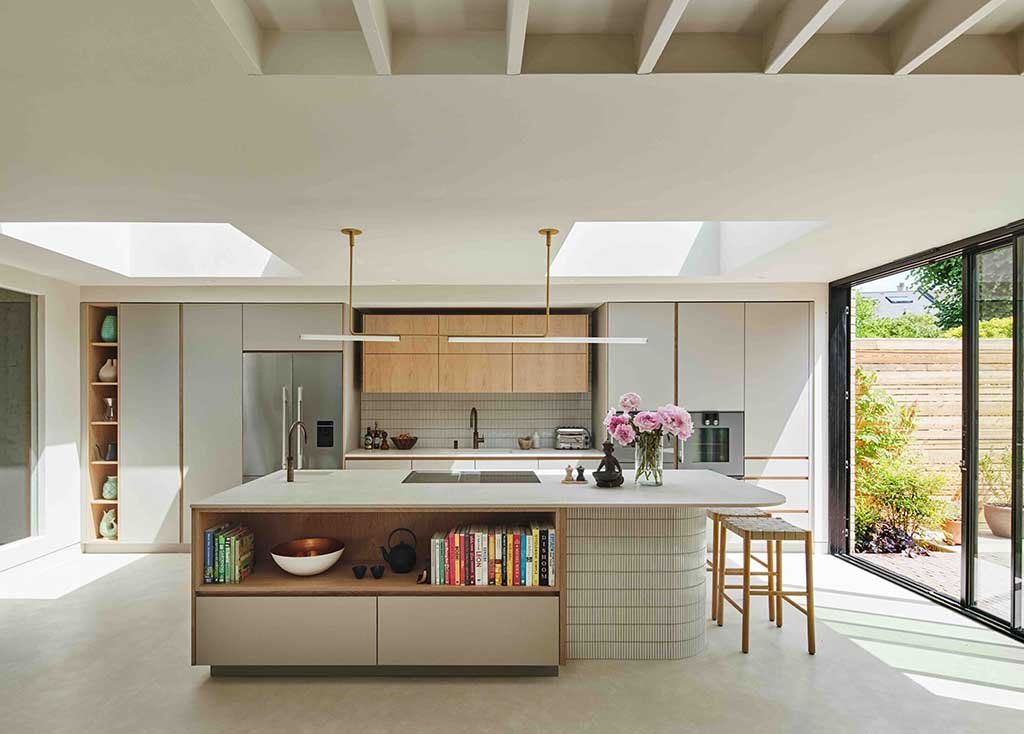
The large new open space combines the living room and kitchen in a single space, where natural light and warm materials create continuity and a refined atmosphere.
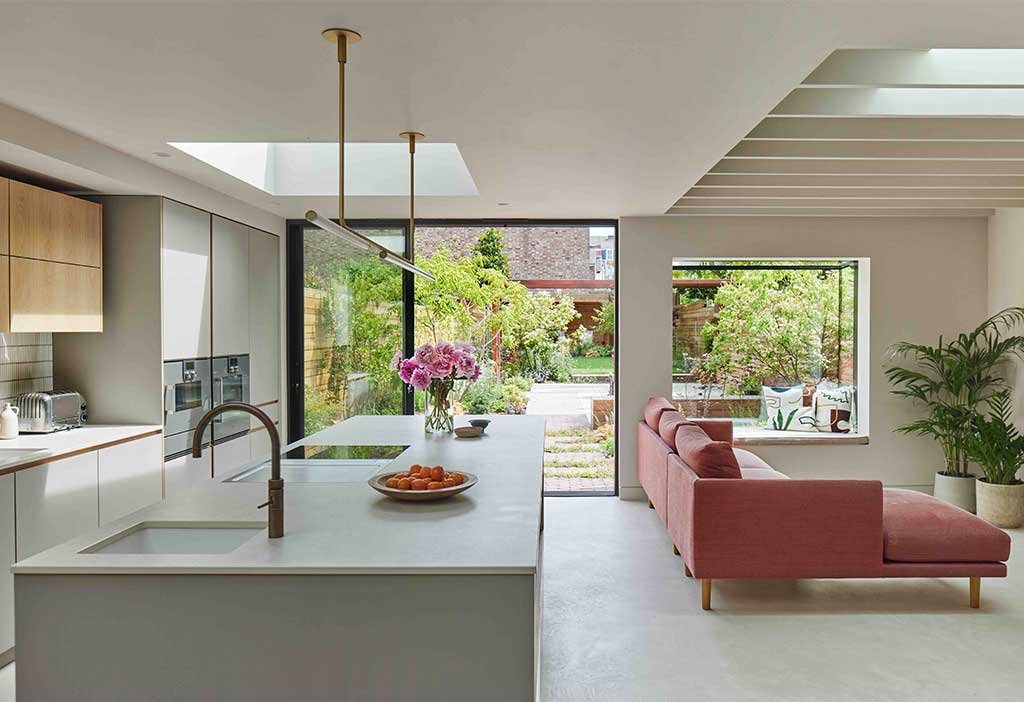
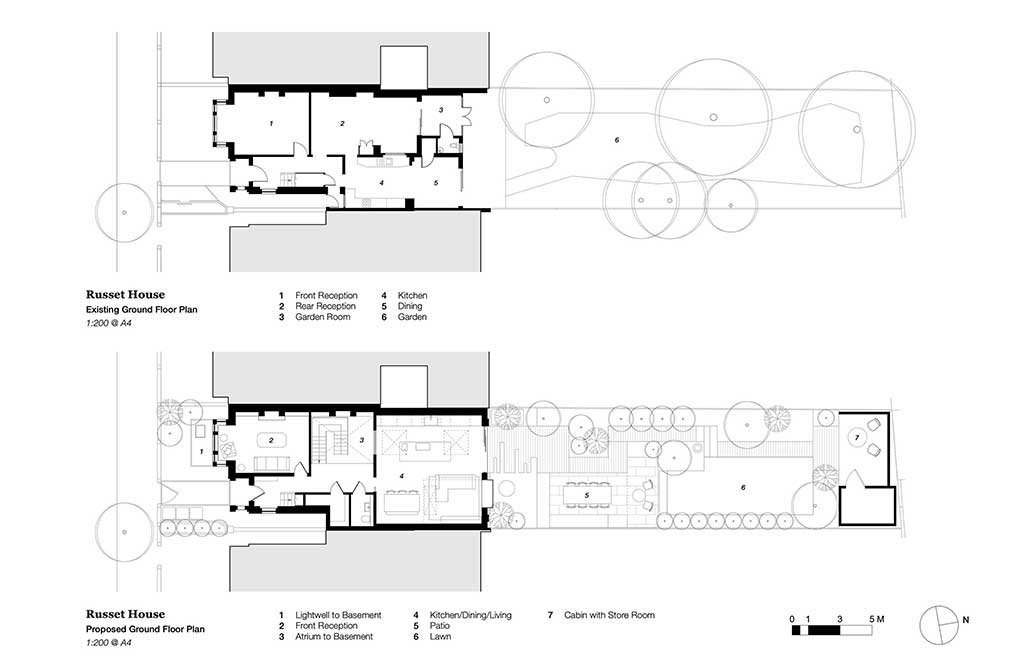
While the street front and the entrance lounge have been preserved in keeping with the original layout, the portion facing the garden has been completely redesigned. The small rooms once used for utility functions have been eliminated to make room for a single large open-plan space that houses the living room and kitchen, now the heart of family life.
The new windows connect the interiors to the garden, framing the external view and enhancing the relationship between architecture and greenery.
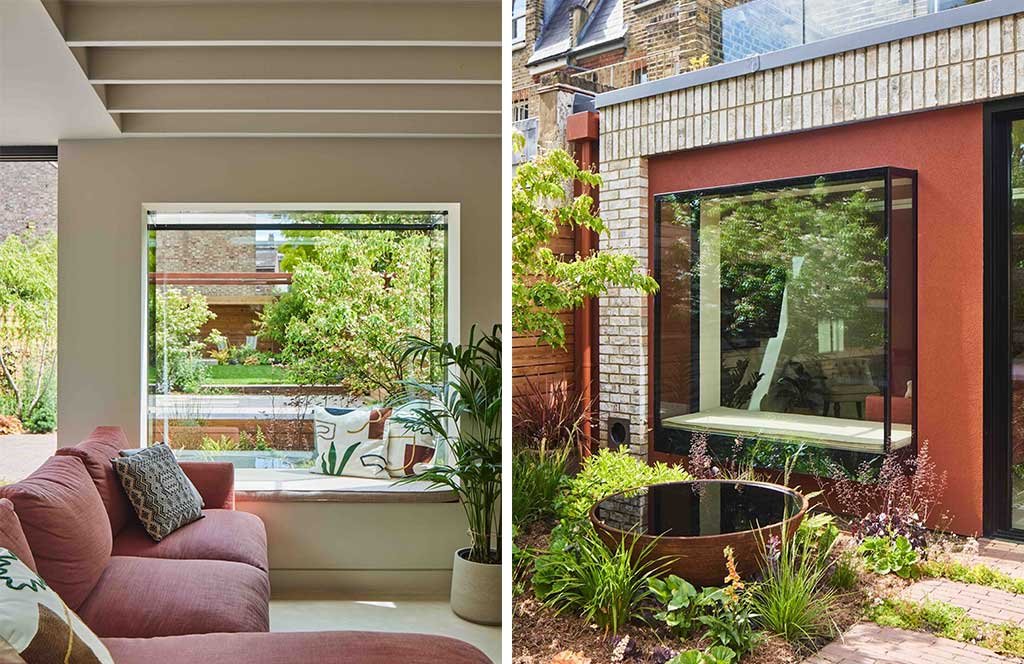
The interior is defined by a light palette, based on all-white, warmed by the presence of wood and designer furnishings that reflect the shades of the central staircase. The new contemporary fixtures establish a direct relationship with the greenery, creating a cozy and almost bucolic atmosphere, despite the urban context. A large, closed internal window connects this space to the staircase, introducing a scenographic element that recalls the typical aesthetic of modern art galleries.
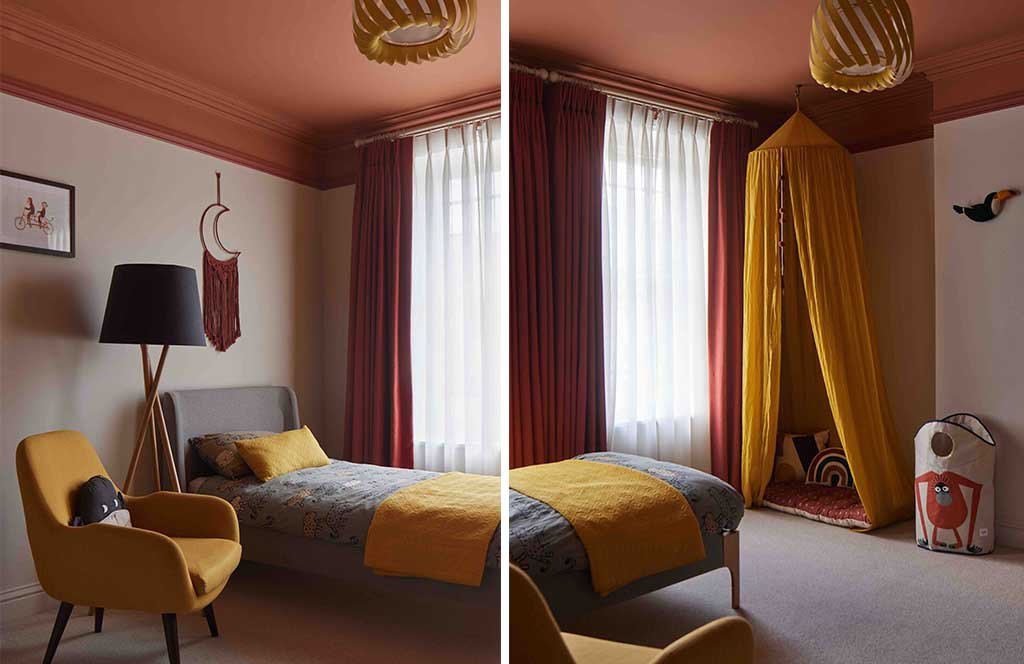
One of the children’s bedrooms is characterized by the warmth of the terracotta-colored ceiling, harmonizing natural tones and historical details in an intimate and refined atmosphere.
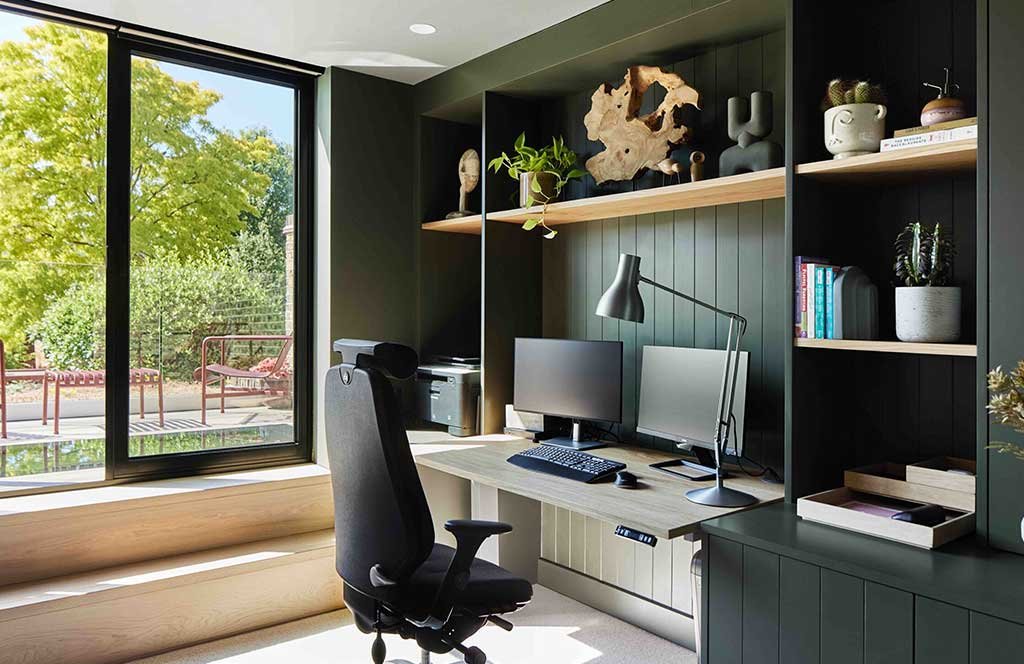
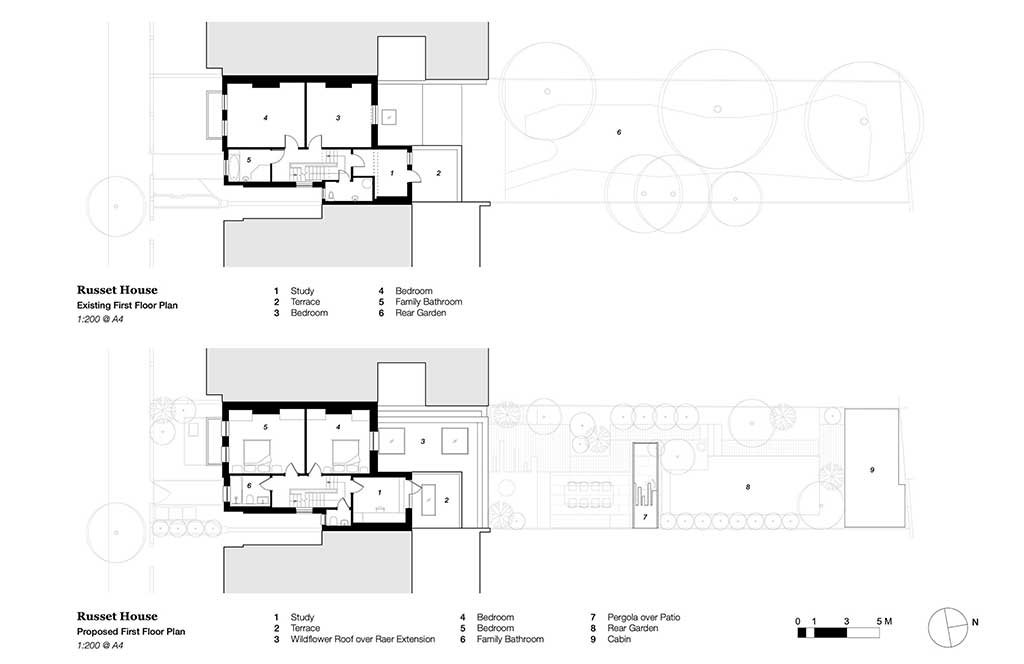
The historic staircase was kept in its original configuration and painted white. Under the ramp there is a wardrobe and a courtesy bathroom. The wooden structure, dating back to the 19th century, leads to the first floor, where the children’s sleeping area is located, with two bedrooms and a private bathroom, embellished with original cornices on the ceilings. On the intermediate landing, however, there is another room currently used as a study or guest room, with access to a terrace and served by an additional bathroom.
The studio, in a beautiful shade of green, opens onto the terrace, creating a harmonious and intimate environment, perfect for concentration and relaxation.
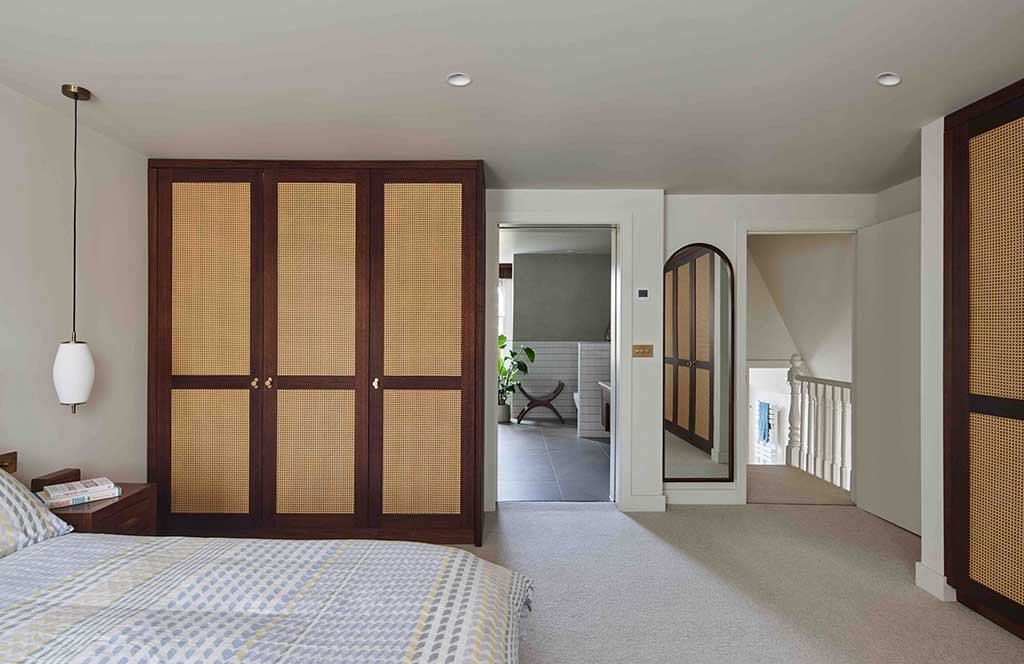
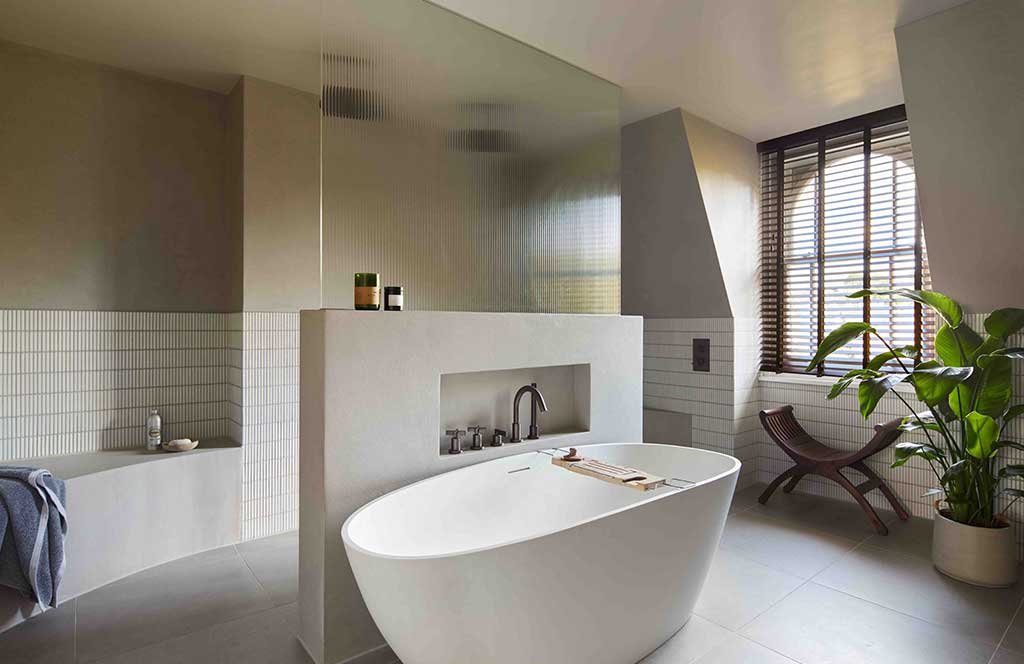
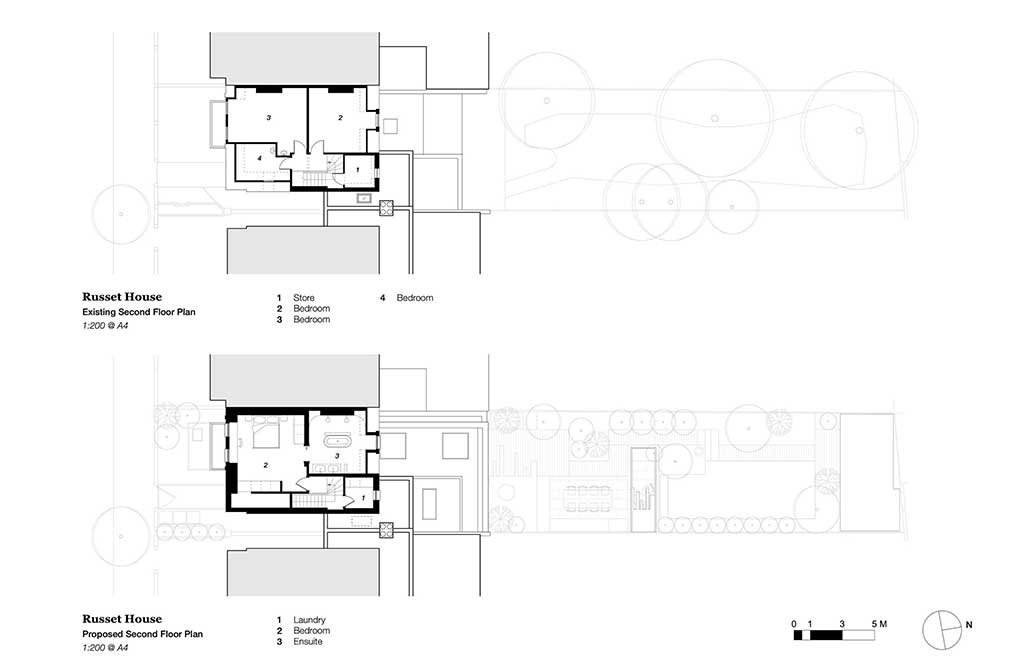
The second floor follows a similar layout, but here the two original bedrooms have been joined to create a large and private master suite, consisting of a bedroom, walk-in closet, and a generously sized bathroom. On the mezzanine floor, next to the study below, a discreet and functional laundry room with windows has been set up.
La nuova master suite si distingue per le armadiature in legno con paglia di Vienna, che conferiscono calore e texture raffinata a uno spazio elegante e armonioso.
The white and sage green master bathroom combines natural materials and sophisticated finishes, creating a bright and refined space, designed for comfort and tranquility.
The finishes contribute decisively to defining the overall atmosphere. The color palette is inspired by earth tones, with shades ranging from red to deep orange, through browns and pinks, balanced by cooler grays and whites. Whitewashed exposed brick surfaces and smooth plaster introduce a subtle material variety, while golden-toned parquet flooring runs through all levels, creating a sophisticated aesthetic continuity.
The contemporary pergola structures the garden, creating an elegant intimacy between green spaces and architecture, with a play of light and shadow that enhances the outdoor environment.
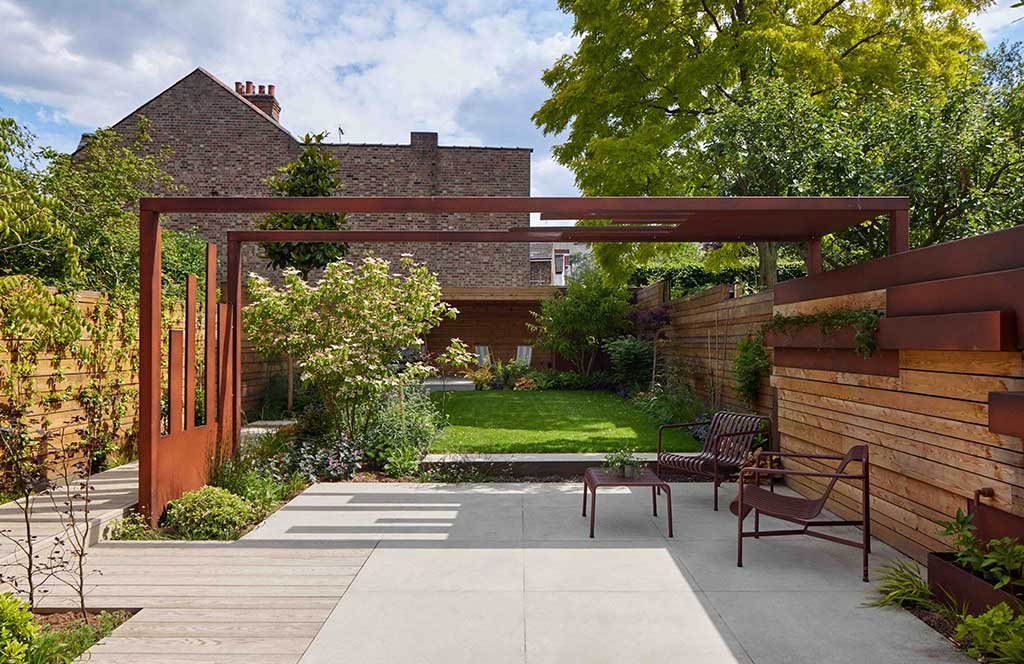
Outside, the garden has been redesigned with new plantings and the addition of a contemporary style pergola, creating a shaded space for relaxation. The presence of greenery, conceived as a natural extension of the interior, reinforces a fluid relationship between indoors and outdoors, completing a project that interprets the renovation as an act of balance, moderation, and conscious transformation.
Project by Mulroy Architects – mulroyarchitects.com
Photo © Dan Glasser
The garden comes alive with evocative effects thanks to the play of light and shadow, enhancing the greenery and architectural volumes in a serene and harmonious atmosphere.
Basement floor plan, before and after © Mulroy Architects
Ground floor and garden plan, before and after © Mulroy Architects
First floor plan, before and after © Mulroy Architects
Second floor plan, before and after © Mulroy Architects
In copertina, la vista dal giardino descrive perfettamente Russet House come un progetto di luce e respiro, dove gli spazi ridisegnati accolgono e trasformano la vita quotidiana.