
by Roberta del Vaglio.
A fundamental choice for the kitchen work area: materials and performance compared, from traditional ceramic to new-generation stone.
The backsplash is the portion of the wall between the worktop and the cabinets, an area in the kitchen that is affected more than you might think: it is exposed to stains, steam, and heat, especially near the burners, and for this reason it must be resistant and easy to clean. But it’s not just about features. This surface also plays an important decorative role, it can add character, create continuity between different finishes, or introduce a studied contrast, based on the style of the room.
Its choice is usually made during the renovation phase, but it’s also possible to work on an existing kitchen to improve its practicality or renew its appearance. Today, the variety of solutions available allows you to evaluate different options based on performance and design: from traditional ceramic to the more eclectic printed glass, including professional and cutting-edge products. The final decision therefore represents a balance between functionality, personal taste and daily habits – do we cook a lot or a little? – in armonia con colori e dettagli dell’arredo e con un’attenzione costante alla pulizia, che deve risultare semplice ed efficace. Let’s look at the different options together to decide which one best suits your needs.
TILES: THE TRADITIONAL CHOICE
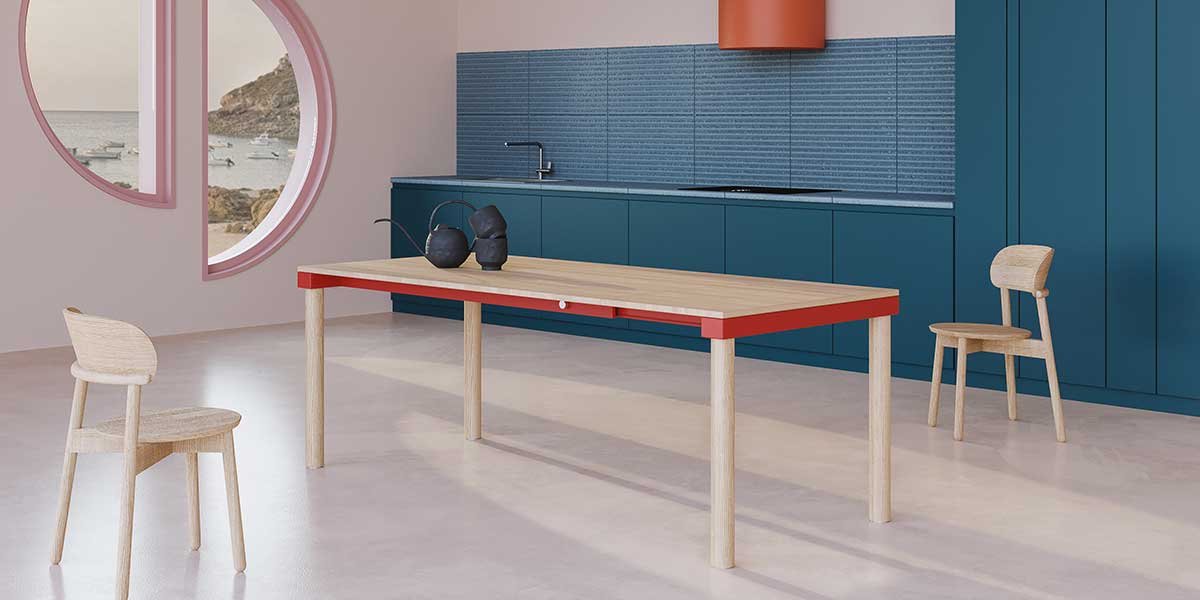
Tiles are one of the most popular solutions, and are generally made of ceramic or porcelain stoneware. Ceramic is a traditional choice: it’s one of the first materials that come to mind when thinking about kitchen walls and is easy to clean with ordinary detergents. Porcelain stoneware, on the other hand, is created by firing a mixture of clays, minerals, and sands at very high temperatures, making it compact, non-porous, and resistant. One of its strengths is the variety of finishes: for example, it can reproduce marble for elegant environments, stone for more rustic kitchens, or concrete for an industrial style. The common limitation of both solutions is the presence of grout, which absorb dirt and require regular cleaning to maintain a tidy appearance.
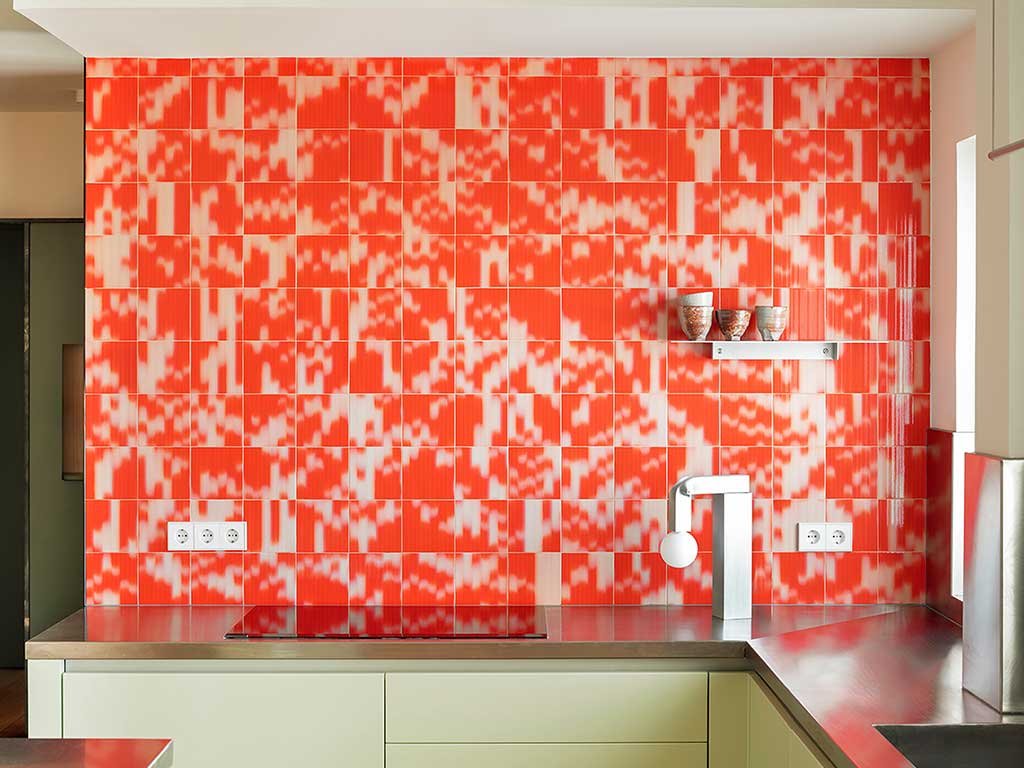
Ceramic tiles from the Dutch brand Palet, per square meter €332.75 – palet.shop
STEEL: CONTEMPORARY STYLE AND HYGIENE
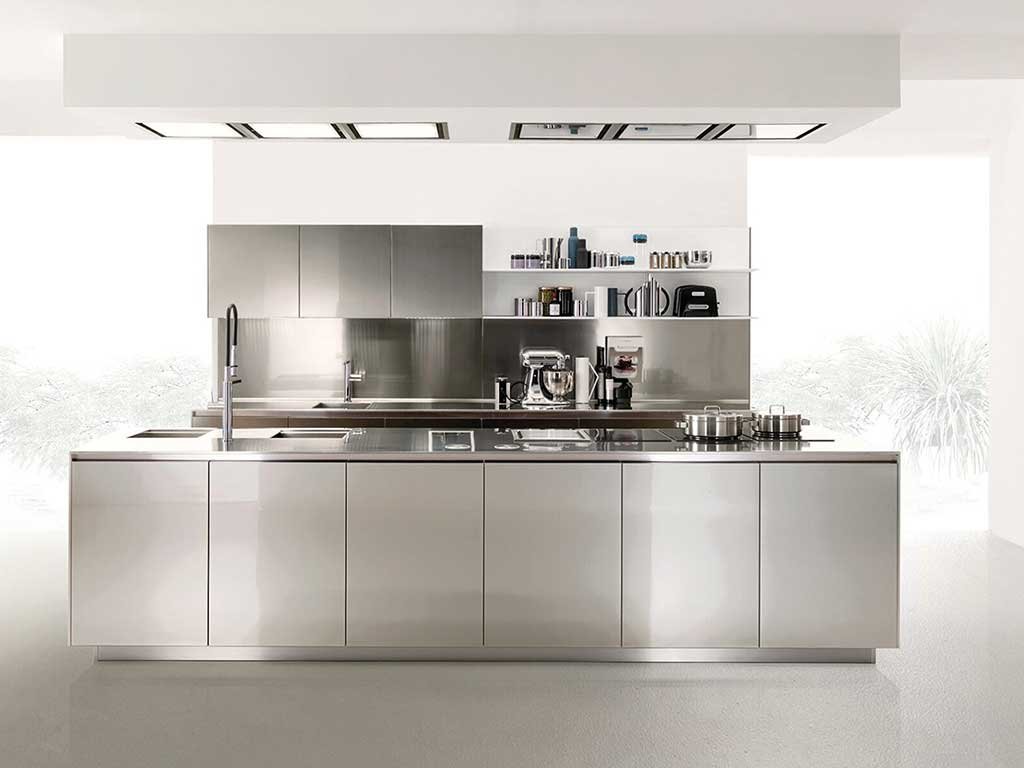
Steel is the material of choice for professional kitchens, but it is also finding increasing use in contemporary domestic environments. It is a material that resists heat well and is particularly hygienic because, being non-porous, it does not absorb liquids and dirt. On the other hand, it tends to be easily damaged by fingerprints and small scratches, which is something to take into account. It is fixed to the wall with technical glues or interlocking systems, to obtain a visually continuous and clean surface.
Kitchen with Free Steel satin stainless steel splashback by Euromobil, for a 60 cm wide base unit €822,28 – euromobil.com
SINTERED STONE: THE LATEST GENERATION MATERIAL
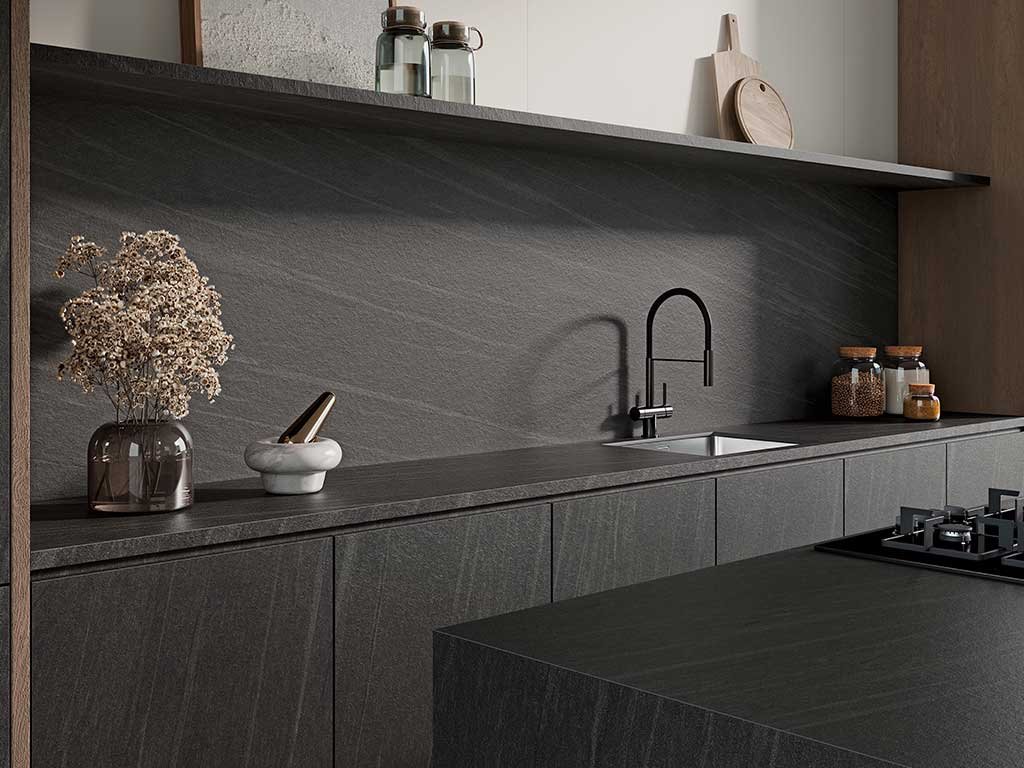
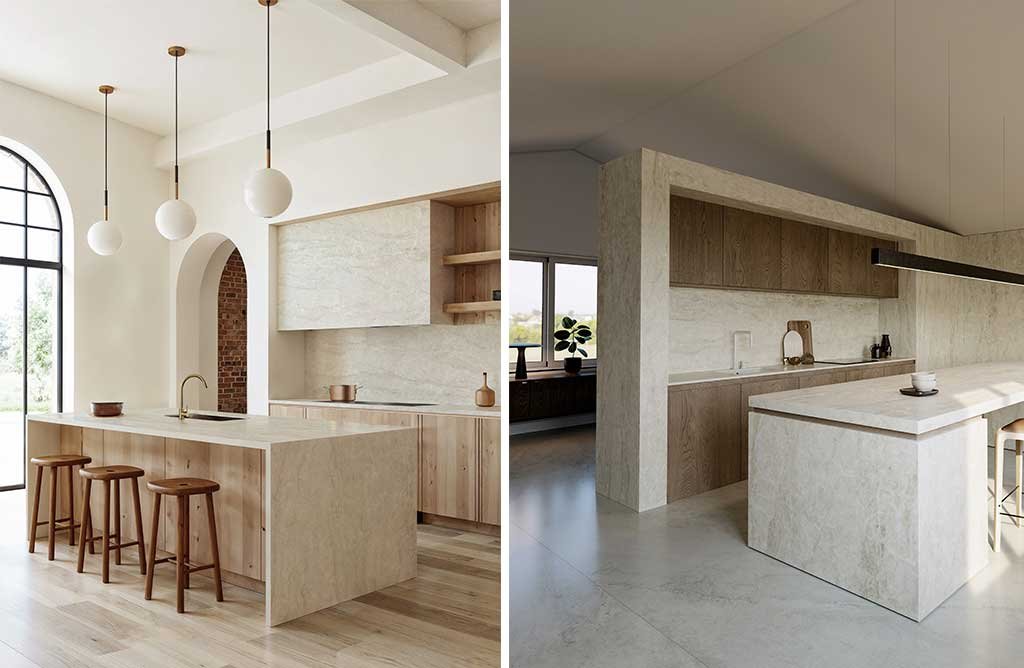
Sintered stone is a material obtained by compacting natural minerals such as quartz and clay at very high temperatures. The process reproduces in a few hours what happens in nature over thousands of years, giving rise to extremely compact surfaces. It is highly resistant to heat, scratches, stains, and UV rays; therefore, it does not discolor or absorb liquids. Thanks to these features, it can be used both as a backsplash and as a worktop, allowing you to create coordinated and visually homogeneous solutions. It has a higher average cost than other materials, such as ceramic and porcelain stoneware, but offers high performance and more advanced compositional possibilities because it is produced in large slabs that can be cut to size.
Neolith Ignea sintered stone by Neolith, priced on project basis – neolith.com
Cosentino’s Dekton® Nara sintered stone, priced on project basis – cosentino.com
Read also →
Renovate the kitchen without renovating
WALLPAPER: THE UNEXPECTED
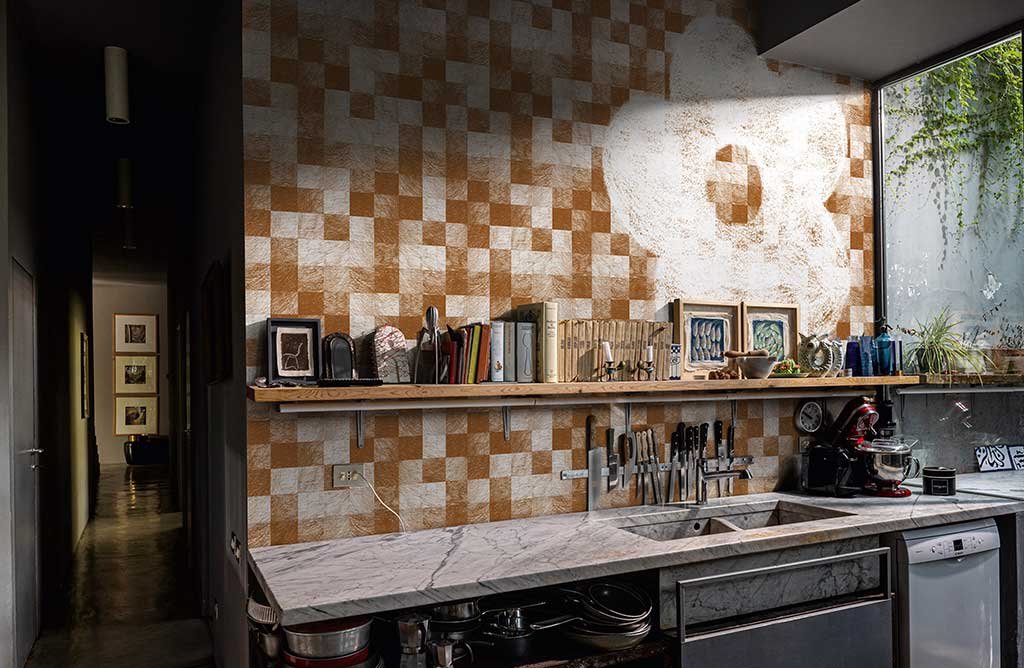
Yes, you understood correctly. Wallpaper in the kitchen allows you to introduce textures and designs and warm the atmosphere with great expressive variety. It’s a choice with a strong decorative impact but certainly less practical: even if it’s vinyl or moisture-resistant, it’s still less durable than other materials and should be avoided in areas most exposed to heat and water. If necessary, it can be protected with transparent glass to increase its lifespan.
Vado in Messico wallpaper by Carolina Palella and Yarn, designed by Alice Peach for Spaghetti Wall: both can be printed on fiberglass to resist humidity and treated with a Clean Finish to protect them from daily cleaning, starting from €74 per square meter– spaghettiwall.it
I’m Going to Mexico by Spaghetti Wall Wallpaper
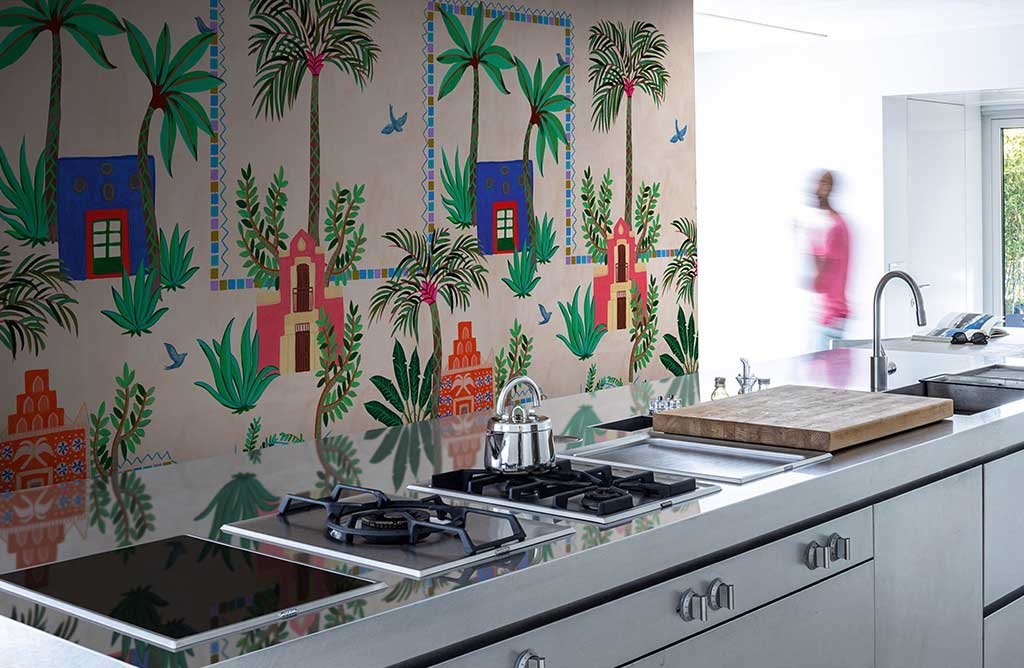
Wallpaper Yarn by Spaghetti Wall
GLASS TO CUSTOMIZE
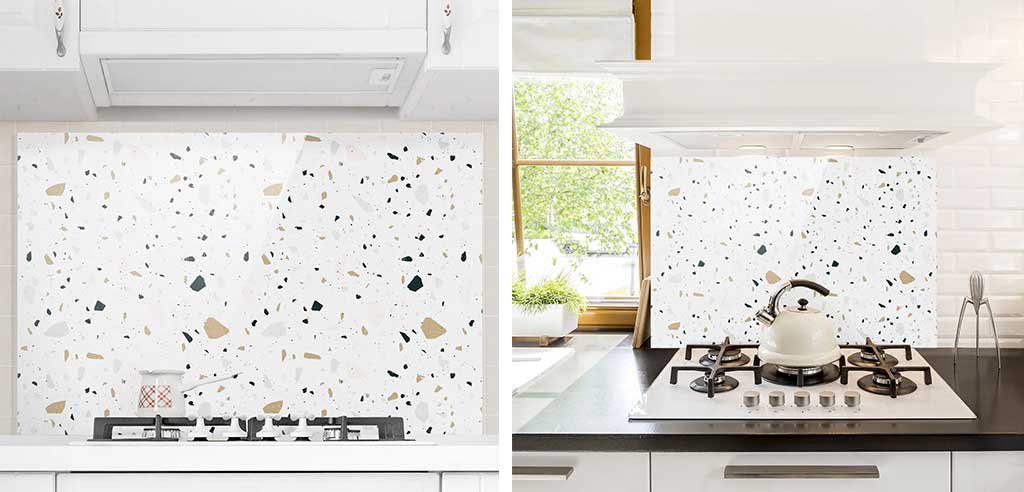
Glass is a material that reflects light and therefore contributes to the brightness of a space. It also has a continuous surface—without joints or seams—and is easy to clean. It can be transparent, satin, colored or with even customized graphic prints, adapting to very different styles. It does not absorb liquids and is resistant to stains and heat, but it must be tempered to ensure safety in the event of impacts or high temperatures, in relation to which it is more delicate than porcelain stoneware and stone coverings. It is fixed with structural glues or hidden supports, for a simple and visually light result.
Tempered Glass Backsplash Detailed Terrazzo Design in San Remo by Micasia, €67.99 (size 60 x 40 cm) – micasia.it
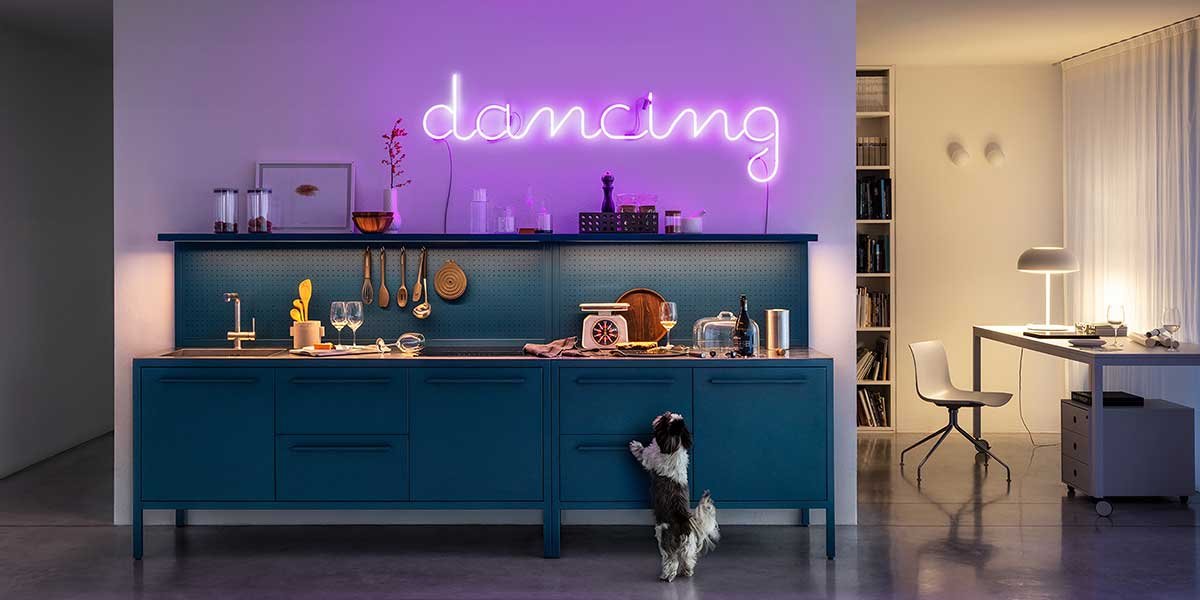
On the cover, Frame Kitchen by Salvatore Indriolo for Fantin, in metal available in 35 colors. Boiserie starting from € – fantin.com