

by Roberta del Vaglio.
For those who love design, contemporary architecture, and creative craftsmanship, a five-part Grand Tour of the present day, each one off the beaten track but emerging for its unique vision of style.
Not just Milan, Paris or London. For a long spring weekend dedicated to design, it’s worth looking beyond the beaten track. From independent galleries, converted factories, furniture museums, and vibrant creative districts, here are five cities to keep an eye on: Eindhoven, Porto, Warsaw, Athens, and Vienna. Illustrious names, but still outside the most predictable circuit of design destinations. And it is precisely this lateral position that makes them so interesting today.
1 – EINDHOVEN: IMMERSING YOURSELF IN EXPERIMENTAL DESIGN
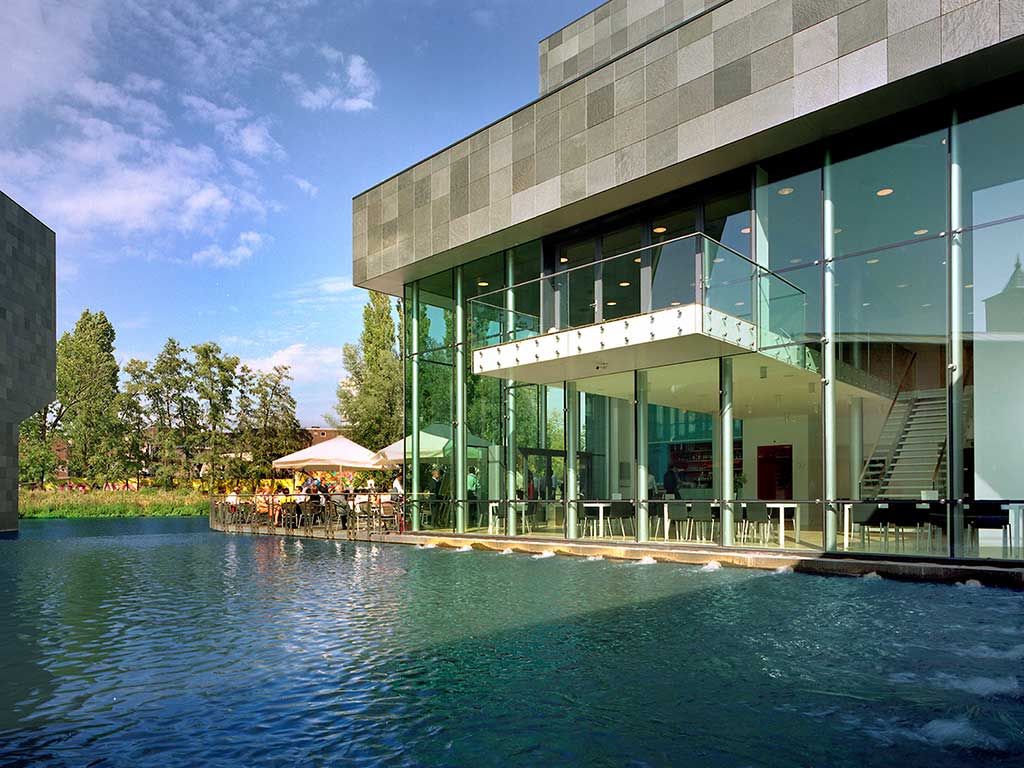
Eindhoven’s creative scene revolves around Dutch Design Week (October) and, above all, around the Design Academy Eindhoven, international reference academy for design in its freest and most experimental form. This approach is reflected in the city’s layout, where hybrid spaces accommodate different functions and styles. At the Van Abbemuseum art and design coexist in the exhibition calendar; Kazerne is an exhibition space, a hotel and a restaurant at the same time.
Van Abbemuseum in Eindhoven.
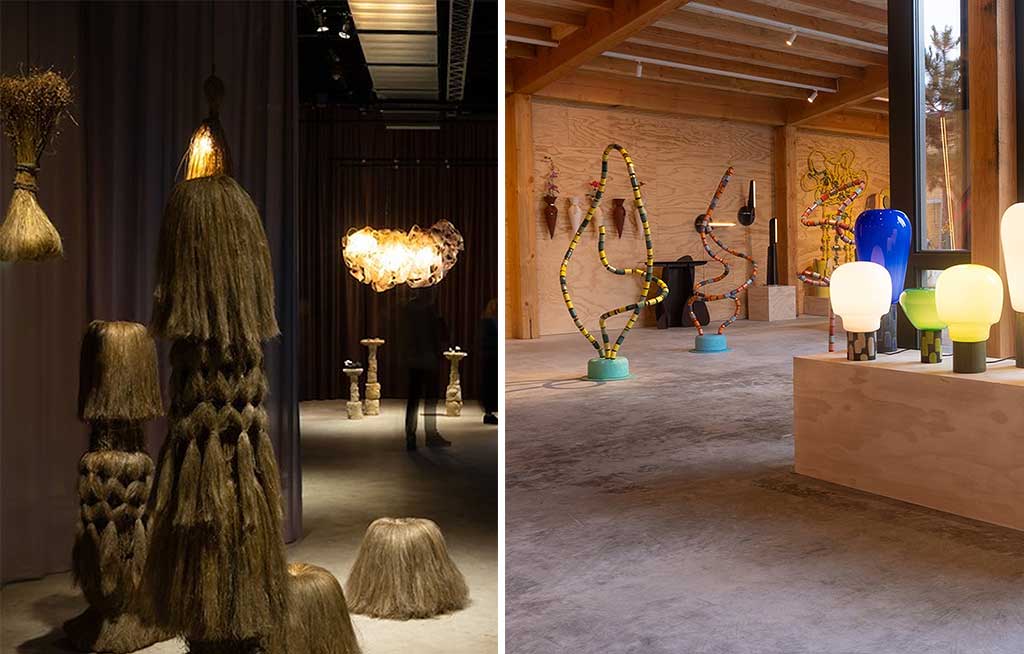
Likewise, designer Piet Hein Eek‘s headquarters is not only his studio, but also a showroom, restaurant and hotel. Another reference name for city design is the creative duo Kiki&Joost: their colorful, organic style is expressed in their showroom, which is a must-see. For accommodation, the Hotel Mariënhage, born from the contemporary renovation of a former monastery, is also worth a visit. “Hybrid” is also the key word for food: for example, KEVN hosts creative studios, events and a bistro with outdoor seating.
Eindhoven is a city projected towards the future, but with an important past marked primarily by Philips: it was here that its first light bulb factory was founded. Today the facility has been converted and houses not only the Philips Museum, but also Strijp-S, the design district where you can wander among galleries, creative shops, bars and restaurants.
Left, Kazerne’s installation for Dutch Design Week 2025; right, Kiki&Joost’s exhibition space
2 – PORTO: ON THE HUNT FOR STUNNING ARCHITECTURE
The azulejo-clad facades alone are worth a trip to Porto; Providing a counterpoint, in the Baixa district, is a mural by Joana Vasconcelos, a leading Portuguese artist whose kaleidoscopic, multi-material language engages closely with the world of design. Less popular than Lisbon, Porto retains for this very reason the charm of discovery and deserves a pinch of extra curiosity, even just considering that two great masters of contemporary architecture were born here: Eduardo Souto de Moura (Pritzker Prize 2011) and Álvaro Siza (Pritzker Prize 1992).
Also leaving an indelible mark on the city’s profile was Belgian engineer Théophile Seyrig, a collaborator of Gustave Eiffel, who in 1881 designed and built the iconic Dom Luís I Bridge over the Douro River. The terrace of the Vincci Ponte de Ferro is the ideal spot to admire it, as well as being an excellent place to eat and sleep. One of the city’s most spectacular buildings, the Casa da Música, a concert hall and contemporary landmark, bears the signature of Dutch architect Rem Koolhaas.
Quinta de Adorigo Winery. Photo © Fernando Guerra
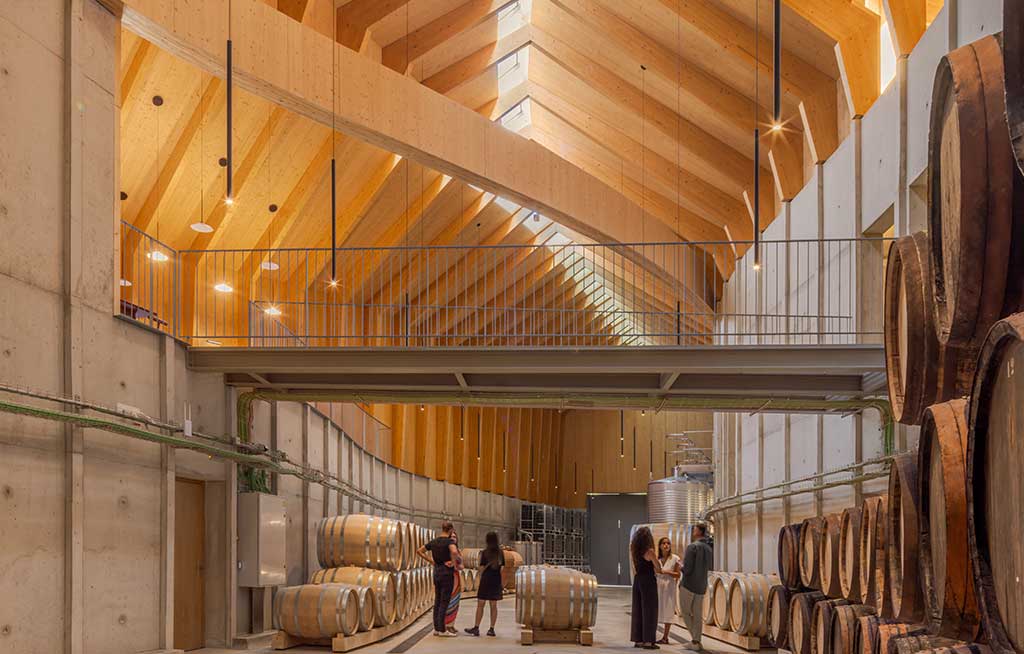
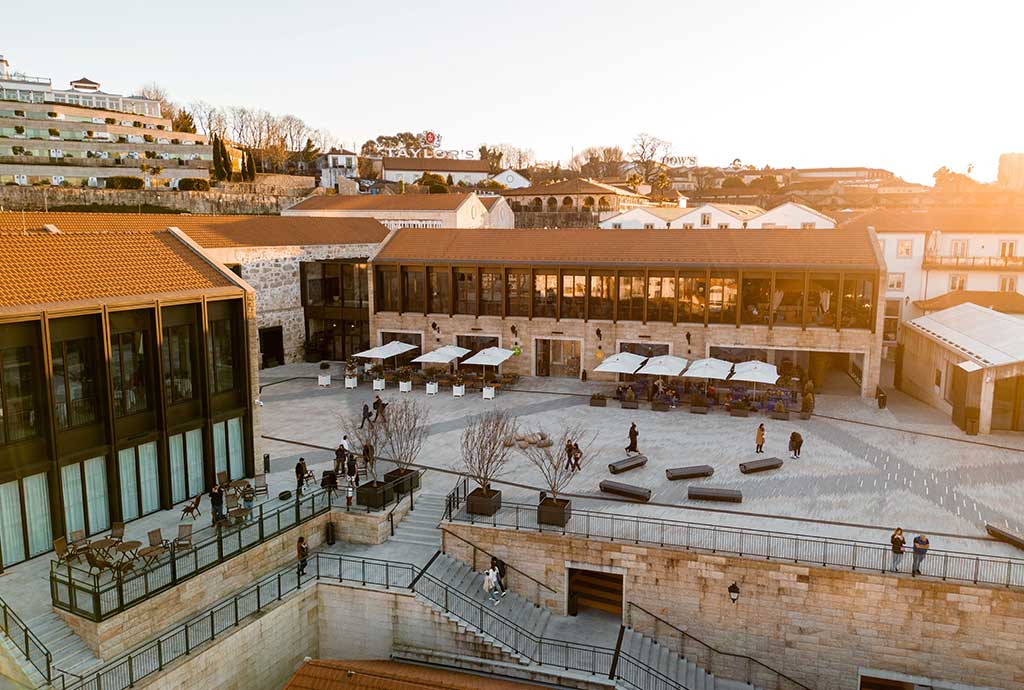
Porto, however, is identified above all with its wine: WOW – World of Wine is a cultural district born from the conversion of old wine warehouses: today it houses 7 museums, 12 restaurants and bars, as well as shops and temporary exhibitions. Finally, it’s worth heading out of the city, into the Douro Valley, to the Quinta de Adorigo estate: overlooking the terraces that slope down to the river, the winery was designed by Atelier Sérgio Rebelo and is open to visits and tastings.
The main square of the Wow cultural district.
3 – WARSAW: URBAN RECONSTRUCTION AND CUTTING-EDGE TUNNELS
Warsaw is a city that, more than many others, has been able to recover from destruction: during the Second World War it was almost completely razed to the ground, only to be rebuilt mainly starting from the visual narrative of Canaletto’s eighteenth-century paintings. In a certain sense, one could say that the Venetian view painter was the involuntary designer of the city, which today offers a one-of-a-kind architectural experience.
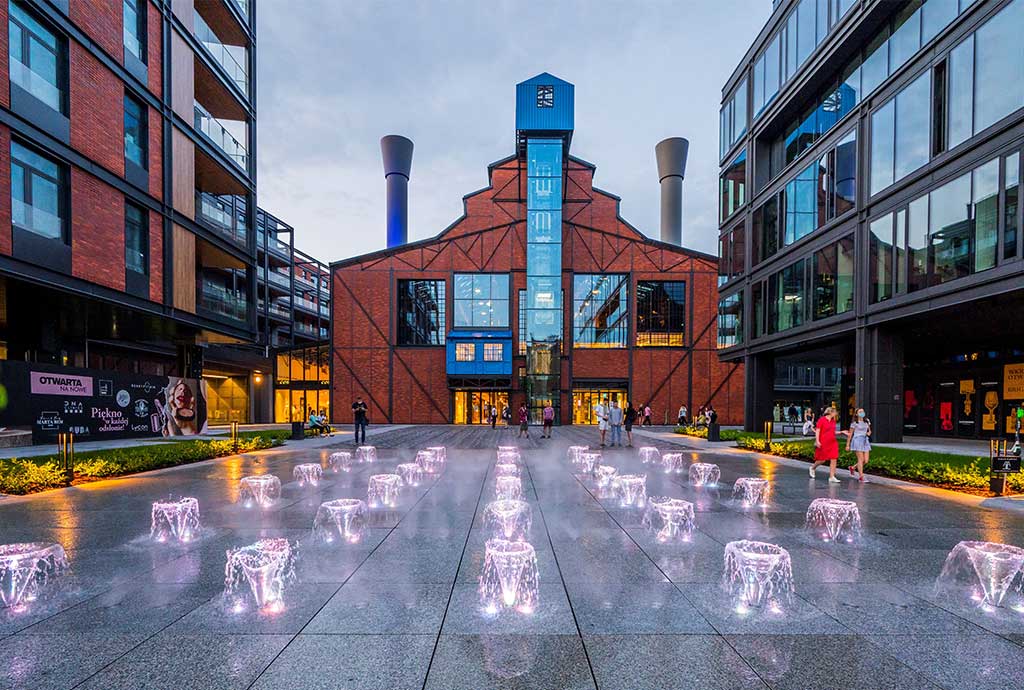
Among the reconstructed historic buildings is the one that houses the Hotel Verte, an ideal place not only to stay but also simply for brunch. As well as the Epoka restaurant, which offers traditional Polish dishes reinterpreted in a contemporary way. On the subject of redevelopment, Elektrownia Powiśle is worth a visit, a former power plant transformed into a multipurpose space dedicated to shopping, food, and vintage markets.
Elektrownia Powiśle. Photo © Filip Kwiatkowski
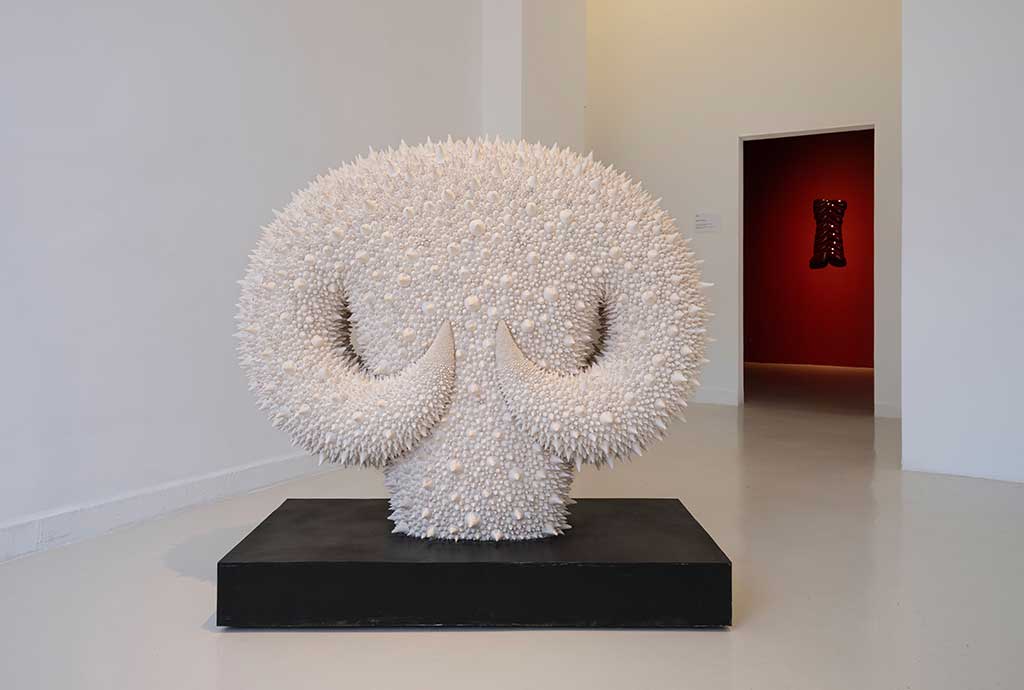
Warsaw’s contemporary art scene is also alive with art and design galleries such as Anna Starak’s Craftica Gallery, specializing in contemporary Polish craftsmanship, and the Leto Gallery, where you can discover the work of Polish artists who matured after the fall of communism in 1989. You can also find local creatives in the Mysia 3 department store, for example in the NAP corners for handicrafts and Orska for contemporary jewelry; while to get a taste of Polish furniture design, it’s worth visiting the dedicated section of the National Museum in Warsaw.
Leto Gallery, Xawery Wolski, Impulse, 2024, installation view, courtesy of LETO Gallery. Photo © Bartosz Górka
4 – ATHENS: AN UNEXPECTED BLEND OF CLASSIC AND MODERN
The Acropolis can be seen from every neighborhood of the city, a reminder that the beauty and rigor of classical architecture are perhaps unsurpassed. At its foot stands the Acropolis Museum, designed by Swiss architect Bernard Tschumi in steel, glass, and concrete. Inaugurated in 2009 to house over 4,000 archaeological finds, it represents the first dialogue with contemporary architecture and design. In 2017, the Stavros Niarchos Foundation Cultural Center, designed by Renzo Piano, was added to this.
Stavros Niarchos Foundation. Photo ©SNFCC_Yiorgis Yerolymbos
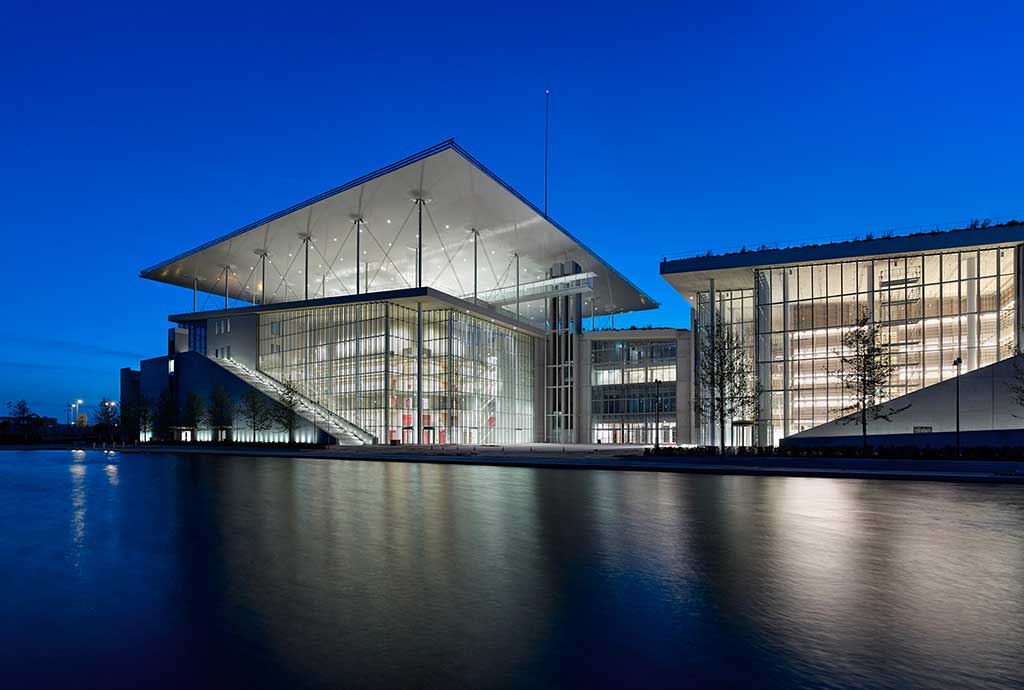
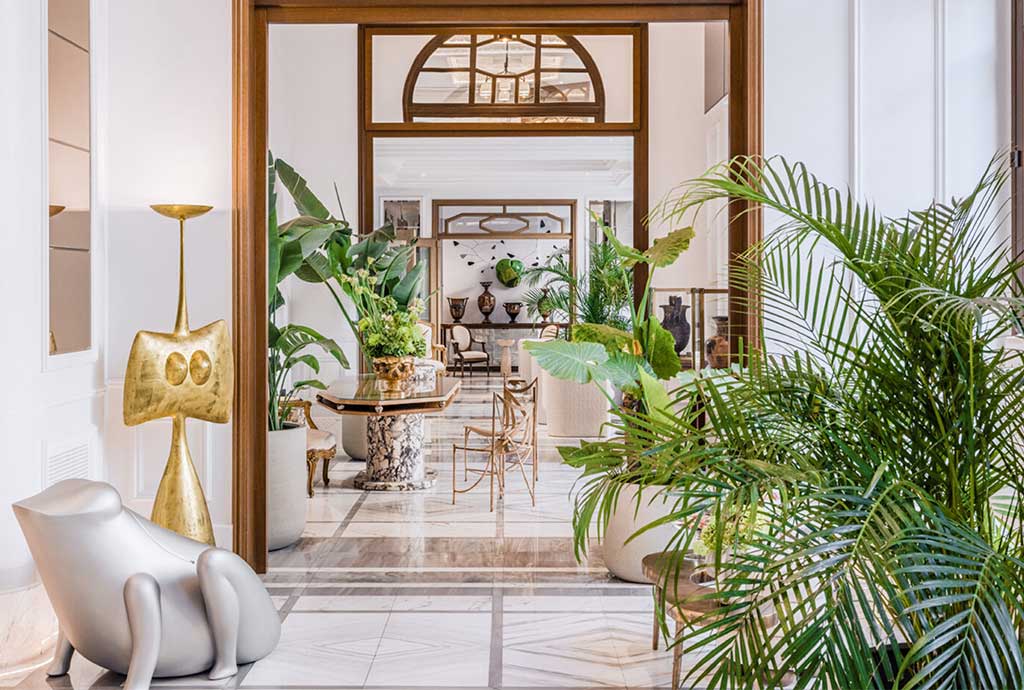
Contemporary creativity flows not only in these institutional buildings, but also along the lively and crowded streets of the center, where decaying buildings from the early twentieth century are constantly being renovated and often transformed into boutique hotels. This is the case of The Dolli at Acropolis, where you can sleep or just relax on the terrace with a breathtaking view of the Acropolis. The interiors of the New Hotel, designed by Brazilians Humberto and Fernando Campana, are also unexpected and surprising. Another interesting example of restoration is the Gagosian Gallery in Athens, housed in a 20th-century building now transformed into a space for the iconic contemporary art gallery.
Athens is also the ideal destination for those seeking contemporary craftsmanship: Contrust Collective is a small concept store run by a collective of local artists and artisans; Mon Coin Studio specializes in contemporary ceramics; Paraphernalia and A Future Perfect showcase the creations of international designers. For a unique, high-quality souvenir, there’s the small but well-stocked Dià Tauta, a boutique shop dedicated to contemporary local craftsmanship.
The hotel The Dolli at Acropolis.
5 – VIENNA: REDISCOVERING THE HISTORY OF FURNITURE DESIGN
The connection between Vienna and furniture design is very strong, even if it is often forgotten: it is no coincidence that Vienna Design Week (end of September) is among the fastest growing events in the sector. The first image that comes to mind is the bentwood chair, the fruit of the intuition of Michael Thonet, who opened his first workshop in Vienna to produce the famous chair. Today the chair is still ubiquitous in city cafés, such as the historic Café Bellaria, recently renovated by Viennese studio KLK, but also in homes around the world. The same seat can be found in the rooms of the Möbelmuseum, entirely dedicated to the history of Viennese furniture and housed in what was once the furniture warehouse of the Habsburg royal family.
On the left, MAK Museum of Applied Arts; on the right Möbelmuseum.
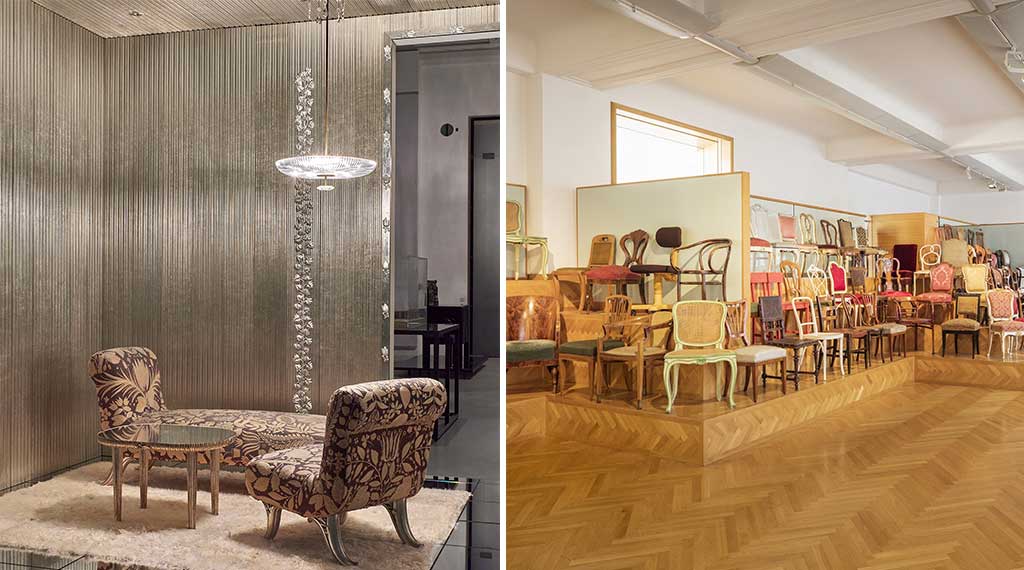
At the MAK – Museum of Applied Arts, the rooms dedicated to the permanent 20th-century collection have recently been rearranged, offering a unique look at last century’s design. The 20th century is also the protagonist at Vintagerie, a gallery dedicated to modern antiques, and vintage shopping also finds space at Glasfabrik, housed in a former glass factory.
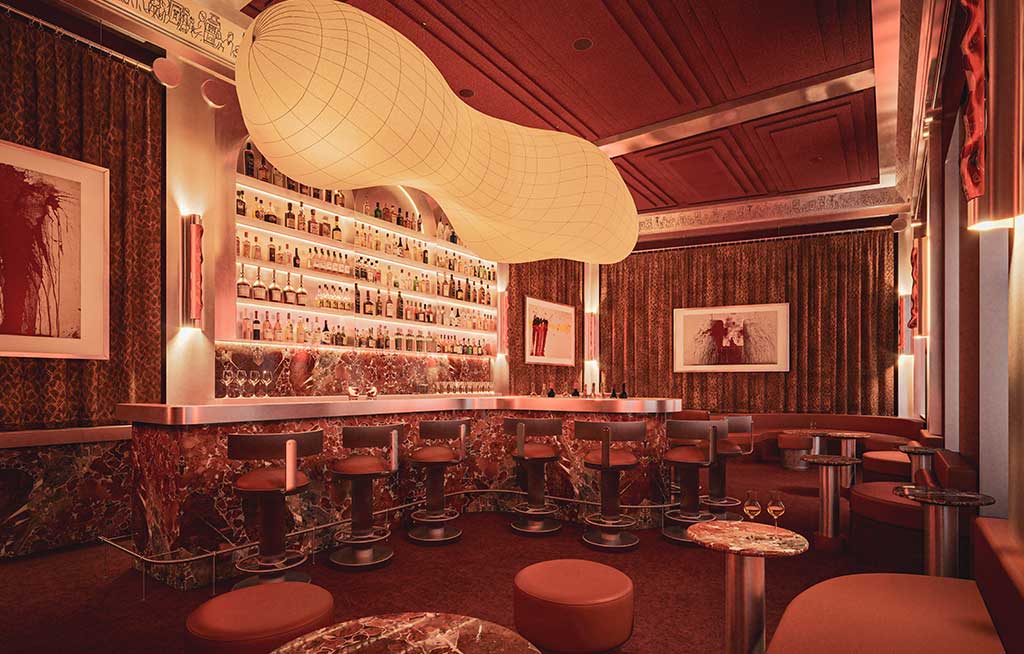
Berlin-based studio weStudio designed the interiors of the Companion Hotel, combining contemporary style with elements typical of the Wiener Werkstätte, the disruptive Viennese creative movement of the early 1900s that fused art and design. Companion is a great place not only to sleep, but also to enjoy a drink at the Calypso Bar, where you can be enveloped by the red marble and velvet.
Calypso Bar at the Companion Hotel in Vienna.
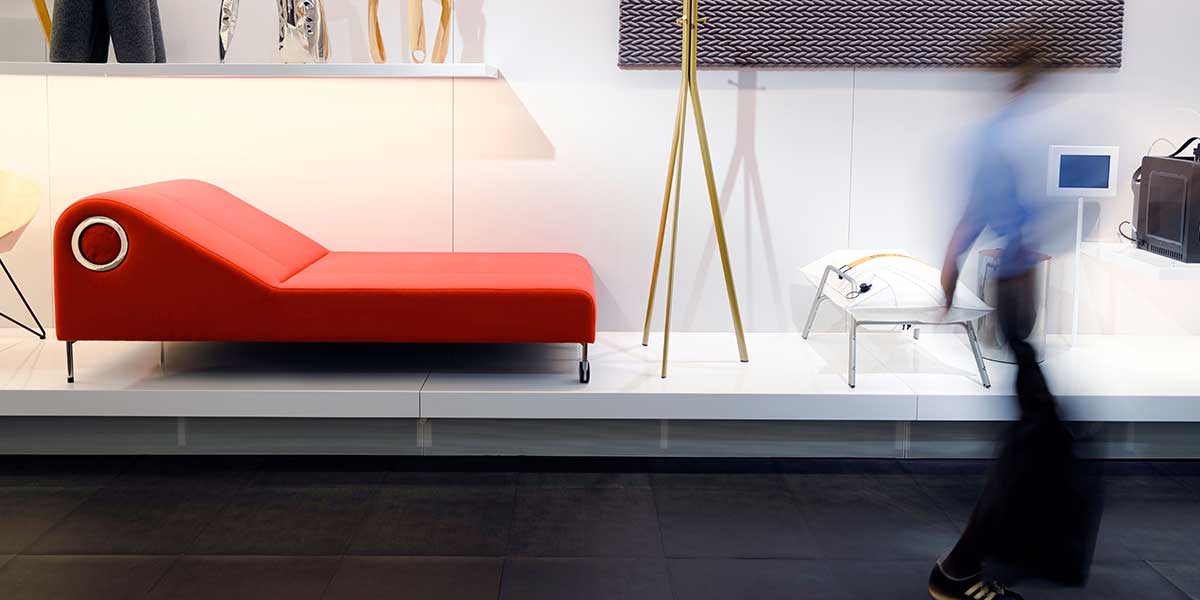
On the cover, a gallery of Polish design inside the National Museum in Warsaw. Photo © City of Warsaw