
A journey into the creative heart of a company that combines mastery, craftsmanship, and innovation, from the production departments where furniture is born to refined narrative spaces that suggest an increasingly très chic contemporary lifestyle.
When you think of Lyon, your mind turns to its traboules (the typical covered passages between buildings), its narrow, characteristic streets, and its historic squares that speak to centuries of life. In this city, which blends tradition and modernity, there’s a place that tells another story: that of French design, quality manufacturing, and a vision of a modern lifestyle that embraces a niche aesthetic sensibility.
My visit to Ligne Roset began at L’Appartment, located at 41 rue Auguste Comte, then continued through the production facilities and concluded in the showroom and outlet: a perfect rhythm of discoveries, emotions and reflections. Olivier Roset, Co-CEO and General Manager of the Roset Group, welcomed me and the other press guests.
Olivier Roset, Co-CEO and General Manager of the Roset Group. Photo © Ligne Roset

L’APPARTMENT
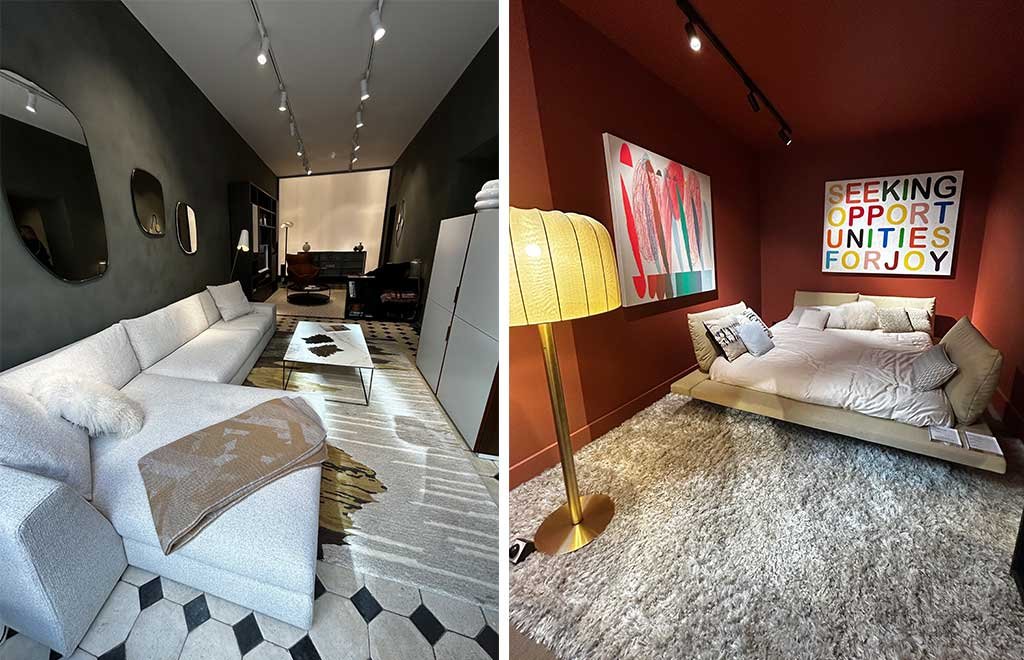
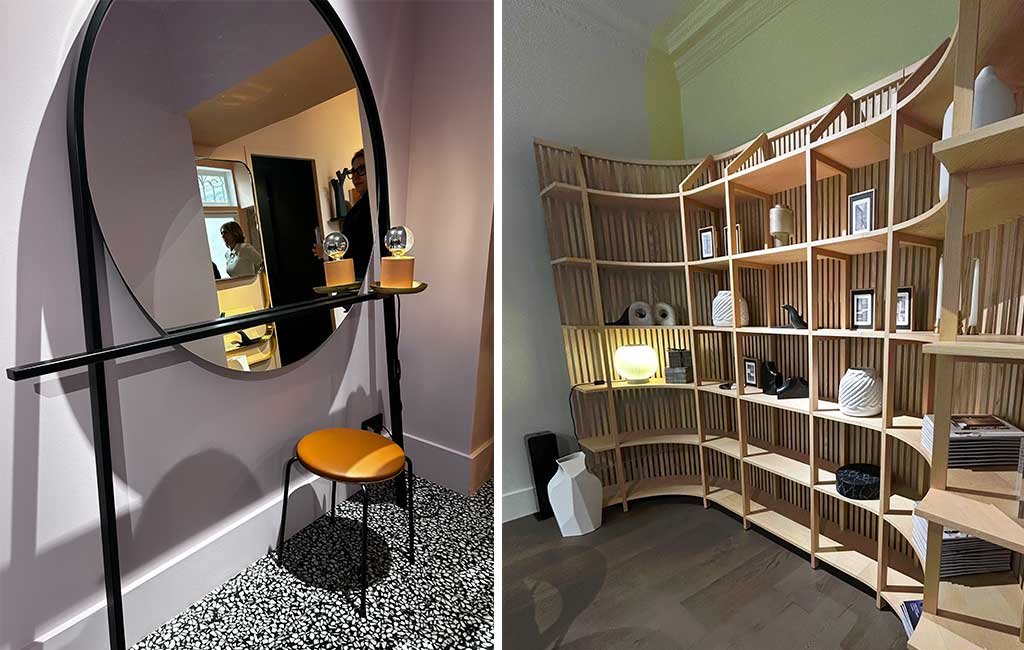
You may ask: L’appartment? It is not a shop in the usual sense of the word. It is a showroom conceived as a real apartment, born from the desire to have two presences of the brand in Lyon after the closure, in 2014, of one of the historic boutiques. When the opportunity arose for this small space—about 120 square meters—the choice was not to replicate a standardized flagship, but to experiment with a different, more intimate and narrative form. Marie-Christine Dorner was given carte blanche to showcase a selection of the Ligne Roset collection, creating a credible, lived-in interior that suggested a way of living rather than simply displaying products.
L’appartment by Ligne Roset.
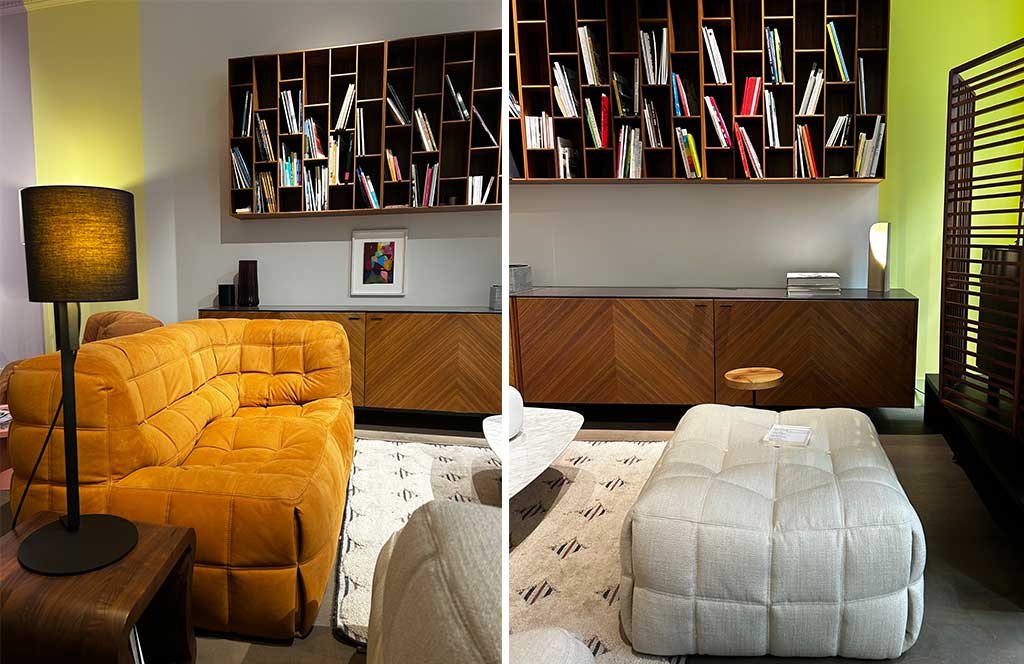
The original idea was for a designer or architect to reinterpret the space every year, renewing its spirit without distorting its structure. Covid slowed down this project, but it didn’t stop and continues today under Dorner’s direction. A continuous evolution. Just over a year ago, for example, it was completely repainted: from the dark and enveloping tones of the first version, in May 2024 it moved to a bolder and brighter palette, seemingly risky on paper, but surprisingly balanced in reality.
L’appartment by Ligne Roset.
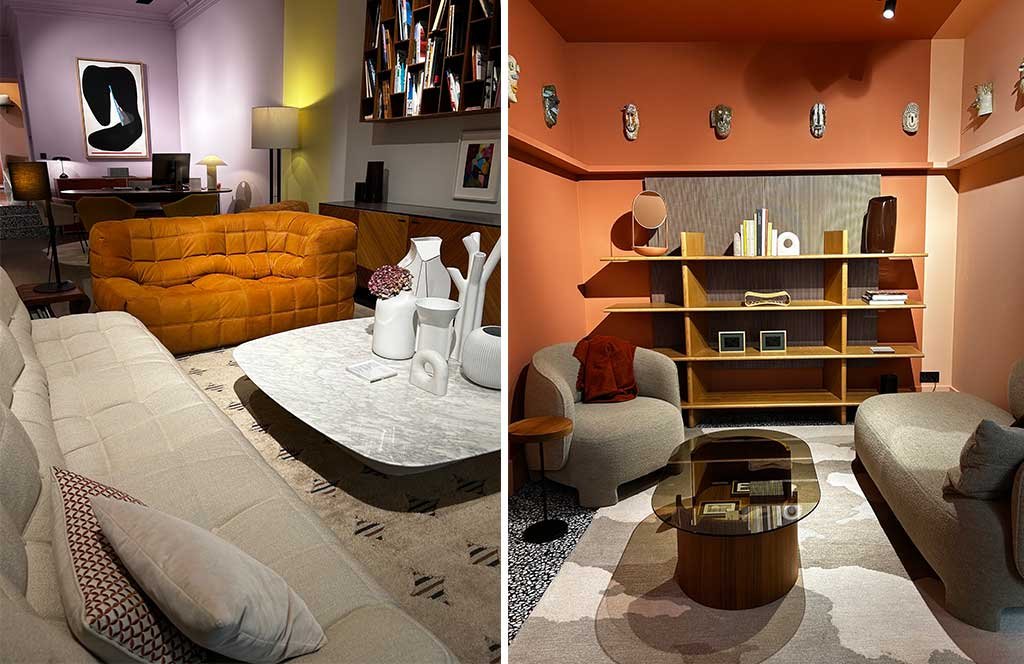
The Appartment works in constant dialogue with the maison’s main store in the city, located in the sixth arrondissement. There is no competition, but collaboration: the two spaces share clients, projects and vision. Here the relationship is more direct, intimate, almost confidential. It is also a place designed to host meetings, workshops, and opportunities for discussion with all industry professionals. The artworks featured, also selected by Dorner, come from the Galerie Mazurel, located on the same street: a natural link between furniture and contemporary art, between living space and cultural content.
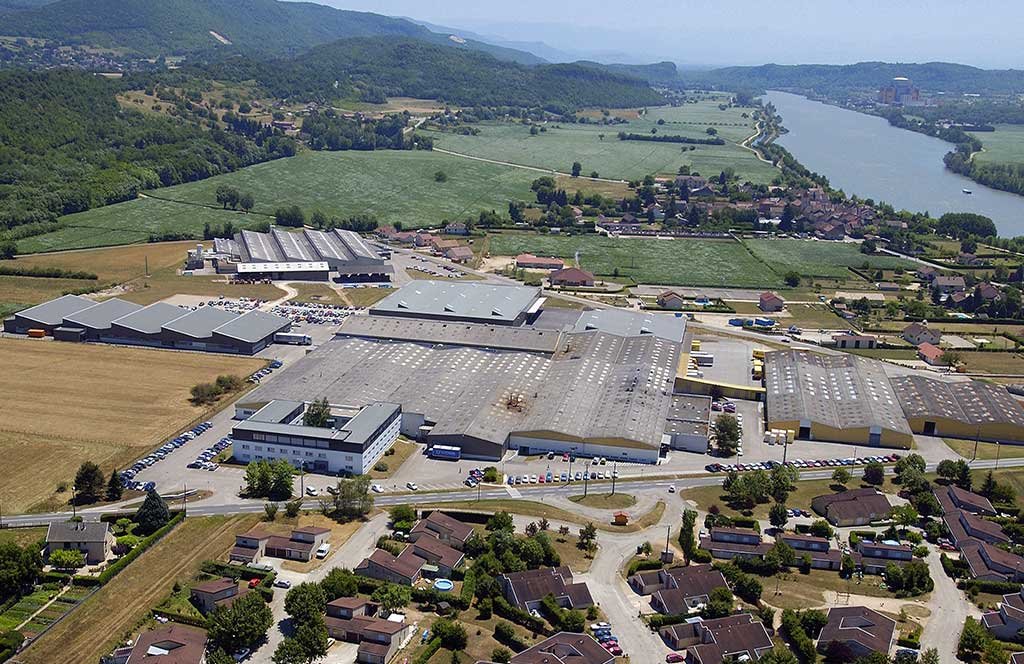
The Ligne Roset factories located in the heart of Bugey (Ain). Photo © Ligne Roset
A FAMILY STORY
After leaving the centre of Lyon, the visit continued towards the nearby production plants in the heart of Bugey (Ain). This is where the story is rooted in the crafting of materials. Ligne Roset was founded in 1860 and still maintains production in the heart of France, between the Ain, Isère, and Rhône regions. Five factories, a massive overall surface area, and an internal, controlled supply chain.
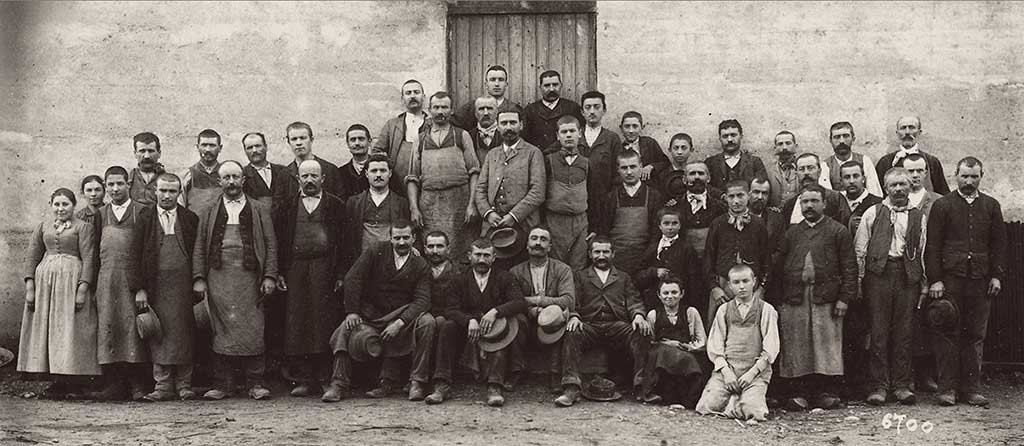
The story begins with Antoine Roset, a manufacturer of umbrella ribs, and evolves thanks to the vision of his wife Emilie, who intuits the possibility of using the same machines to make wooden components for seats. Specifically, the feet. From there, a path that has never abandoned the bond with the territory.
A historical image of the Ligne Roset workforce at the end of the 19th century. Photo © Ligne Roset
Returning to my experience, the carpentry shop was the first impact upon entering the company. The wood, rigorously traced and mostly coming from nearby forests, is left to acclimatize outside and then moved inside, before being worked. The woods used are ash, oak, walnut (including American) and beech, while MDF panels are used for the non-visible parts of the furniture.
Machines do most of the work, but the artisan’s hand remains central to the finishing touches; in fact, around three hundred people work in this department. The waste is not wasted: it fuels the heating of the warehouses, is sold for the same purpose or made available to employees. A true example of sustainability.
A stage in the tailoring process of Ligne Roset products in the fabrics department. Photo © Ligne Roset
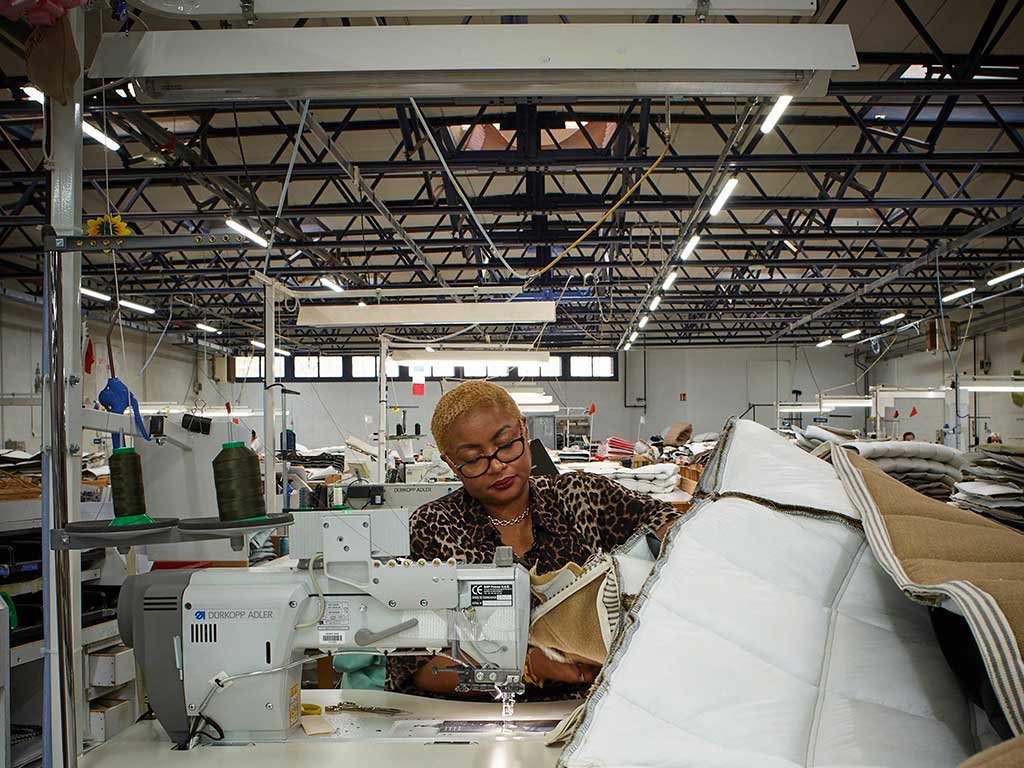
The fabrics and leather department reveals another level of complexity. There is no finished product warehouse: everything is taylor made, with lead times that can take up to three months, including shipping. The fabrics—over 170 rolls in more than 1,300 colors—come mostly from Italy, but also from Germany and Scandinavia, and are inspected meter by meter. The skins, all certified and traced, are approximately 900 per month.
All waste is reused and used for new local artisanal processes. The buttons are made at the same time as each covering is cut, approximately 300 per day. A laser machine projects the necessary shapes onto the fabric, optimizing precision and reducing waste. An identifying fabric sample is inserted inside each padded item, to guarantee the same finish in the future. A truly sartorial touch.
La lavorazione di molti pezzi iconici viene fatta a mano, nella parte del rivestimento, da tappezzieri esperti che cuciono personalmente ognuna delle fodere e le applicano manualmente su ogni singolo prodotto. Photo © Ligne Roset
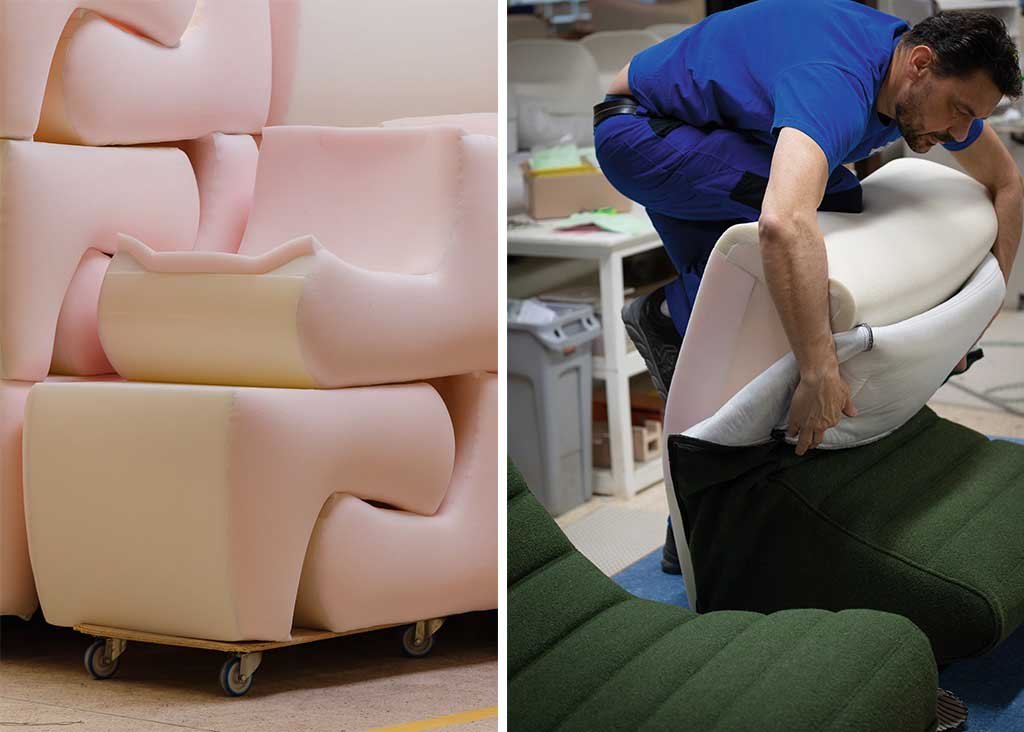
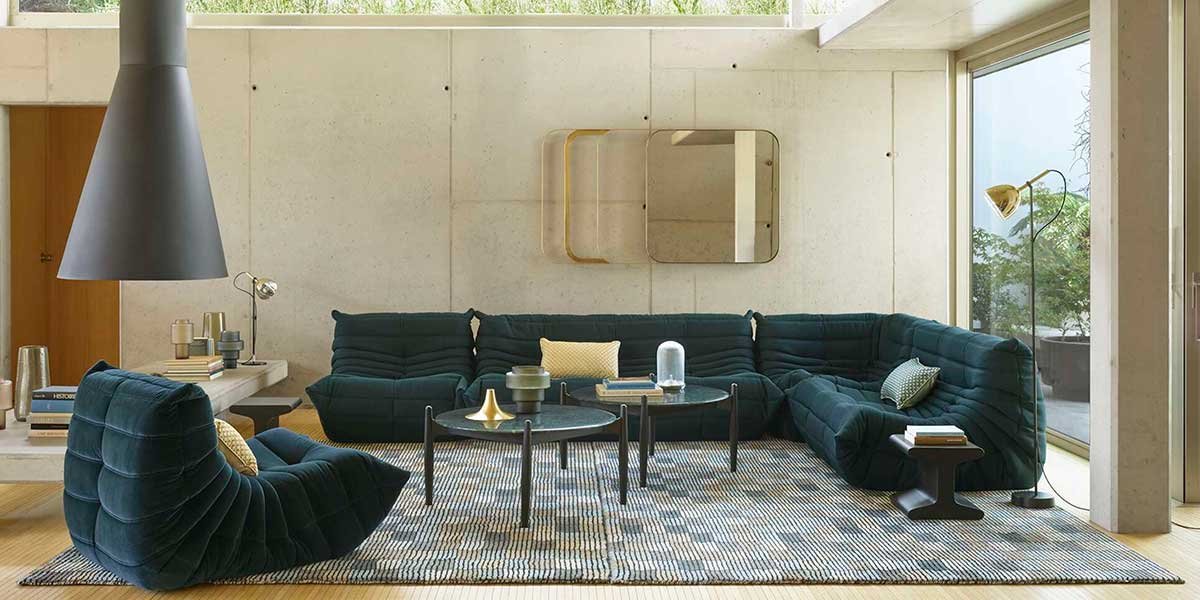
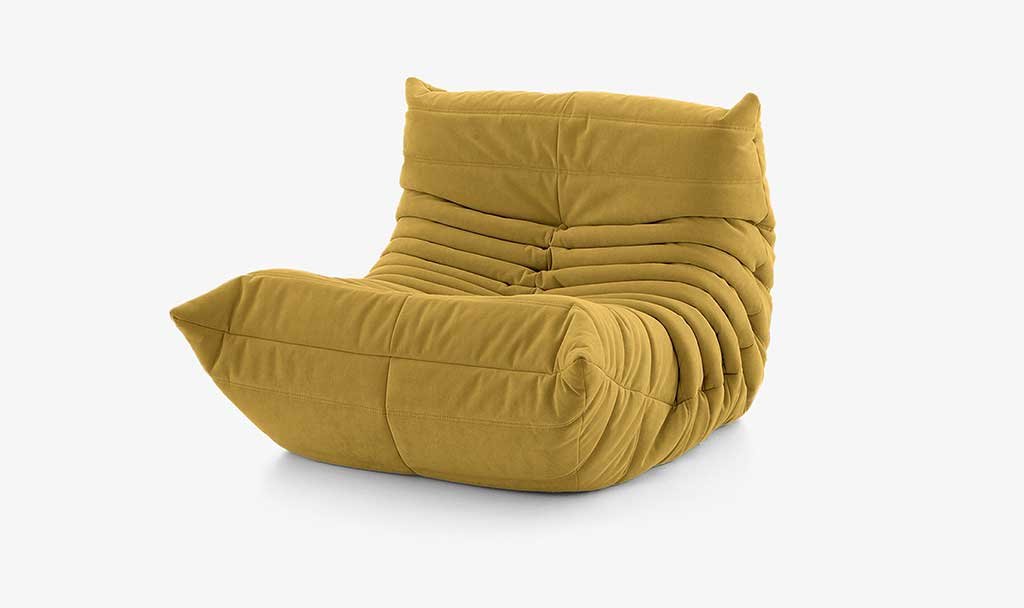
Foams are a whole other story: at least twenty different types, varying in density and consistency. Togo, an absolute icon, uses three. Watching it come to life is one of the most intense moments of the visit: the shell is entirely covered by hand by an expert upholsterer who, with confident gestures and calibrated strength, creates the characteristic folds one by one, fixing them from the inside with long curved needles. A single armchair requires approximately an hour and a half of manual labor. Approximately 15 tons of foam are used each month; some is recycled, while the rest is researched into biodegradable solutions.
Togo by Ligne Roset, design Michel Ducaroy. Photo © Ligne Roset
THE FUTURE OF STYLE
After the factory, the museum with historic pieces next door—Studio 1860, recently opened—the outlet and showroom offer a tangible synthesis of what we’ve seen: carefully designed spaces that allow us to imagine the furniture in everyday life, not as simple display products. During the lunch offered to me and the other guests, speaking with the Roset family—particularly with Olivier—we further explored several topics that clearly outlined the overall framework of a truly comprehensive conceptual vision.
L’appartment by Ligne Roset.
First and foremost, the idea behind L’Appartment emerged clearly: not a traditional shop, but a place that resembles the way people actually live, a complete interior curated by a designer, designed to offer an immersive experience to architects and end customers. A replicable model, quickly understandable and adoptable by those already working in distribution. The reason is easy to explain: a significant portion of high-end customers purchase through interior designers.
The line between retail and design is increasingly blurred, allowing us to discuss supply chains and build relationship systems. In large stores, about 15-20% of orders come from the contract sector itself – hotels, restaurants, naval – a segment with specific rules. The selection of collections in the Appartment doesn’t follow the logic of novelty at all costs: it’s the whole that counts, sometimes enriched with personal elements to make the atmosphere more authentic.
L’appartment by Ligne Roset.
There has always been tension between retail and architects, especially regarding discounts and customer management. This “atelier” was also created to encourage a more balanced dialogue. The possibility of replicating the concept in cities like New York, London, or Milan is being evaluated, especially if connected to a traditional store. Milan remains a strategic city: in the past, a shop on Via Manzoni worked very well as a publicity tool, but less so as an effective sales tool. Returning is a goal, but only with a coherent plan.
The trade fair strategy has also changed: fewer halls, more vision. Today Ligne Roset is organizing its own event in April in Paris, at the Palais de Tokyo, before the Salone del Mobile. Not just to sell furniture, but to share an idea of life and brand. Togo, with nearly two million pieces distributed, remains an icon, while working with over one hundred designers a year fuels a constantly vibrant and interesting catalogue. In step with the aesthetic dynamics of contemporary design.
L’appartment by Ligne Roset.
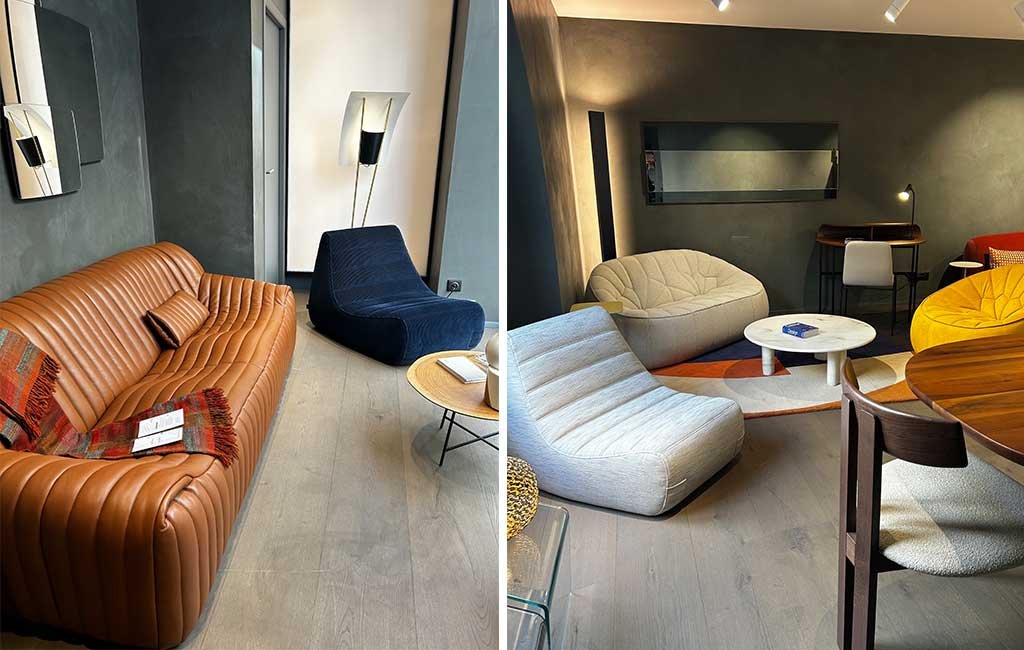
General production, continues Mr. Roset, involves around 800 people and, despite being a global reality, has its own specific weight in each market: Italy, with around 5-6% of turnover, remains fundamental for the culture of design and for the interaction with the local industrial fabric. In a system that tends towards mergers, Ligne Roset remains a family company, attentive to growth without losing its identity. The strength of the brand, ultimately, lies in the community it manages to build around itself.
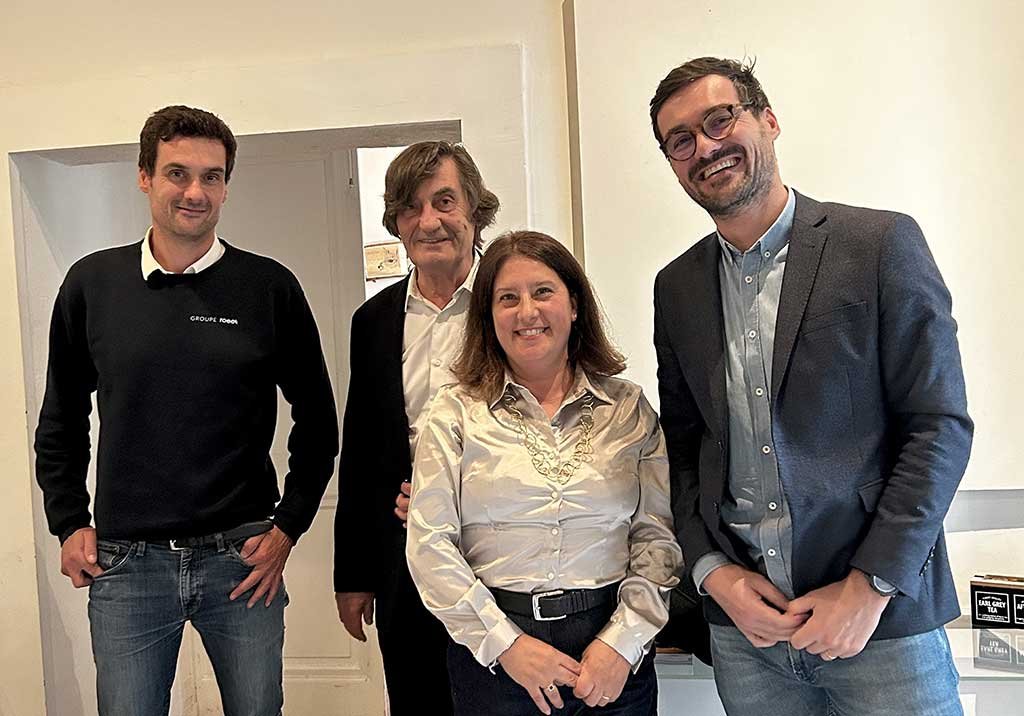
Director Anna Caldera together with (from left) Olivier Roset, Michel Roset (President of the Roset group) and Alexandre Roset during the visit to the Ligne Roset world in Lyon.
On the cover, a refined interior that highlights the elegant lines and versatile modularity of Togo by Ligne Roset.