



Born in Cairo on September 18, 1960, to an Egyptian father and an English mother, Karim Rashid grew up in Canada, where he completed most of his education. He graduated in Industrial Design from Carleton University in Ottawa and in 1982 moved to Italy to continue his training, first in Naples with Ettore Sottsass, then in Milan at the studio of Rodolfo Bonetto.
Fascinated by the Milanese design scene , which would become a great school for him, he also managed to collaborate with other leading figures on the Italian scene, such as Alessandro Mendini, considered his mentor.
An anti-traditionalist with a multifaceted personality, with over 2.000 objects put into production and 300 awards won, he is one of the most prolific and visionary contemporary designers , capable of ranging from products to lighting, from interiors to installations, all the way to retail.
His work spans over 40 countries and his clients include names such as Alessi, Prada, Riva 1920 and Lamborghini, Yves Saint Laurent, Zanotta and Foscaini.
Karim Rashid, Speed table, Riva 1920 by Lamborghini, 2017.

The main characteristic that has made him famous throughout the world is his ability to mix different ideas, materials, and aesthetics . His eclecticism stems from his fascination with every art form through which he can express his creativity, working, in addition to design, with art, fashion, and music. His aim is to democratize design through the creation of objects that combine planning, beauty, and accessibility.
On the left, Karim Rashid, Cadmo, Artemide, 2006. On the right, Karim Rashid, Oh Chair, Umbra, 1999.

“ Design means giving shape to contemporaneity. Everything must be designed, from airplane interiors to our shampoo bottles. We must beautify this planet in every aspect, in every corner .”
On the left, Karim Rashid, Kaj Clock, Alessi, 2013. On the right, Karim Rashid, Cyborg, Artemis, 2015.
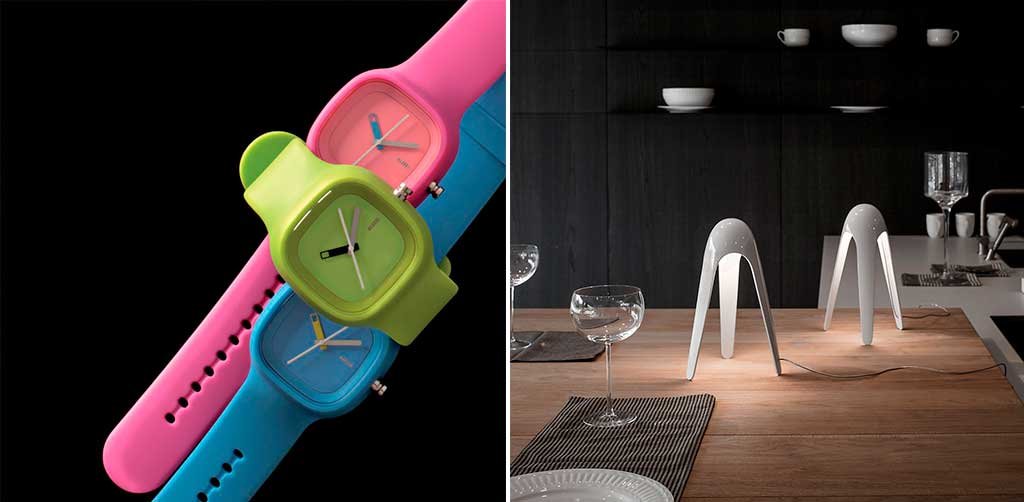
Objects that reflect his personal sensibility , with clean, precise lines, lacquered finishes, and decidedly bright colors. Design must not only solve problems functionally, but also improve the lives and home environments of consumers.
On the left, Karim Rashid, Tide Comò, Horm, 2006. On the right, Karim Rashid, Woopi, B-line 2016.

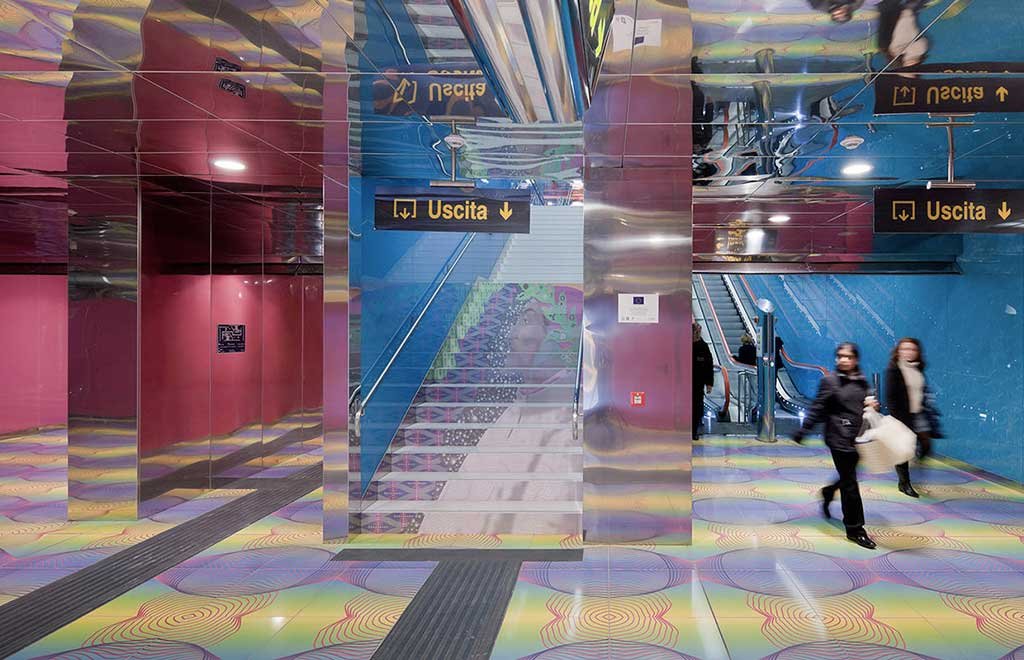
The strong colours , unusual combinations and the most disparate shapes are also found in interior design projects, such as the Morimoto restaurant in Philadelphia, the Semiramis Hotel in Athens, the Nhow Hotel in Berlin and the “Università” station of the Naples Metro.
Karim Rashid, Nhow Hotel, Berlin, 2010.

Karim Rashid, Naples metro station “Universita”, 2011. (Photo from Metropolitana Napoli Spa).
Countless awards have been received throughout his career, and his work is included in 20 permanent museum collections worldwide. Alongside his design work, he has been a professor of industrial design at the University of the Arts in Philadelphia and the Pratt Institute in New York, and he regularly lectures globally to promote the importance of design in everyday life.
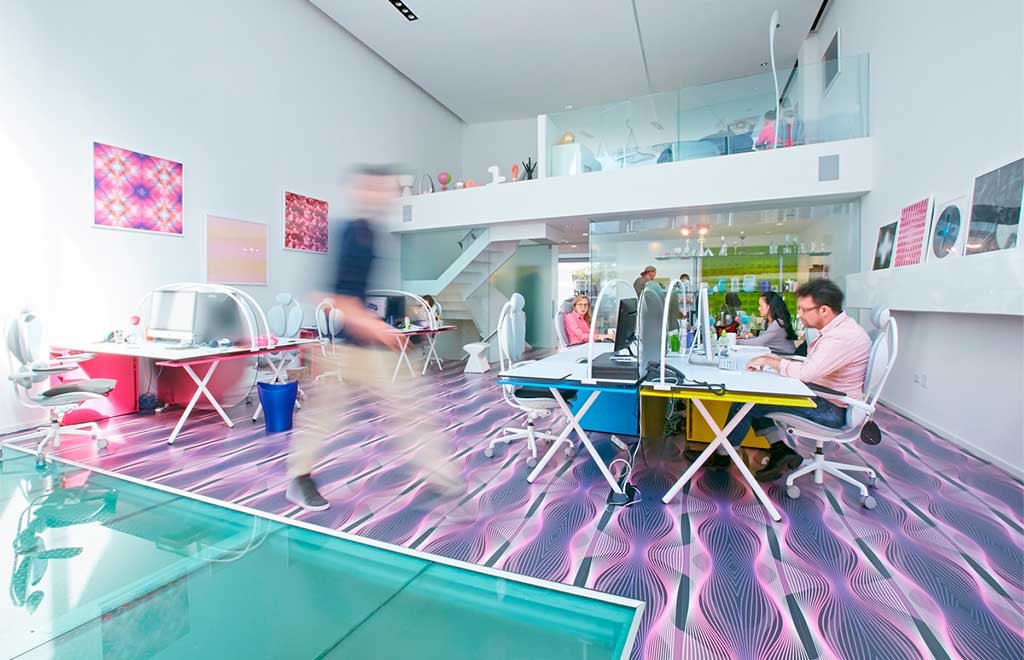
Karim Rashid's New York studio opened in 1993. Photo © Stanislas Liban.
On the cover, a portrait of Karim Rashid.