

An interview by Evi Mibelli with Marialaura Irvine, architect, designer, and creative director.
Research, design culture, and experimentation with materials are the cornerstones of a vision that interprets design as a process capable of transforming matter into language and craftsmanship into innovation. From her Neapolitan roots to the helm of Studio Irvine, Marialaura Irvine recounts a journey in which architecture, design, and the culture of making dialogue with rigor and sensitivity, giving shape to spaces and objects that preserve memory and imagine the future.
“Guys, break ranks”
Riccardo Dalisi
Nothing is stronger than one's roots. Especially when it comes to Naples and its undisputed capacity for producing culture, creativity, and vision. It is here, in the vibrant School of Architecture, that Marialaura Rossiello Irvine pursued her passion for design, graduating with honors under Riccardo Dalisi. Her education drew on the finest critical, historical, and design schools of the second half of the 900th century, with figures such as Cesare De Seta, Renato De Fusco, Aldo Rossi, Luigi Cosenza, and Dalisi himself.
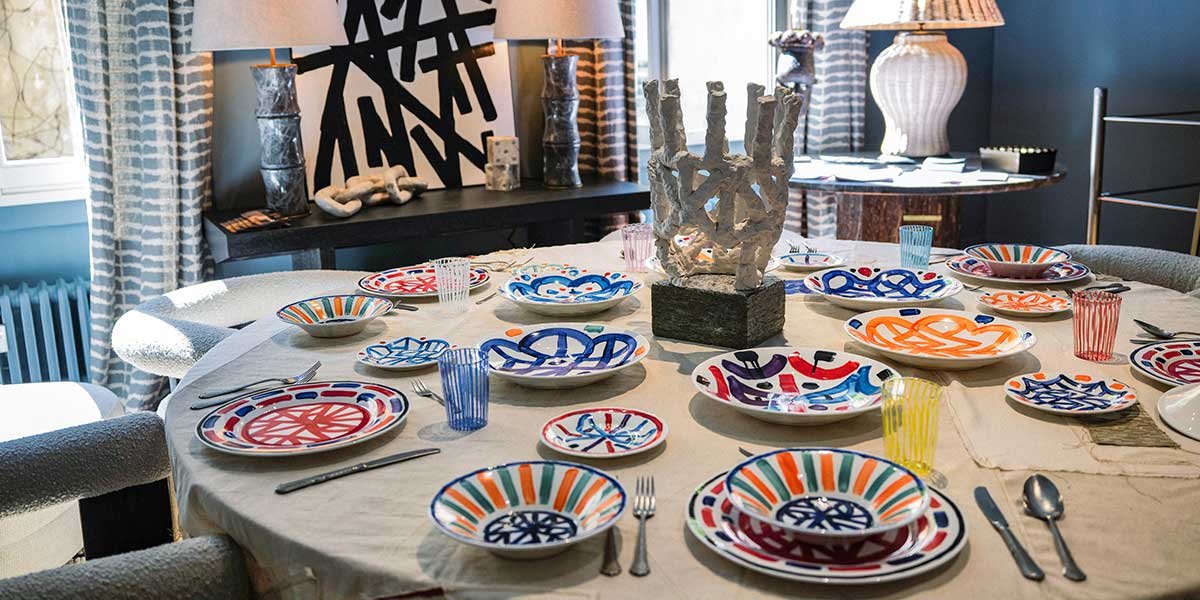
Interior of a private home. Designed by Architect Marialaura Irvine. Photo © Natalia Garcia.

With this background, she moved from Naples to Milan in 2000 to pursue a Master's degree in Strategic Design at the Polytechnic University. Strengthened by her education and a personality that quickly emerged in all its originality, she joined Studio Irvine, founded by designer James Irvine, which she assumed management in 2013 following the passing of her husband.
Dustpan and toilet brush. Designed by Marialaura Irvine for Muji.

A professional partnership that has managed to maintain two distinct projects capable of intertwining ideas and visions without, however, compromising the originality of the individual.
What we have always had in common has been a love of rigor, clarity, and research aimed at responding to the market in an unconventional way. Our different skills—I, an architect, and James, a designer—have contributed to our mutual autonomy and the multidisciplinary nature of the studio. Today, alongside my work as an architect, I also work as a product designer and/or Creative Director for companies looking to enter the design world. I bring my experience to bear in defining their strategies and identities. Over the years, I have collaborated—and continue to collaborate—with Mattiazzi, MDF Italia, Forma Cemento, MatteoBrioni, Muji, Thonet, Mohebban, Arper, and other companies.
Left, “Through the Thread – Embroidery as an Architectural Act,” a project that brings together architecture, design, and textile craftsmanship, creating diaphragms that separate spaces. Detail of Studio Irvine on Via Moscova in Milan. Design by Marialaura Irvine. Photo © Frank Stelitano. Right, Pavè Carpet. Design by Marialaura Irvine for Mohebban. Photo © Maria Tersa Furnari.

The Studio—Marialaura Irvine's workplace—is a perfect synthesis of her vision of architecture and design. The space—created in the former stables of a 19th-century building—is designed to define different perspectives, playing with temporary openings and closures—visual screens—creating private or shared spaces as needed in a constant flow of motion. The perception is that of a welcoming, peaceful, reflective, and bright space (thanks to three large windows overlooking an internal courtyard).
It means walking among the ideas, hypotheses, and visions that materialize in matter.
In this space of construction – not only physical but also conceptual – knowledge of materials is the very lifeblood that defines space, its perception, and its language.
The materials investigated are conceived from a structural and not merely decorative perspective. Just as knowledge of the technical characteristics of materials determines the possibility, at an industrial level, of reducing waste and working towards true sustainability, the resulting form is the result of a research process; it is never the end in itself.
Pavè carpet, detail of the study and research phase. Design by Marialaura Irvine. Photo © Maria Tersa Furnari.

"I'm more interested in the process that allows us to explore the potential of a material, rather than the result itself. It means pushing beyond the conventional to open unexplored avenues and offer clients new development opportunities. And for me, it's a stimulus to discover new alphabets to compose when designing spaces and everyday objects."
I work extensively on surfaces, interpreting them as places where rigorous geometries come to life, respectful of the characteristics of the materials they're made of. But I also work with a rigor that isn't rigidity. To the point of disrupting entrenched conventions: I'm talking, for example, about the P-Saico mosaic, where the tiles aren't orthogonal but arranged randomly, interpreting Riccardo Dalisi's profound motto, "break the lines."
I come from a classical background; references to history are part of my DNA. I grew up near the world's most important archaeological sites—Pompeii and Herculaneum—and they remain sources of inspiration for me. I'd call it the contemporaneity of tradition. This also explains my focus on the highest quality craftsmanship, like that of Fornace De Martino, with whom I recently began collaborating. Learning about and exploring these local gems—we're in the Salerno area—takes you back to your roots, to the material expertly crafted by hands that embrace the experience of making and the beauty of the unexpected, of imperfection that becomes word and identity. A journey filled with responsibility, but also with beauty to be preserved, giving it new opportunities for expression.
P-saico mosaic flooring. Designed by Marialaura Irvine.

What's surprising and unique about Marialaura Irvine's design approach is the balance she creates by combining materials, finishes, colors, spaces, and volumes. Her approach, at times radical, is highly innovative and visionary. What sets her apart is her ability to use a gentle, almost whispered tone of voice, which contrasts with the pervasive vulgarity of overexposure.
I love to speak softly, never imposing myself. This doesn't mean I don't make strong choices; I simply do so with the grace one would use when touching a beautiful fabric, a valuable object. Clear ideas, but with gentleness. The use of color that's never overt, with neutral yet warm and enveloping tones, as well as tactility, the ability of light to bring surfaces to life, is a source of exploration for me. A space, an object, an environment can be interpreted and yield surprisingly diverse results simply by working on the surfaces, geometries, volumes, and opacities afforded by materials.
I love working with colors that evoke the earth, colors that also define places, traditions, and origins. Marble, for example, with its natural, unpolished surface, allows us to see its natural beauty, the passing of those who have touched it, and its imperfections. These imperfections are what make that object, the space, and the rituals to which it silently bears witness, unique. It's a story. It's an intertwining of past and present. Everything, from mosaics to embroidery that becomes a motif imprinted on surfaces—be they tiles or otherwise—everything becomes history, a history filled with new visions. Traditions that are renewed are not lost. They remain witnesses to time as it passes, evolves, and presents itself in new forms. I work in this direction. It's also the only one that can truly keep memory alive. Otherwise, oblivion erases them.
Artificial intelligence—a technology that certainly helps streamline routine tasks, providing more space and time for research—must be balanced by the humanity of doing. This is evidence of the uniqueness expressed in detail, in mistakes (which aren't mistakes because they highlight a particular grain of the material you're using), in sudden changes in research direction, because a difficulty always suggests unexpected solutions. The unexpected is the great opportunity afforded to human inspiration and creativity. And nothing can replace it.
Left, detail of the Lino table in unpolished natural green marble, for Marsotto. Designed by Marialaura Irvine. Photo © Alberto Strada. Right, the Paf Paf Chair. Designed by Marialaura Irvine for Mattiazzi. Photo © Studio AKFB.

And it is precisely on the theme of imperfection that Marialaura Irvine has ventured into provocation. Radical, indeed. The chair for Mattiazzi— the Paf Paf Chair —is proof of this. While polyurethane is typically used for padding—which has the advantage of returning to its original shape after use—the Paf Paf Chair features a seat and backrest padded with recycled down. Once raised, they must be reshaped manually, unless you wish to leave your mark. In any case, a small ritual that combats a contemporary evil: distraction. The Paf Paf Chair asks you to choose between one state and the other. Because indifference is not an option.
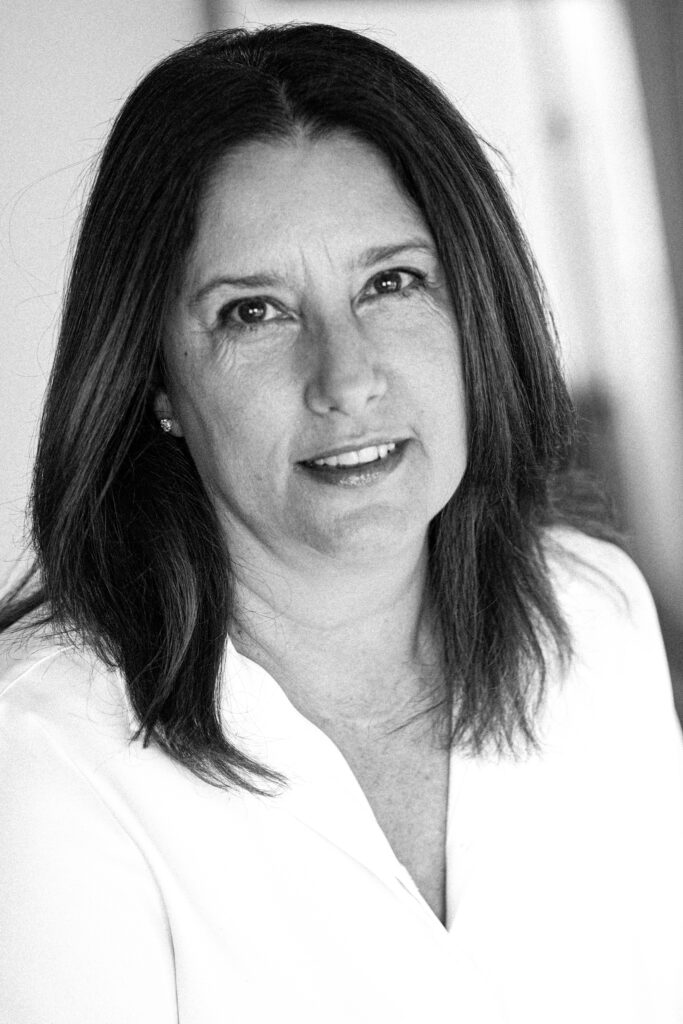
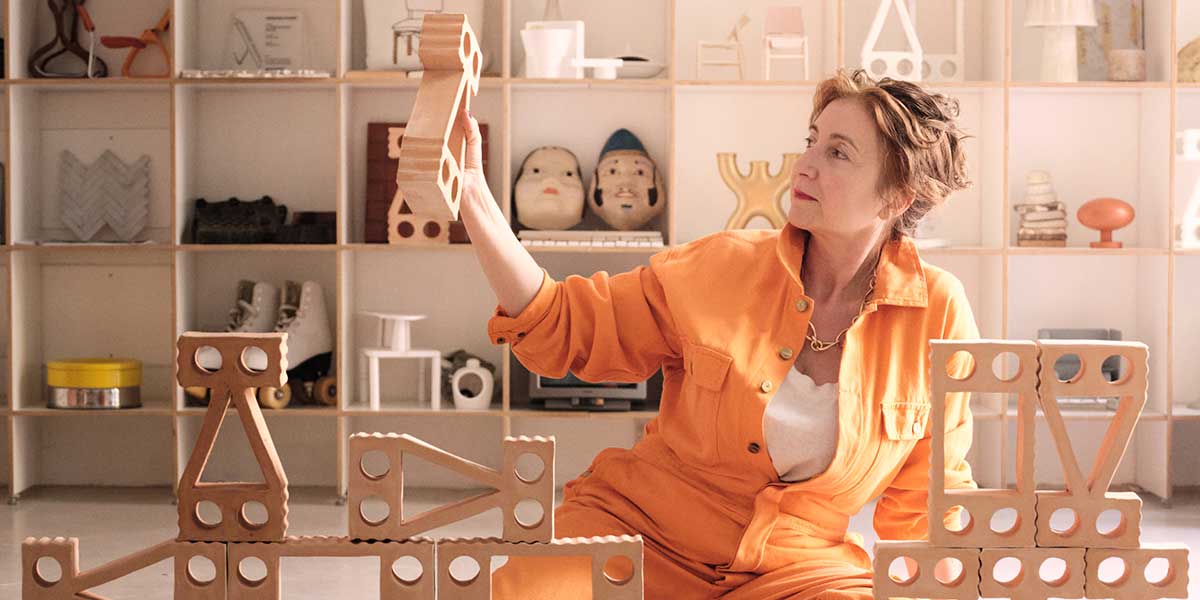
On the cover, Marialaura Irvine, with the "He and She" (Rigore e Sentimento) bricks produced by Fornace De Martino. Photo by Frank Stelitano