


Created to enhance the value of properties for sale, home staging also offers useful insights into everyday life. Because clutter often isn't caused by the quantity of objects, but by how the space is perceived and organized.
When you think of home staging , you imagine perfect homes, decorated to captivate potential buyers. In reality, this discipline is based on principles that can help anyone improve the quality of their home environments , even without moving or renovating.
Understanding space, eliminating visual noise, and enhancing proportions: these are the steps that make a home more welcoming and functional, as well as more beautiful to look at. This is confirmed by Sanja Radovanovic, co-founder of MARI Team Immobiliare and global president of GAPHS (Global Association of Professional Home Stagers), who identifies some simple yet effective criteria for looking at your home with fresh eyes.
1- FIRST OBSERVE, THEN MOVE
When a room isn't working, instinct often leads to rearranging the furniture. For home stagers, however, the starting point is different: observing the space . Doors, windows, natural light sources, passageways, and electrical outlets form the structure of the space and suggest its best organization. Only after understanding these characteristics does it make sense to modify the furnishings. In essence, the room shouldn't adapt to the furniture, but the other way around.
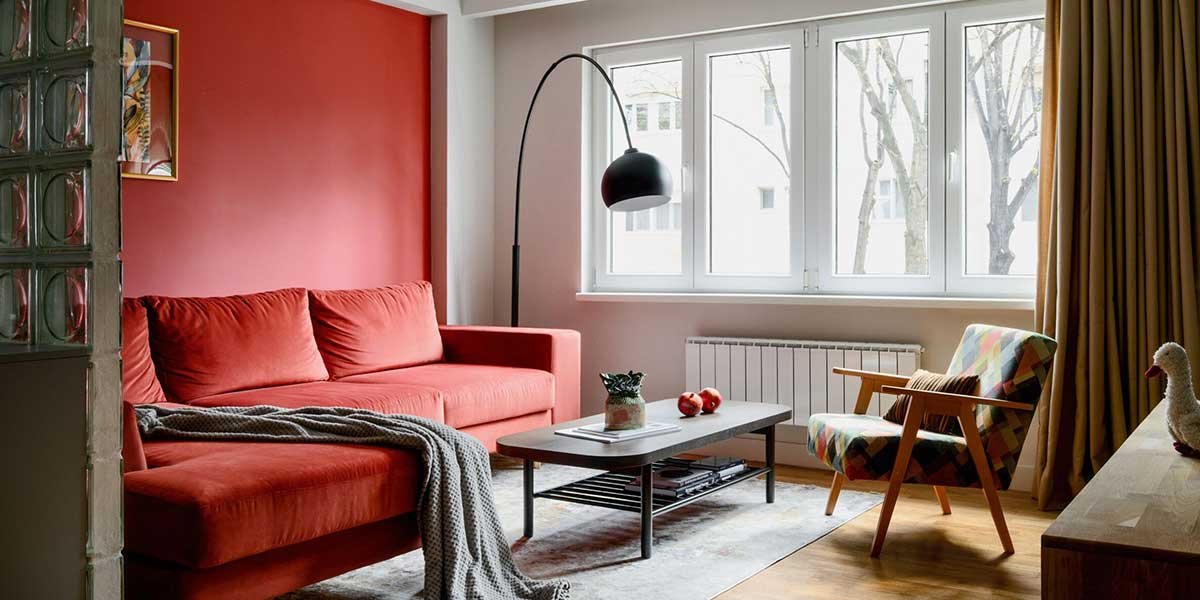
First, we look at the space, then we organize the furniture and its arrangement. These photos show the living area before and after home staging.


2- DO AN EXPERIMENT: REMOVE THE STAFF
Family photos, souvenirs, magnets, small decorative objects. These elements reveal who we are, but they sometimes prevent us from clearly understanding our surroundings. The advice is simple: try temporarily removing them and observing the room. Stripped of its most personal elements, the home more easily reveals any imbalances, out-of-scale furniture, or unfunctional accumulations. Once the observation is complete, the most significant objects can be reintroduced. We often realize that not everything deserves to be returned to its proper place.
Temporarily removing personal elements that speak to us helps us better understand spaces, detecting imbalances and accumulations. These photos show a bedroom before and after home staging.


3- FIND THE FOCAL POINT
Every room has a focal point. It could be the bed in the bedroom, the dining table, a large window, a fireplace, or a particularly interesting wall. Identifying this focal point helps organize the rest of the furniture coherently. When the eye immediately finds a clear reference point, the space appears more orderly and harmonious. Conversely, a room with too many elements competing for attention can convey a sense of confusion, even if perfectly tidy.
Once the focal point of each room has been identified, the rest of the furnishings benefit in terms of order and harmony. These photos show the bedroom before and after home staging.


4- LESS MATERIALS, MORE BALANCE
One of the least considered aspects is the amount of visual stimuli present in a room. Different materials, finishes, and colors can make the space more complex to interpret. A rule used by home stagers is to limit the dominant materials to three . For example, wood, fabric, and metal can coexist without creating perceptual clutter. The other elements should appear as details and not as additional protagonists. The final effect is greater visual coherence and a sense of calm that is immediately felt upon entering the room.
A room shouldn't have more than three dominant materials: too much visual stimuli creates confusion even where there isn't any. These photos show an entrance before and after home staging.


SPACE MUST BREATHE
For Sanja Radovanovic, there's a principle that sums up the essence of home staging : "Staging should be the palette, not the painting: it's into the space that we allow those who live there to project themselves." A concept that also applies to the home we live in every day. The goal isn't to create impersonal or perfect environments, but to let the space breathe, avoiding excess and overlap . Because a tidy home isn't one that contains the least amount of stuff, but one in which every element finds its place and contributes to the balance of the whole.