



by Evi Mibelli.
A successful career spanning over 50 years. A pedigree that places him among the greatest contemporary international architects and designers. Antonio Citterio's destiny was written right from his birthplace: Meda, June 16, 1950. A region, Brianza, that has literally shaped the history of Italian design and has successfully translated artisanal know-how and craftsmanship into an innovative industry. The rest is history, thanks to the courage of entrepreneurs of rare caliber, such as Cesare Cassina and Piero Busnelli, to name the most famous.
ABC armchairs by Flexform (1996), in the Peserico showroom in Florence (Project/ CP Architetti). The shape and tubular structure are a clear reference to the design of the Masters of the 900th century Modern Movement.

It is in this context that Antonio Citterio He took his first steps. His father's work as a craftsman helped him, from a young age, to live among pencils, drawings, and prototypes.I've always been inspired by creativity; designing was a natural, logical thing for me. To those who ask me if it's a calling, I don't know what to say; I've never asked myself that question.".
At 14, he enrolled at the Art Institute of Cantù, a school where he spent hours drawing and learning how to construct an object, a piece of furniture, a handcrafted product. Combining creativity with practicality. At the same time, he frequented his father's workshop—as well as that of a sculptor—in the best tradition of the apprentice.
On the left, Eileen collection, console, B&B Italia, 2010. The collection is inspired by, and is a tribute, albeit in a contemporary key, to the design of Eileen Gray. On the right, Mart, armchair, B&B Italia, 2004. The organic shape of the shell evokes 50s American design. The seats are created using a new thermoformed leather production technology.

He belongs to that "middle generation" as he himself defines it "who ranks among the great masters such as Castiglioni, Magistretti, Ponti, Bellini”. Observes the evolution of the furniture industry through the pioneers of Italian and international design – especially the American school represented by Charles Eames.
He understood and absorbed the climate of change that characterized those years and decided to enroll in the Faculty of Architecture at the Milan Polytechnic. He was joined by his classmate from the Art Institute, Paolo Nava , with whom, while still a student, he opened his own design studio in 1970.
Esprit Italia Brand Headquarters, Milan, 1988

The first years of his career saw him almost exclusively engaged in design and it was only in the mid-80s that he moved on to architecture.A rather tiring transition on a professional level, determined by the fact that I was known as a designer and not as an architect".
He designed the house of Piero Busnelli in 1983 – founder of B&B Italia, a company with which Citterio has collaborated since the beginning of his career – before moving on to design for the Esprit brand in 1987 , expanding the scale of his projects that would establish him on the international contemporary architecture scene. Together with Patricia Viel, he founded the Antonio Citterio Patricia Viel & Partners studio in 1999 , a professional partnership that would lead him to design hotels, residential and commercial complexes in Italy and abroad.
Interior of the Bulgari Hotel in Milan, designed by Antonio Citterio Patricia Viel & Partners, 2004. A new way of interpreting luxury as the quality of spaces, design, and services in a contemporary key.

Interior of the Bulgari Hotel in Beijing, China, 2017

"Architect or designer? There's no difference. Today, design, like architecture, must manage complexity and ever-faster change. Ultra-specialized skills, technologies, materials are required. A constant challenge that focuses on the process and the problem it is called upon to solve.".
Mobil wheeled chest of drawers designed for Kartell. Winner of the Compasso d'Oro in 1994.

Antonio Citterio is not interested in surprising. Look for the meaning of an object and to do so it is essential to study what has already been done and how it worksThe project is to rebuild in a new way without getting lost in the details.My goal is synthesis. Design, contrary to popular belief, isn't just about creativity. It's an integral part of a production process that requires investment, resources, and creativity.".
Atoll, modular leather sofa, B&B Italia, 2018

The paradigm is not to design an object or a place, it is designing behaviors, knowing how to simulate dynamics.
“ What matters to me, more than the objects I've created in my career, are the relationships I've built with the people and companies I work with, even after so many years. Friendship, respect, exchange. This is something intangible, it's the value of relationships .”
Relaxation According to Antonio Citterio: Repos & Gran Repos by Vitra, 2011

The perfect example of this concept is the story of the Sity sofa for B&B Italia, awarded the Compasso d'Oro in 1987. A revolution in the world of sofas. No longer a piece of furniture intended for conversation: you can sleep, work, read, or have breakfast on it. Today, it seems obvious.
The kitchen shifts paradigm and becomes the hub of social relations in the home, changing its connotation and spatial role. The Convivium kitchen/system designed for ARCLINEA is the synthesis and expression of this. 2002

The same goes for the kitchen. While it was a utility space until the 70s, it has long since become the beating heart of family social life. This is how it was born. Arclinea and the Convivium kitchen/system, which has literally redesigned behaviors and the use of home spaces around the ritual of food.
Arclinea, Monoblocco Artusi, 1999. It is the professional kitchen with the dimensions, performance and widest design flexibility designed for a domestic location.

Antonio Citterio has never followed fashions or trends. Only his instinct. This is why each of his projects is characterized by timeless language of concreteness: precise, discreet, timeless.
In the industrial design sector, he has secured ongoing collaborations with Italian and foreign companies such as Ansorg, Arclinea, Axor-Hansgrohe, B&B Italia, Flexform, Flos, Hermès, Iittala, Maxalto, Sanitec (Geberit Group), Technogym and Vitra, and Kartell, for which he designed the Mobil cabinet system, which won the Compasso d'Oro award in 1994.
It goes without saying that some of his creations are permanently displayed in the halls of the world's leading design museums, starting with the prestigious MoMA in New York.
On the left, Kelvin Edge, LED floor lamp for Flos, 2015. On the right, mLarge single-lever basin mixer, Axor Citterio collection for Axor

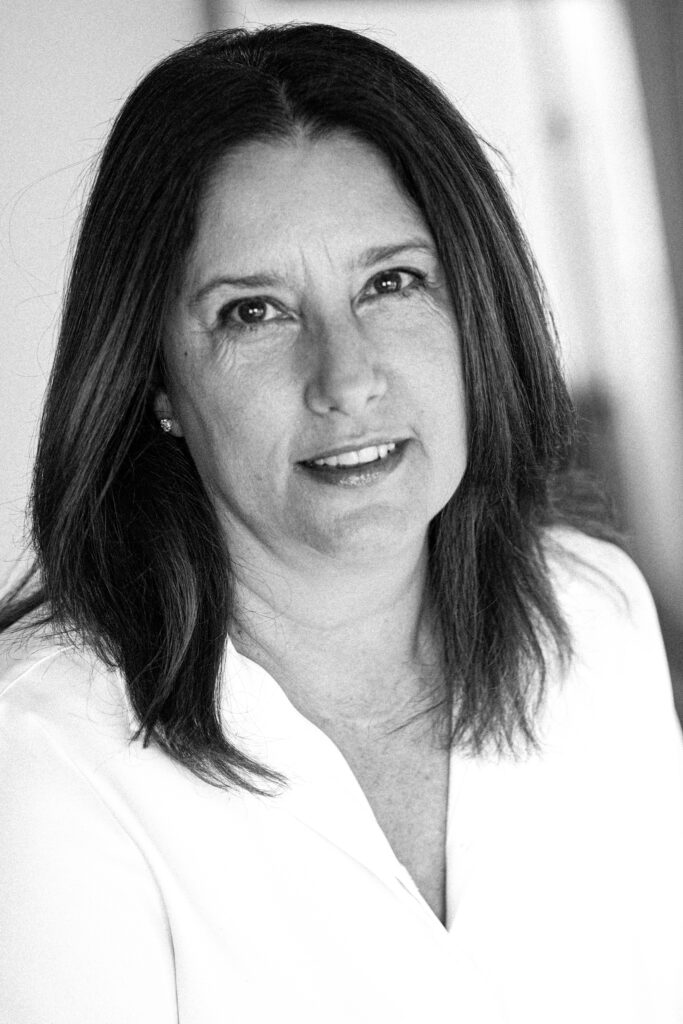
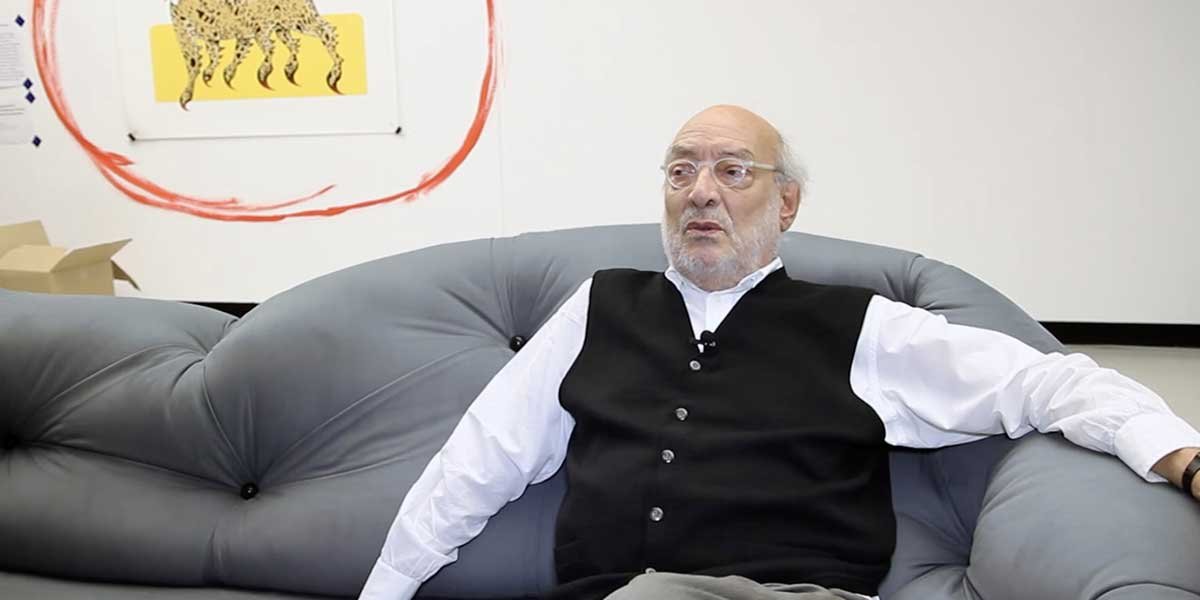
In the cover image, a portrait of Antonio Citterio (ArcLinea archive)