

The meeting of two visions gives life to a project in which light, materials, and atmospheres dialogue with each other, transforming every daily gesture into an experience suspended between tranquility, elegance, and poetry.
Some houses demand to be understood rather than revolutionized. They remain unchanged, passing through time without making a sound, until someone decides to observe them with a different gaze, rediscovering their true soul. In the La Ermita neighborhood, in the historic center of Mérida – the capital of Yucatán – a house seemed to have lost its personality. Yet, beneath the stratifications of the years and the haphazard interventions, the original structure resisted: walls still solid, clear signs of ancient repairs, surfaces marked by use and light.
It is in this state of suspension that Veinte Diezz Arquitectos recognized the potential of Casa Aljibe, choosing to work through subtraction and listening, rather than formal imposition. The design for this 234-square-meter home took shape after meeting the owners, a Colombian couple looking for a place to unwind from the stresses of everyday life. On the one hand, a chef, accustomed to building emotions around the act of cooking and its daily rituals; on the other, an artist, guided by a profound sensitivity to light, matter, and the transformations of time.
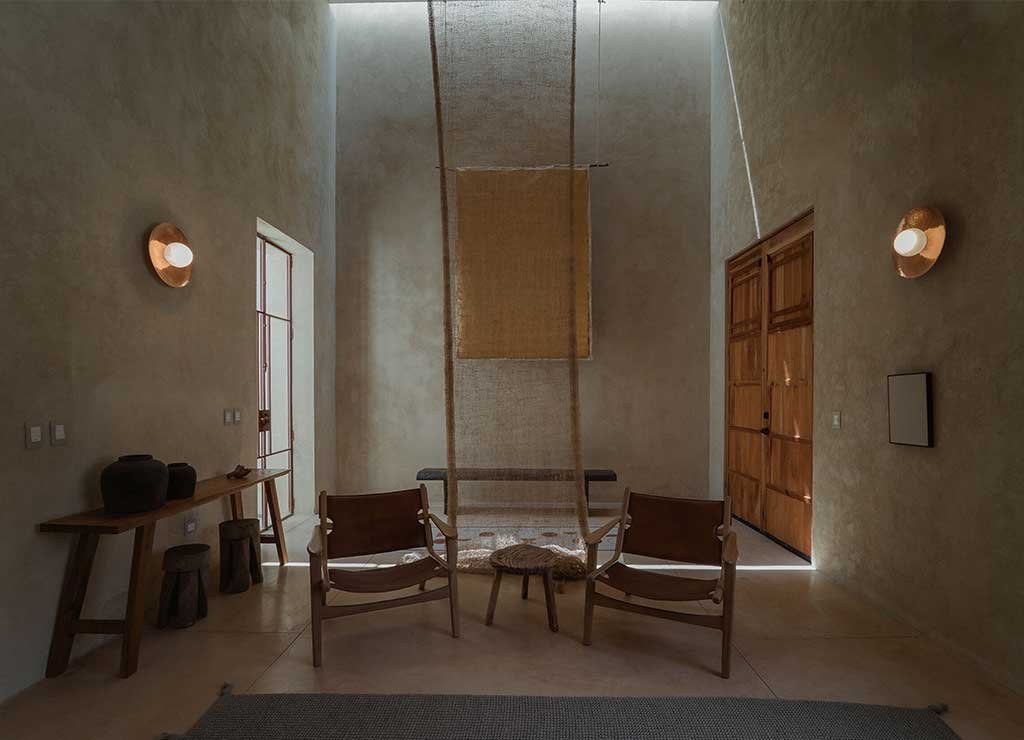
The entrance opens onto a double-height living room, where openings in the ceiling let in natural light that expands the space and defines its atmosphere.
From this dual vision, a precise choice was born: to give the home a shared heart, a space designed for living and rediscovering the beauty of being together with loved ones. The overall project is described with a clear and coherent choice: traditional materials, worked without excess, natural finishes laid in a patchwork, solid cedar wood, local stone. There is no search for a perfect image, but the desire to restore authenticity. A house that doesn’t pretend to stop time but allows it to write new stories.
A brick seat and essential wood and leather furnishings create a cozy domestic landscape, where comfort and material interact naturally.
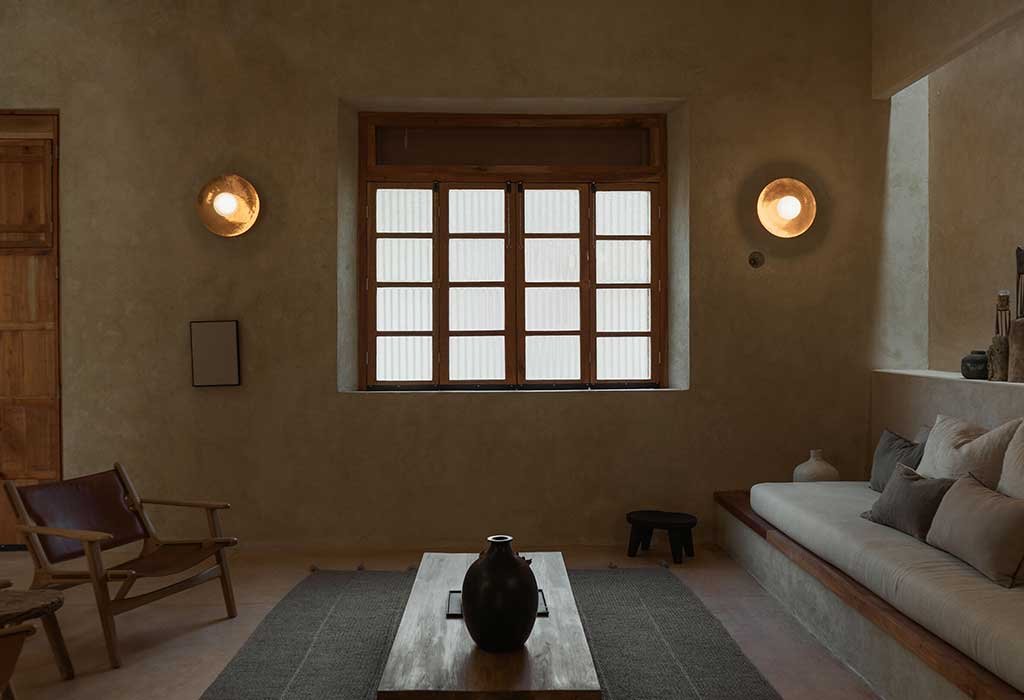
The entrance now opens directly onto a large space, a living room defined by its dramatic double height without structural separations. A cushioned masonry seat welcomes those who enter, in a dreamy atmosphere worthy of a Gabriel García Márquez novel, while a fique curtain—a natural fiber obtained from plants of the Furcrae family—modulates the brightness and creates a visual threshold, delimiting the room’s different functions.
On the left, the fique curtain filters the light and creates a delicate threshold; on the right, the internal passage is defined by panels and openings that guide the gaze, suggesting the continuity of the spaces.
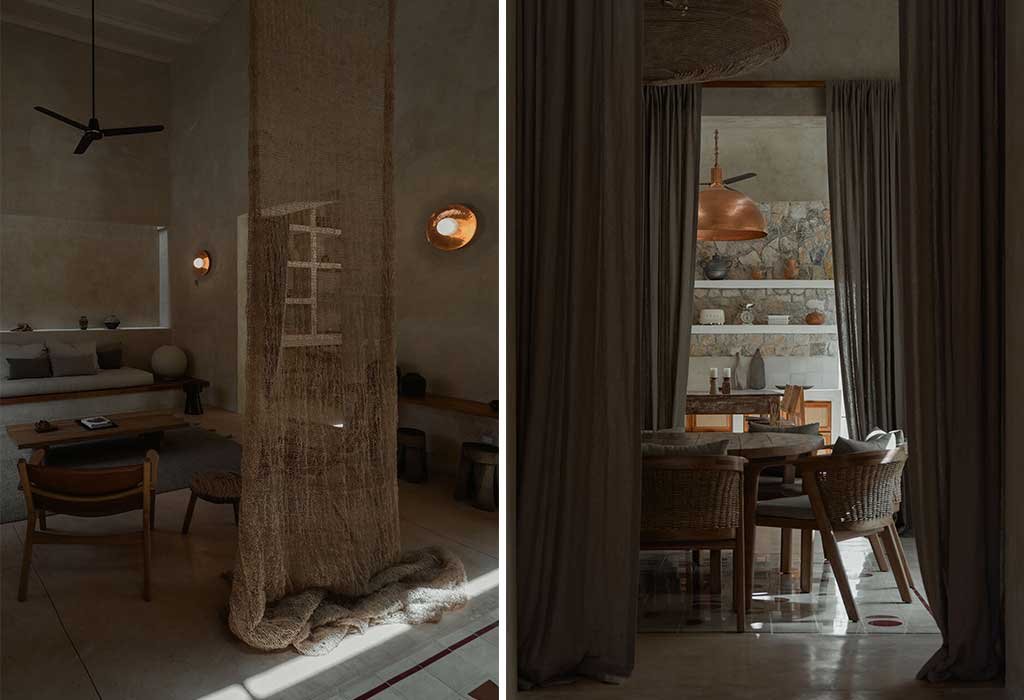
The furnishings are low and discreet: a large wooden table alongside wooden and leather armchairs, a simple console table, and carefully selected textiles. From above, two zenithal openings, like skylights, diffuse light creating a warm and enveloping perception. The interior design moves on a measured balance between essentiality and materiality, where the spatial design reduces the use of additional elements in favor of integrated volumes and natural surfaces.
On the left, furnishings integrated into the masonry create a functional and measured space; on the right, the large round table becomes the centerpiece of the dining room, designed as a place for meeting and sharing.
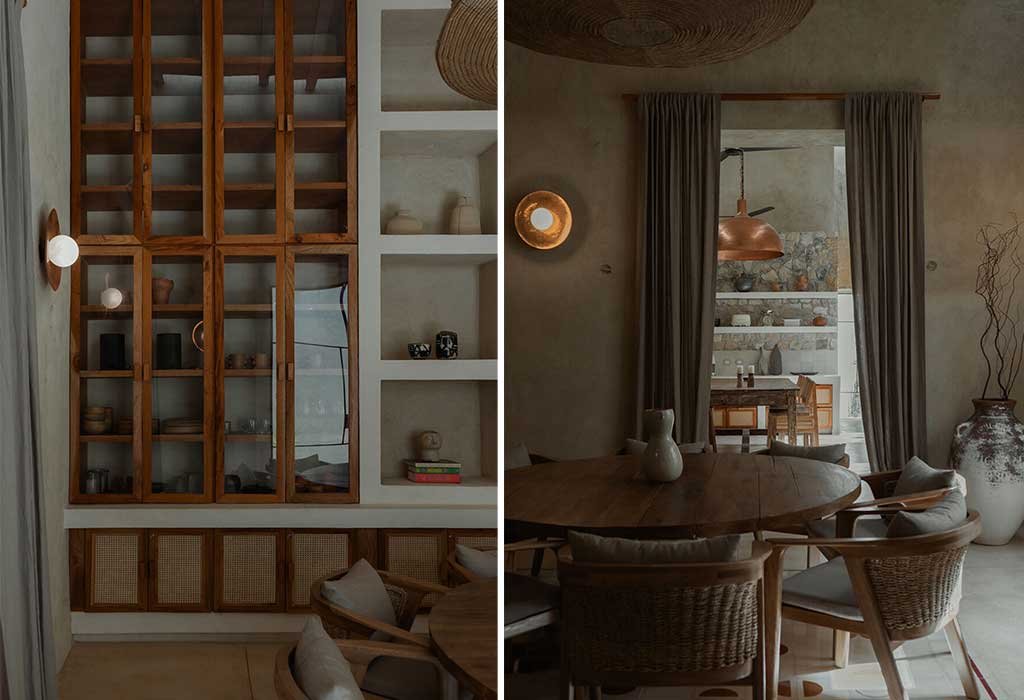
From this initial nucleus, the house opens in two directions. One leads to a dining room with a large round table, designed as a place for sharing, where the bookcase, display cabinet and wine cellar are built directly into the masonry. The woven seats and the lighting with elegant copper lamps reflect, without forcing, the material language that we will see in the kitchen.
On the left, the transition from the dining room to the kitchen is punctuated by textiles that complement every opening in the house; on the right, the kitchen ceiling, constructed with dovetail tiles and left open at the sides, guides the eye and tells the story of the original structure.
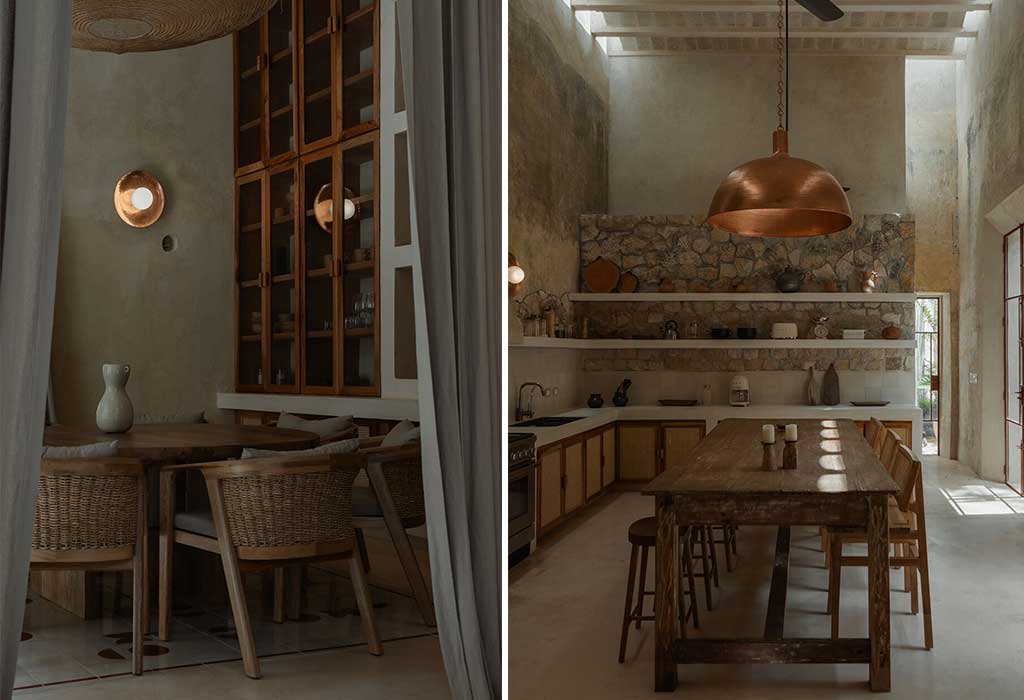
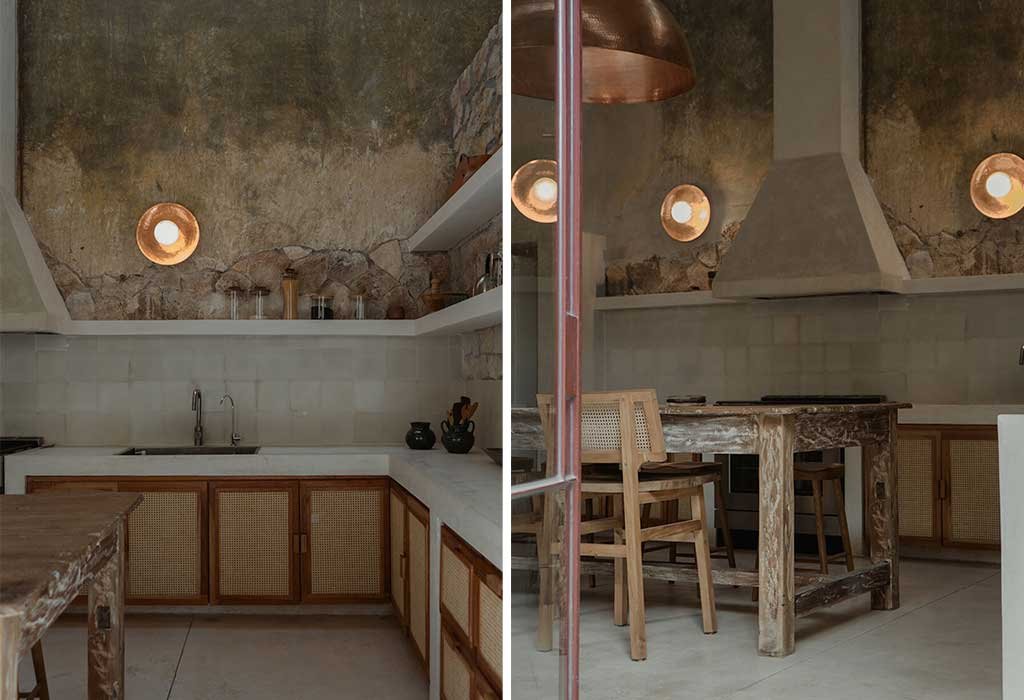
In sequence to the room is the kitchen, the declared fulcrum of this complete renovation, the place where design sensibility and everyday life meet. The walls, preserved in their original state, bear witness to the traces of time, silent witnesses to the gestures that have passed within these walls. At the center of the space, a vintage work table becomes the focal point of conversations and shared moments, while the hob and preparation area, built in masonry with large open shelves above, interacts with the lower compartments closed by Vienna straw doors framed in wood, which lighten the volume and introduce a warm, porous texture.
On the left, the masonry surfaces and exposed shelves interact with compartments closed by Vienna straw doors, creating a functional and material space; on the right, the period work table becomes the convivial hub of the kitchen, which opens onto the courtyard.
Looking up, even the ceiling takes on a narrative role. Rebuilt with dovelas, shaped stone blocks typical of traditional vaults, it was deliberately left open at the ends: light passes through the space, casting shifting shadows that change throughout the day. A direct reference to the original conditions of the house, when the old wooden beams allowed slanted rays of light to filter through, transforming imperfection into something magical.
The rooms open onto the verdant courtyard, where the original walls interact with natural light, delicately punctuating the volumes and guiding the gaze through every corner of the space.
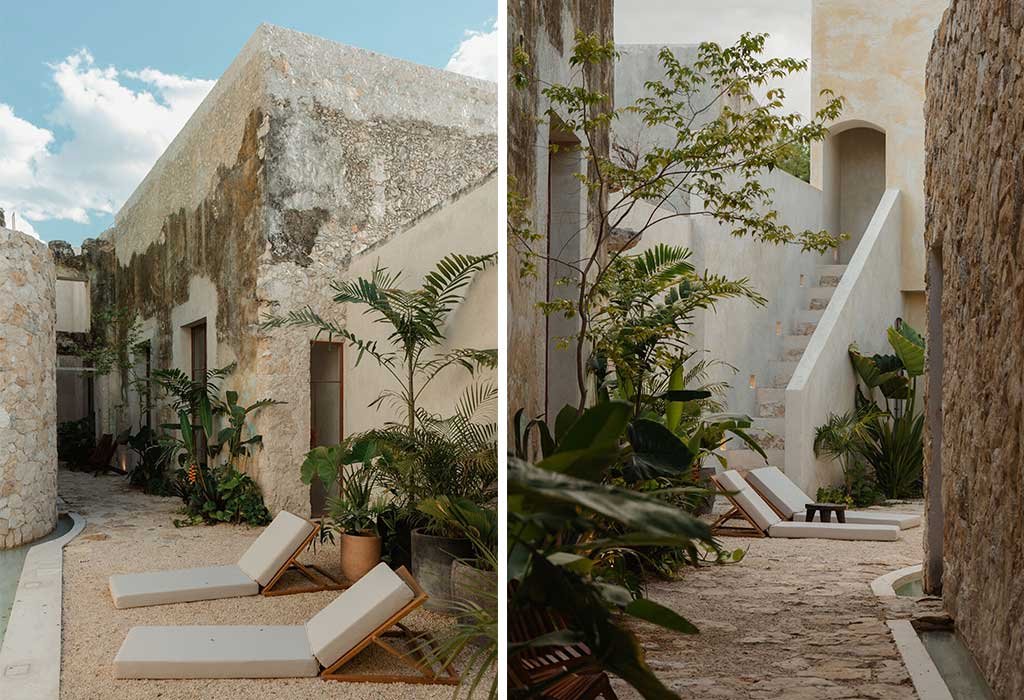
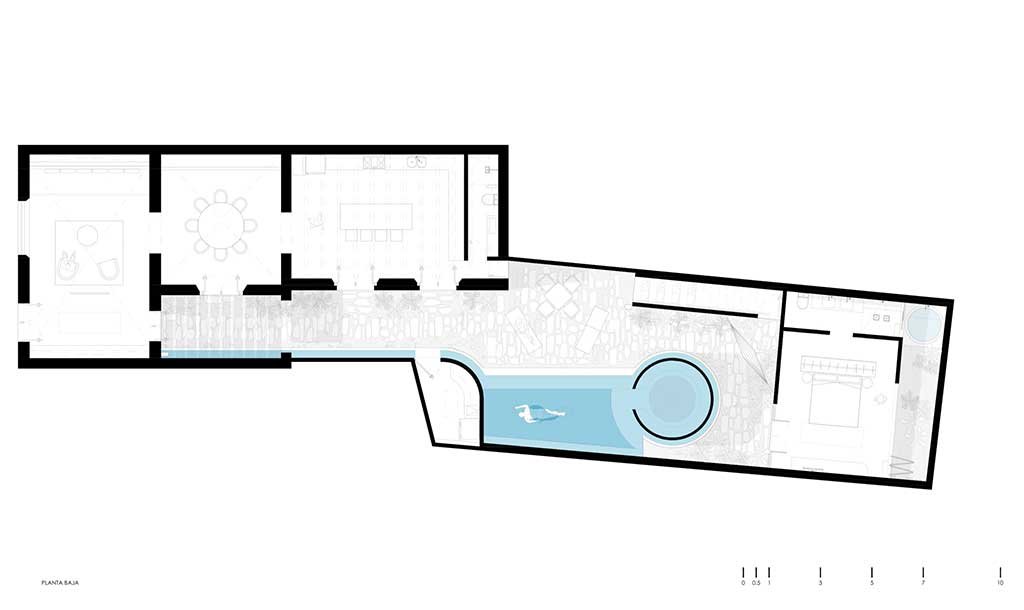
The other path, however, unfolds outdoors: a sequence of stone and nature leads the gaze towards the most private part of the property, where a private outdoor space opens up with a swimming pool, a laundry room (hidden in the exterior wall) and a two-story volume detached from the rest of the building, which houses the bedrooms.
On the left, a small fountain at the entrance creates a thin water channel that runs along the perimeter of the house; on the right, the new two-story volume overlooks the swimming pool and the aljibe, reinterpreted as a Jacuzzi within the outdoor space.
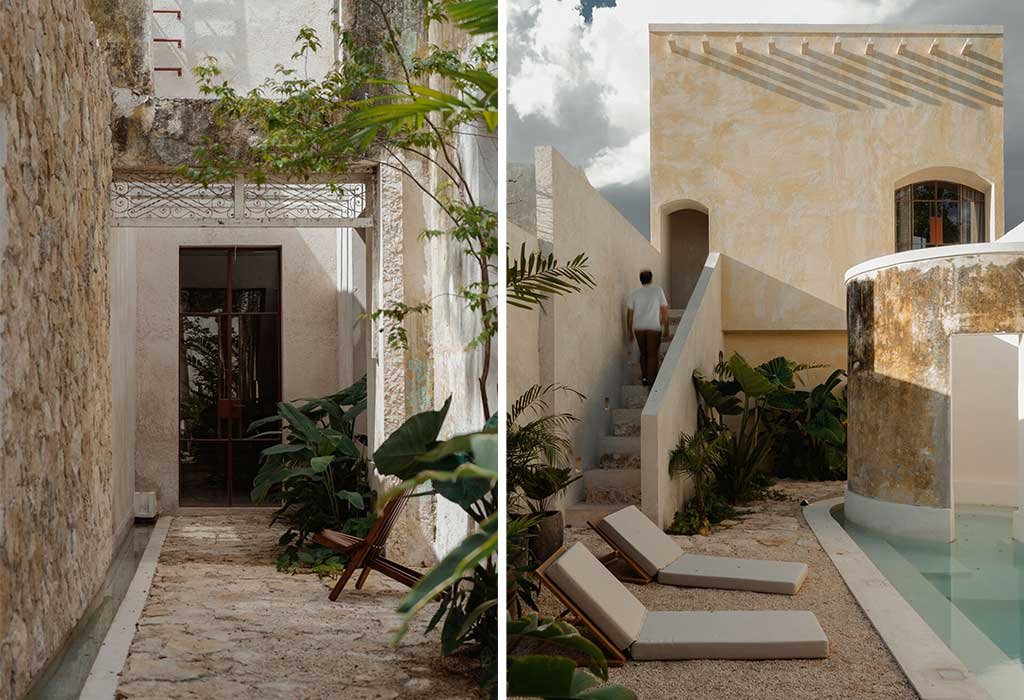
A narrow passageway—open to the living room entrance but also to the dining room and kitchen—leads to a courtyard where water defines the rhythm of the space. A swimming pool surrounds a raised concrete basin created from the original aljibe, an ancient collection cistern now reinterpreted as a jacuzzi. From a small fountain, located at the entrance, a thin water channel flows through the open perimeter of the house, connecting rooms and paths in a continuous and enveloping way, amidst sounds and sensory perceptions.
The entrance to the master bedroom opens onto an internal garden that filters light and protects privacy, creating an oasis of tranquility within the home.
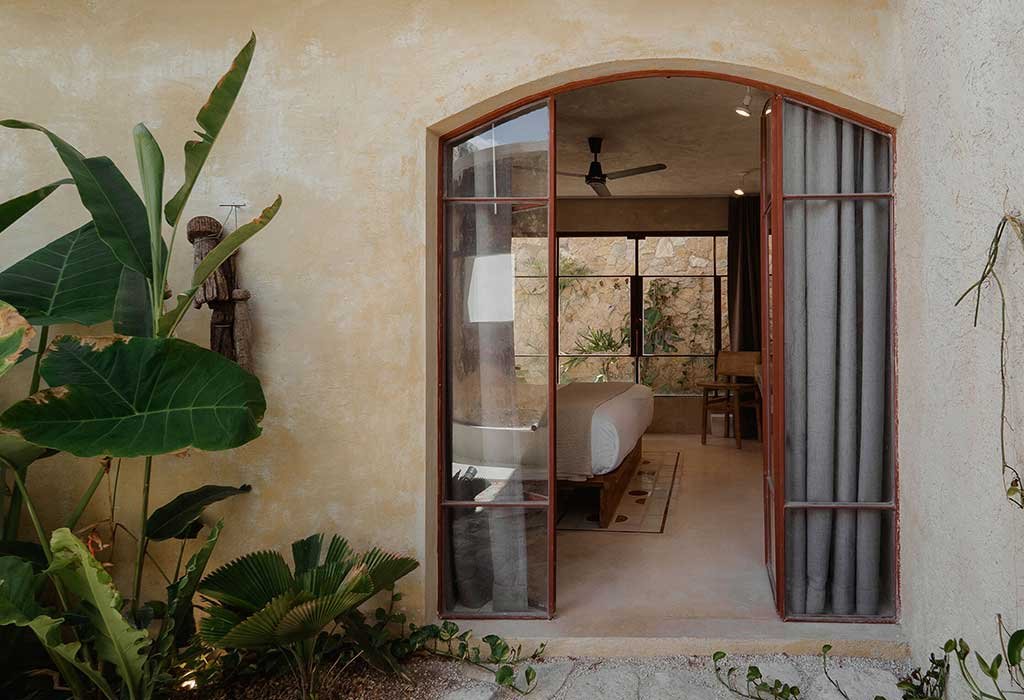
The master bedroom combines functionality and design: the headboard integrates discreet wardrobes and leads to a bathroom designed for complete relaxation, where natural materials and thoughtful details create a welcoming and refined atmosphere.
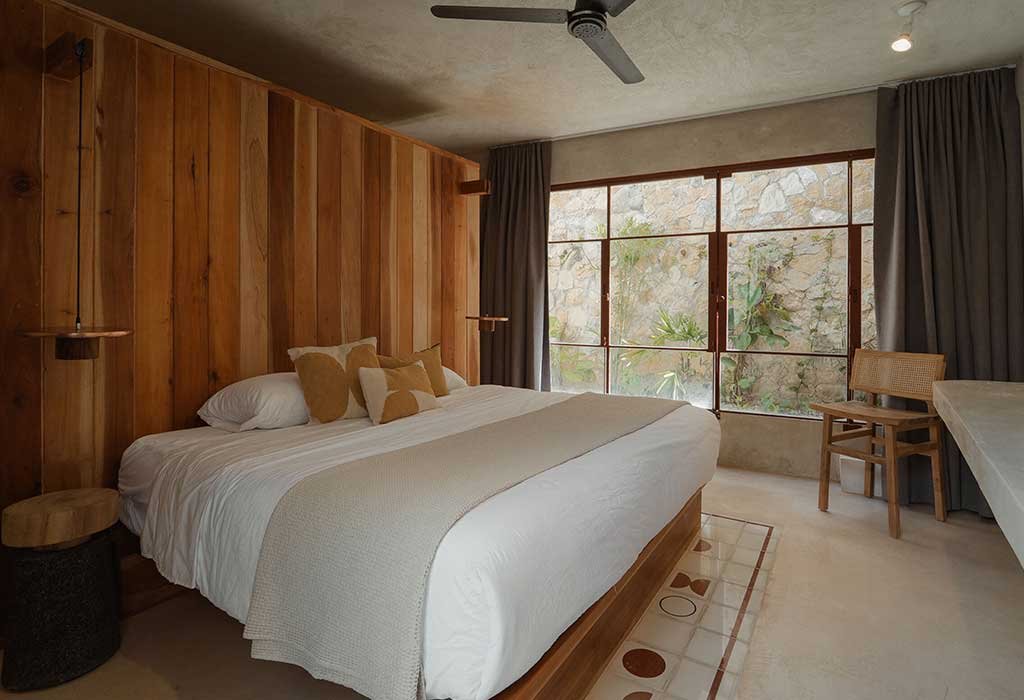
The most private part of the house, dedicated to relaxation, is located in the two-story volume that was added to the property. On the ground floor, the master bedroom is set back from the boundary change and hidden behind the aljibe. This choice creates another small, hidden internal garden, which improves natural ventilation and filters the view from the courtyard. The headboard incorporates a wardrobe system and conceals the bathroom, a space entirely dedicated to relaxation, featuring a bathtub and open-air shower hidden from prying eyes.
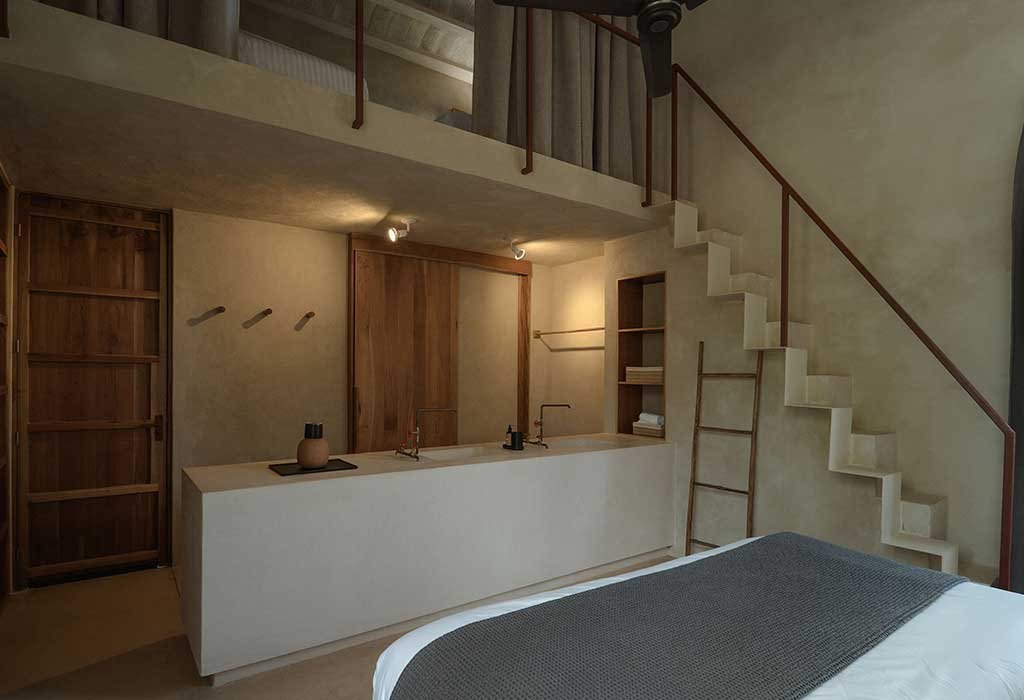
To the left, the master bedroom bathroom features a tub and open-air shower, blending comfort and connection with nature; to the right, the guest bedroom extends onto a mezzanine level that expands the space and enhances natural light.
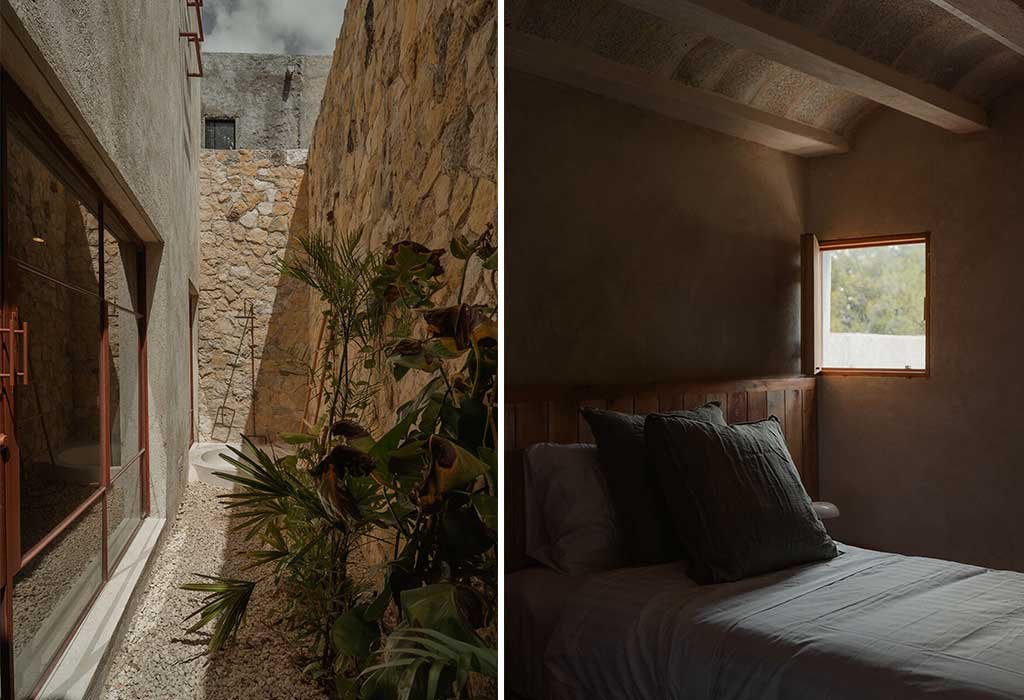
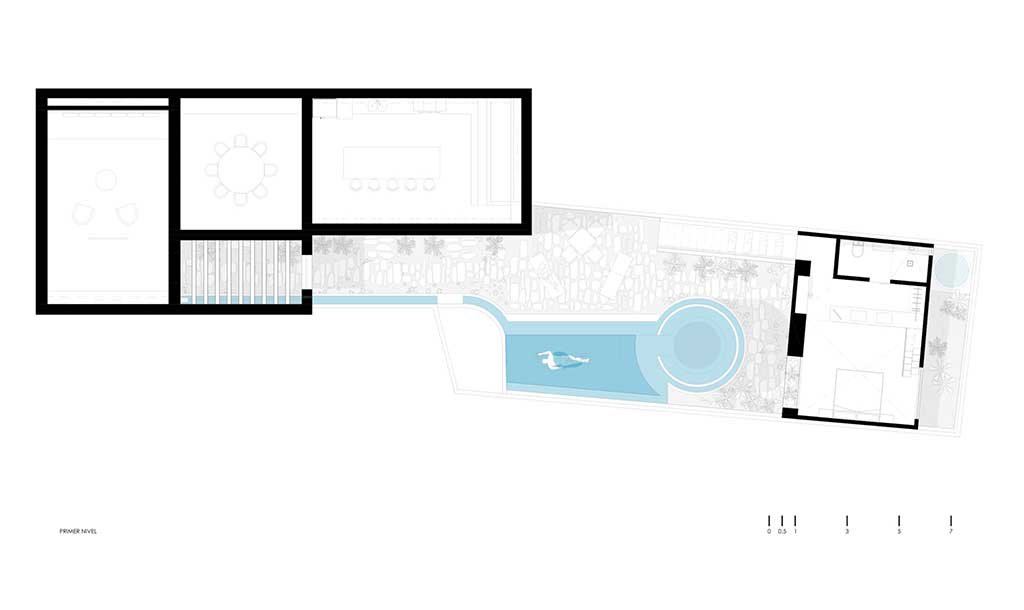
Upstairs, the guest bedroom features a mezzanine that expands its space—and the ability to accommodate relatives or friends—and a private bathroom with a double exposed sink. Access to this space is possible thanks to an external staircase composed of alternating steps in local stone and concrete, a material sequence that integrates perfectly with the rest of the context. Il nuovo corpo edilizio è stato trattato con una tonalità velata di giallo, in continuità cromatica con l’edificio originario. No overt conflict, but a silent dialogue: a conceptual poem that is the stylistic signature of the entire renovation.
Project by Veinte Diezz Arquitectos – veintediezz.com
Photo © Eyes of Memo
The interior of the guest room reveals a mezzanine that expands the space, while the bathroom is hidden by doors located immediately after the double exposed sink, combining privacy with a charming style that permeates the entire home.
Floor plan of Aljibe House, ground floor © Veinte Diezz Arquitectos
Floor plan of Casa Aljibe, first floor and guest bedroom © Veinte Diezz Arquitectos
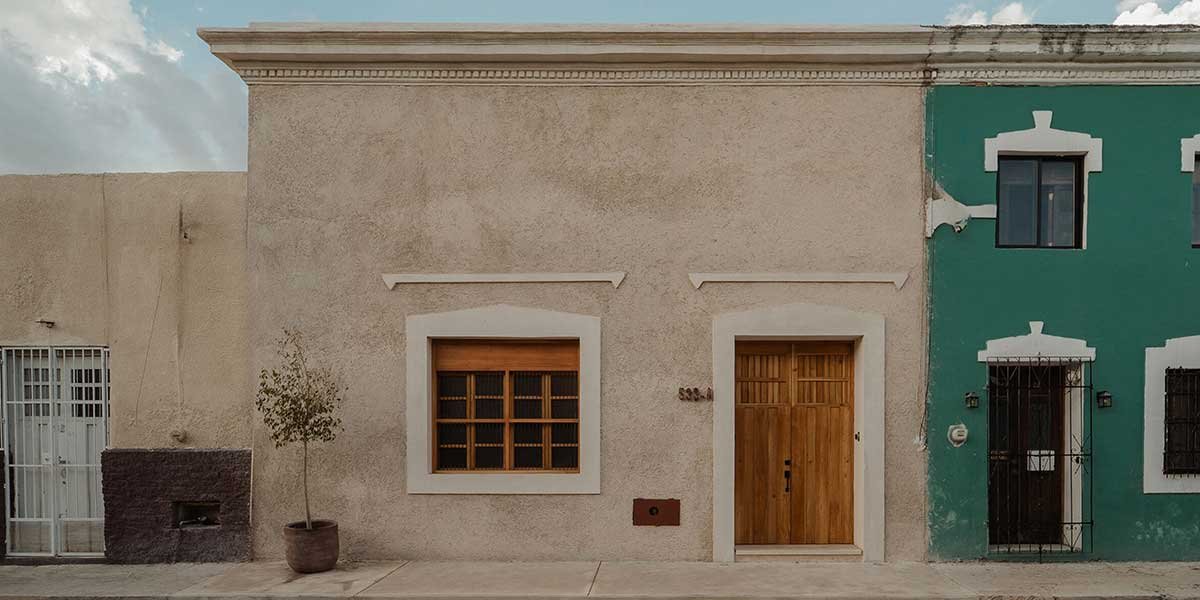
On the cover, the facade of Casa Aljibe, a house located in the La Ermita neighborhood, in the historic center of Mérida, the capital of the Mexican Yucatán.