


A delicate dialogue between memory and contemporary renovation, where every material and functional choice restores the soul of a period home, transporting it to the present day.
Renovating a 1930s apartment means dealing with a history that has in some ways already been written. Doing so when you are both designer and client makes the process even more complex, a constant balance between professional discipline and personal sensitivity. The work by Martin Cenek – Martin Cenek Architecture – demonstrates this dynamic, being his own home. In Prague, in 49 square meters, a project takes shape that does not impose its own voice, but dialogues with the soul of the building, respecting its memory and updating its character without forcing it.
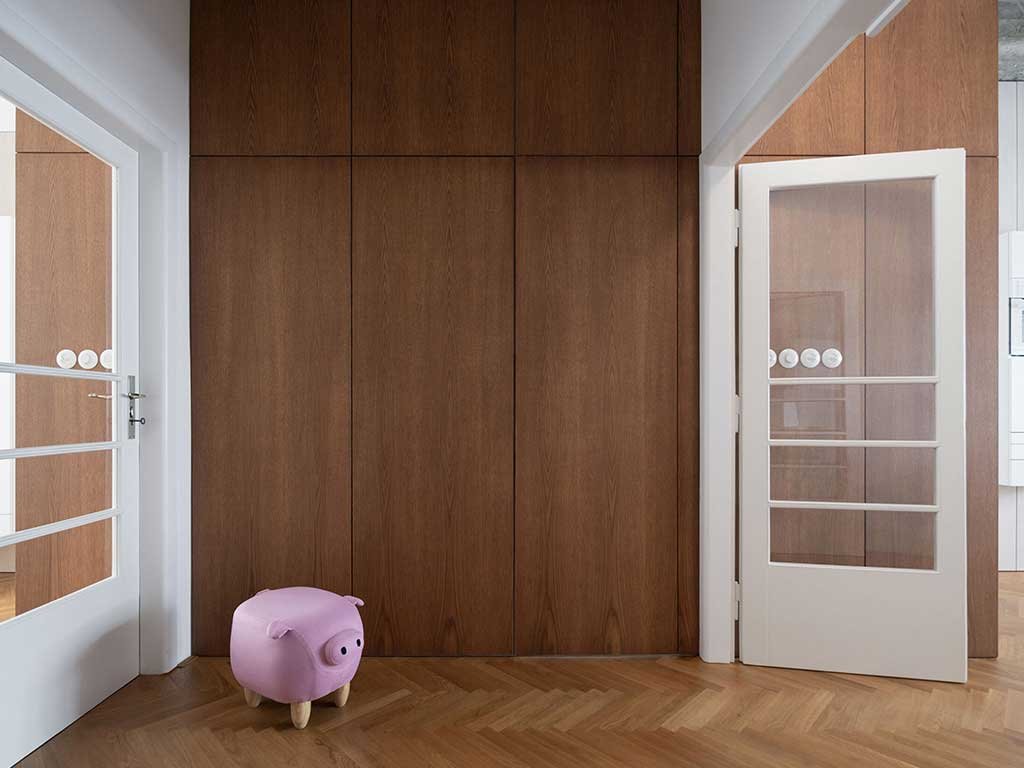
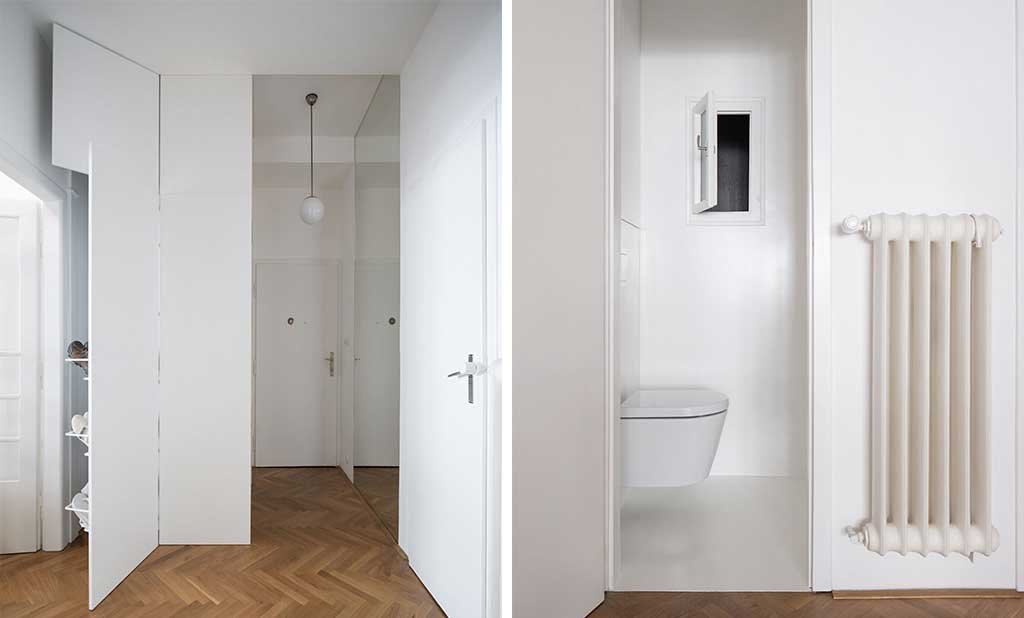
The entrance, defined by custom-made paneling, welcomes and discreetly conceals storage spaces and the bathroom door, restoring a discreet order and harmony to the space.
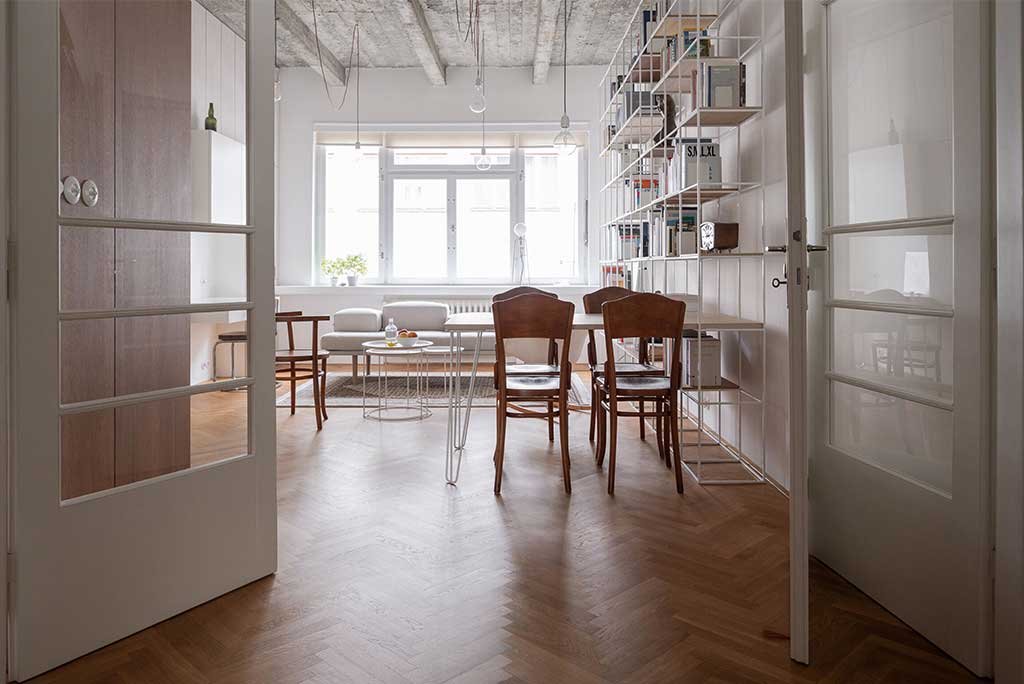
The living room features a reinforced concrete ceiling stripped of plaster, transforming it into a structural element that engages with the memory of the home.
The building, designed by Ladislav Šimek and built by his brother Jaroslav, is an icon of modernist aesthetics: a tiled facade, compact apartments, and a pared-down construction quality, almost didactic in its simplicity. In this scenario, The project stems from a central question: how appropriate is it to intervene without dissolving the spirit of the context? The answer is revealed in thoughtful choices, capable of discreetly renewing and without ever betraying the subtle personality of the original..
The living room interior combines custom-made furnishings and historic family pieces, creating a balance between contemporary functionality and memory.
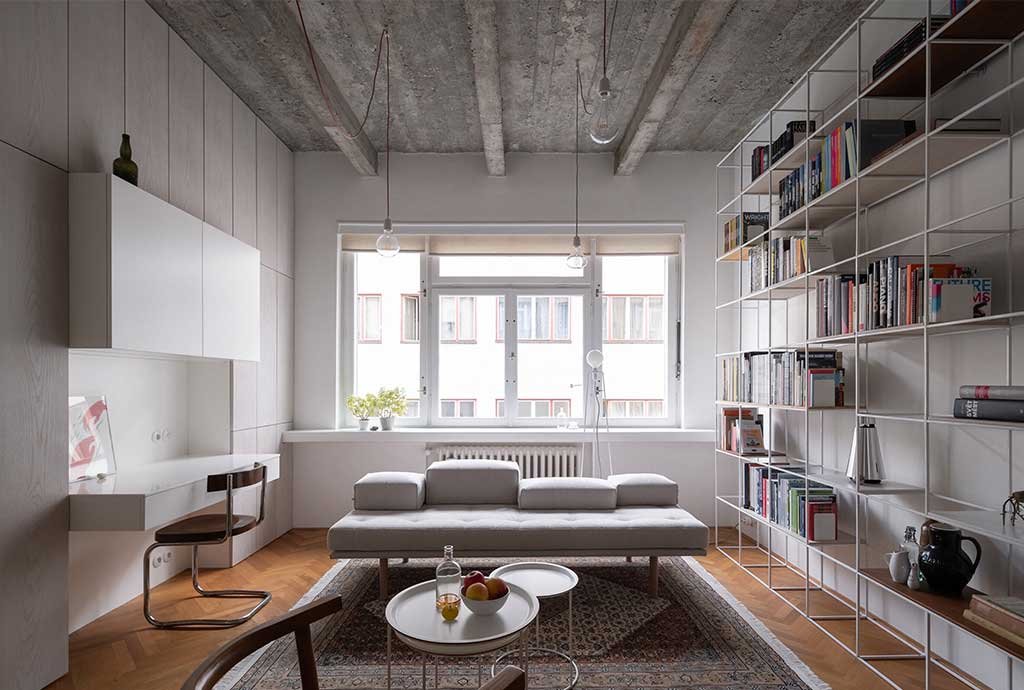
In the living room, the carefully balanced arrangement of the furnishings and the suspended lighting enhance the textured surfaces, creating an atmosphere of continuity and restraint.
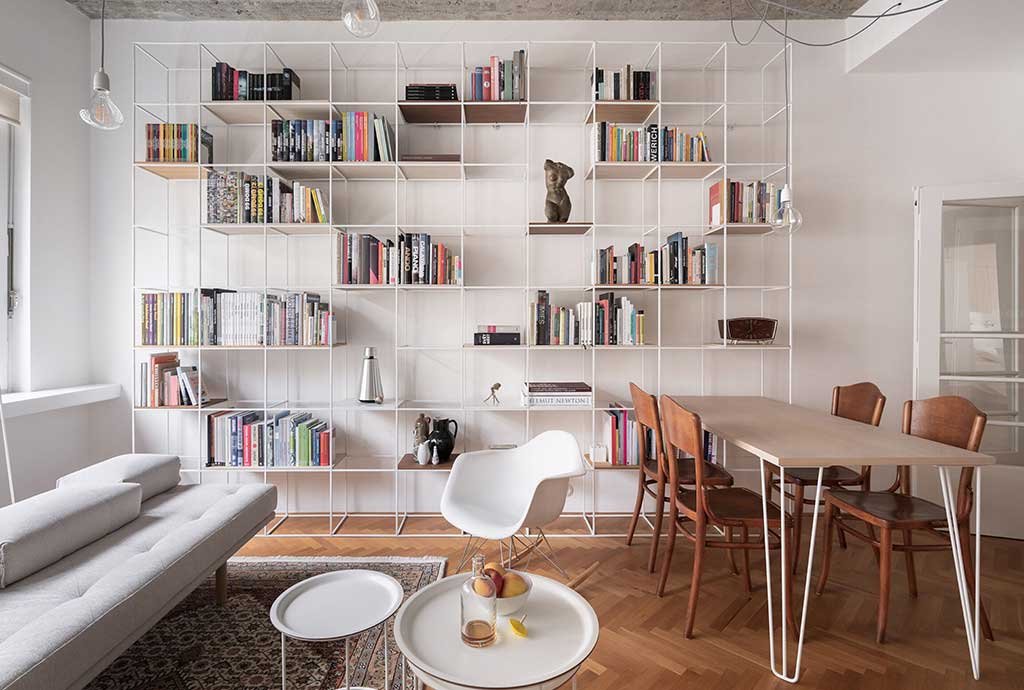
The renovation involved every part of the house: systems, flooring, surfaces, and room layout. In the living room, the reinforced concrete ceiling was stripped of its plaster and restored to its material essence, transforming it into an artistic element, almost a structural signature. The original doors, windows, and hardware have been carefully restored, while the oak parquet, now irreparably damaged, has been replaced with a philological replica, capable of restoring the same image without betraying the authenticity of the details.
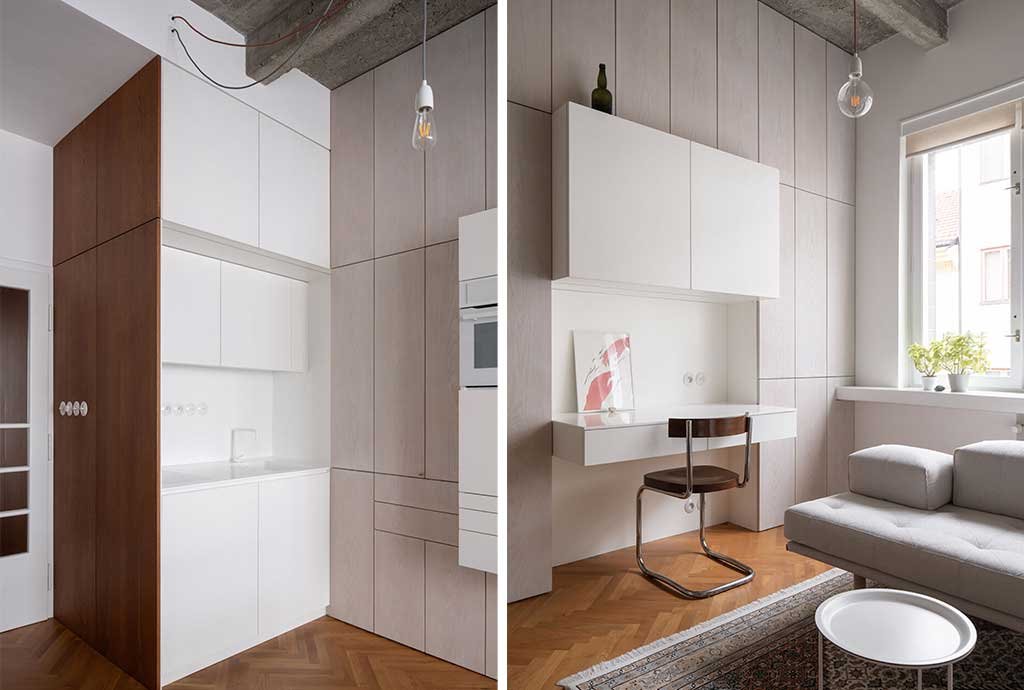
The custom-made living room furniture discreetly integrates a portion of the kitchen and a study corner, combining functionality and formal cleanliness without interrupting the flow of the space.
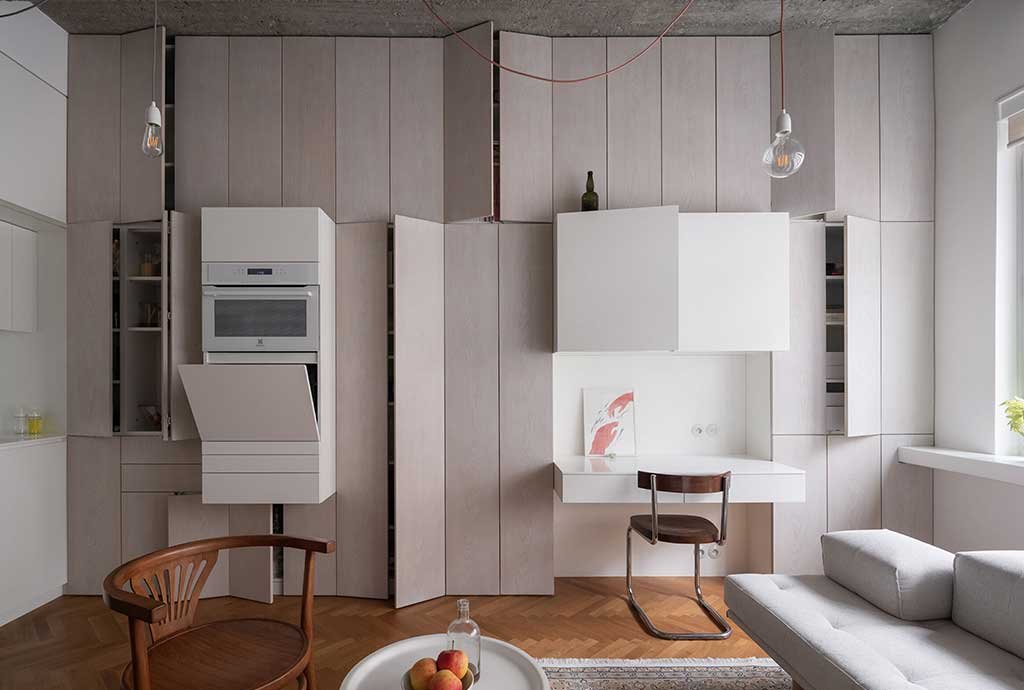
A sinistra, il blocco cucina definisce con ordine l’area funzionale; a destra, la scrivania dell’angolo studio restituisce uno spazio raccolto e organizzato, dove ogni elemento trova il proprio posto.
Read also →
Bankside Loft – urban feel
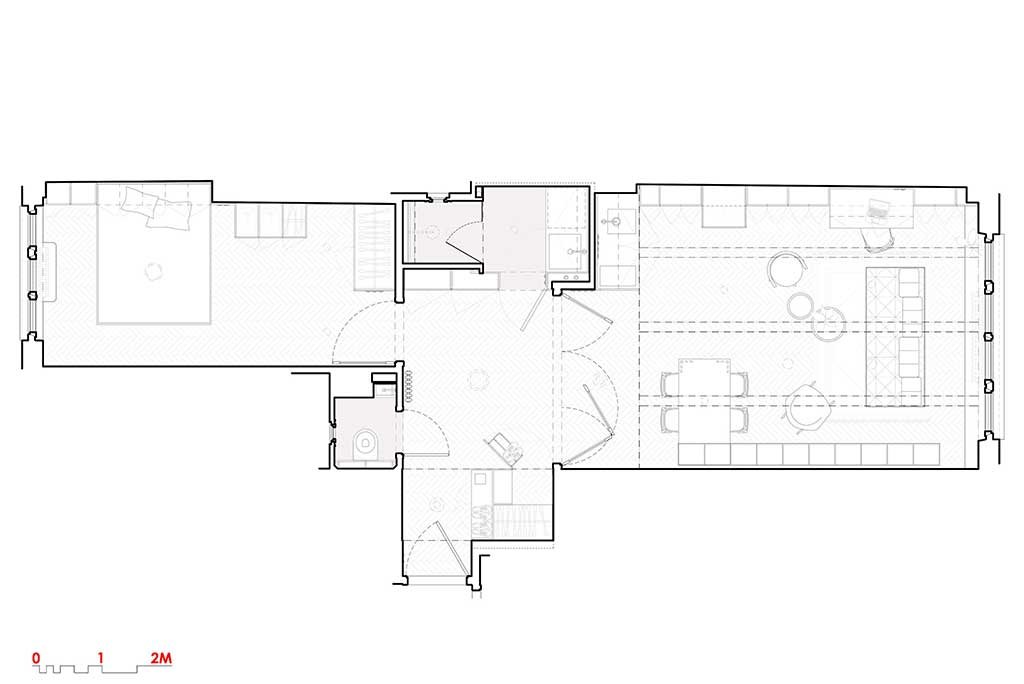
The renovation of the layout focuses on the living area. The demolition of the pantry and the old bathroom allowed for a more functional reorganization, which now includes a block of custom-made furniture designed primarily to contain and integrate part of the kitchen and create a study corner. The bedroom was left as it was, made functional and minimalist with custom-made paneling and furniture.
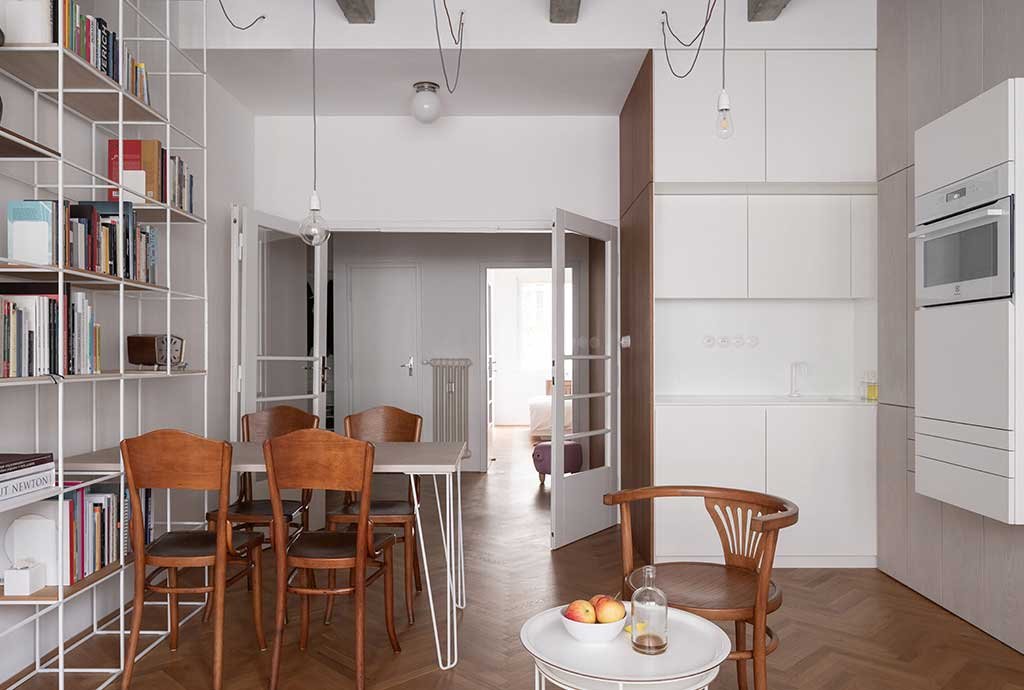
The living room’s dining area features historic family chairs around a minimalist table, creating a meeting point that unites the past and everyday life.
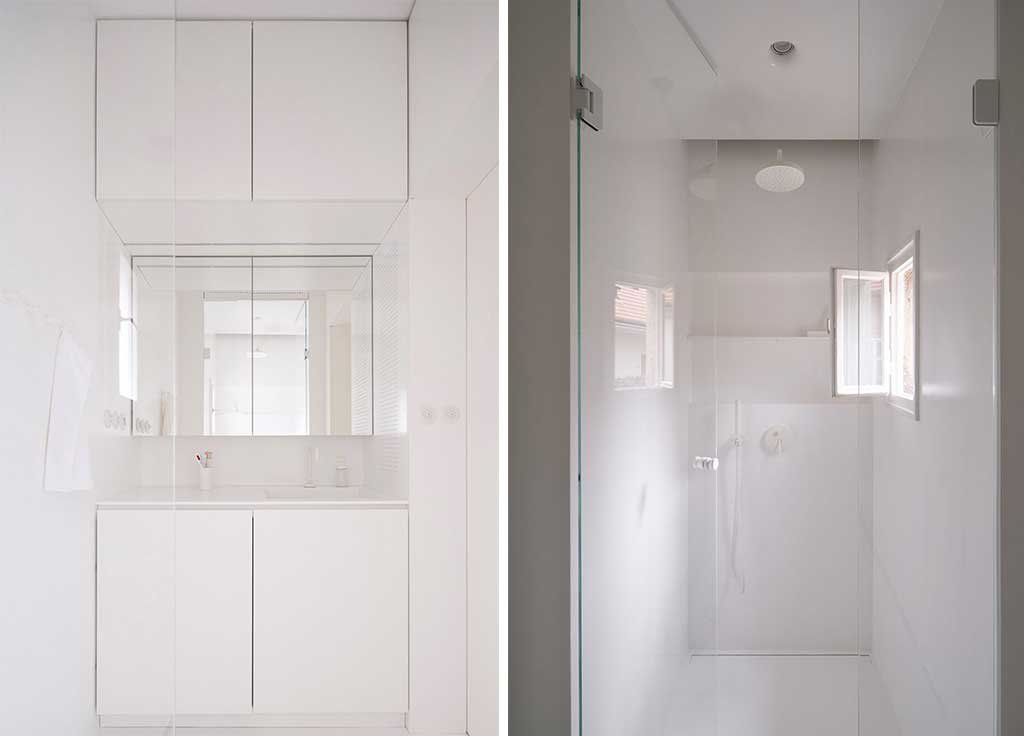
The completely redesigned bathroom now features a more intimate, spacious and defined corner, which interacts with the apartment’s new layout while maintaining a discreet balance. The original layout has been carefully preserved: the sink and shower occupy a separate space, while a small compartment, located at the entrance next to the new shoe rack, is reserved exclusively for the toilet: a curious division but in keeping with the era of construction.
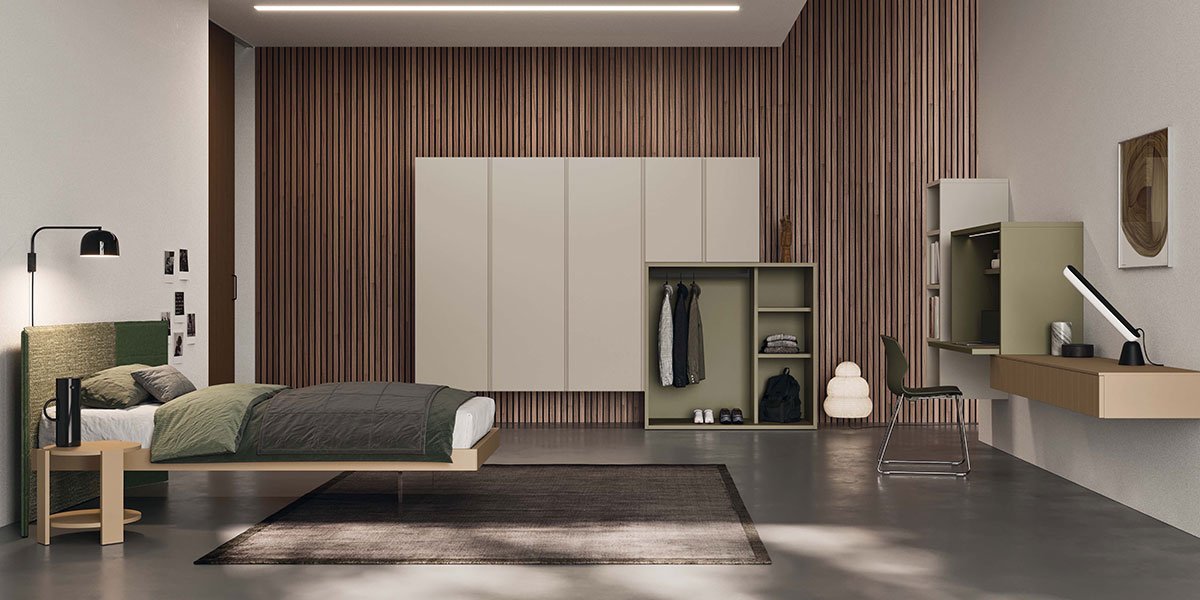
The bedroom retains its original layout and introduces continuous paneling that organizes the space with sobriety, accompanied by elements created specifically for an orderly and linear composition.
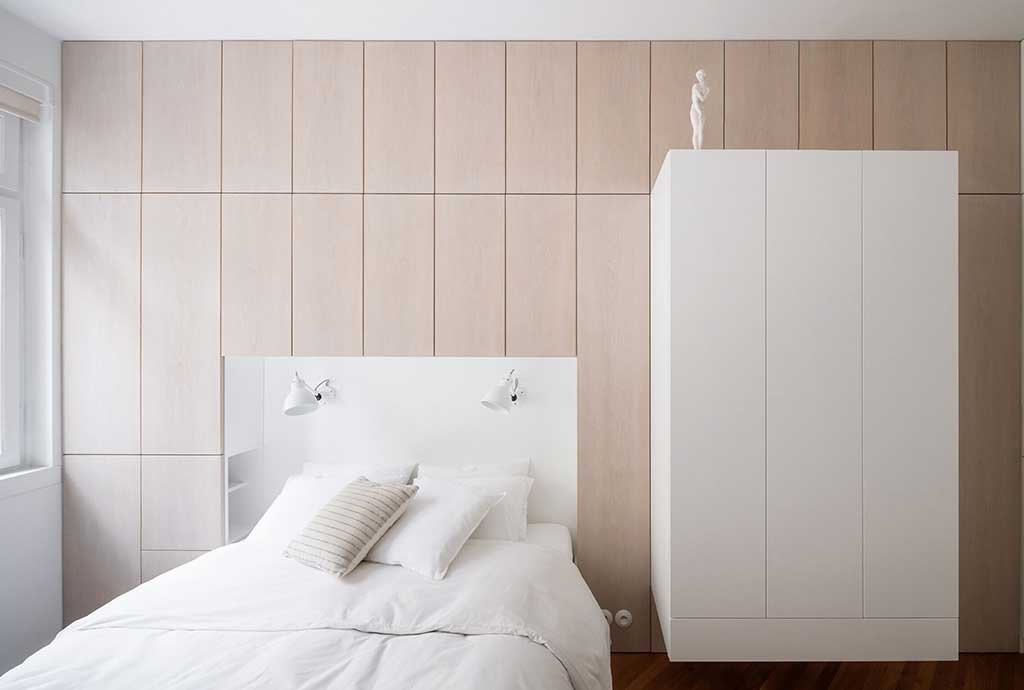
In terms of interior design, traditional materials such as stained oak and white lacquer are interpreted with a contemporary, essential and clean language. Attention to detail, from the suspended lighting to the materiality of the surfaces, ensures that the new elements do not overwhelm the historic ones, but rather accompany them in an elegantly measured comparison.
On the left, the entrance is completed with additional custom-made cabinets that define its visual order; on the right, the toilet compartment introduces a discreet separation, in keeping with the home’s original layout.
The character of the house is also expressed through a selection of furnishings that preserve a family memory. Thonet dining chairs that belonged to his great-grandparents, an armchair from the same company, the Anýž table lamp from the 1930s from a family office, the functionalist tubular chair Ez12 designed by Karel Ort, together with some works by the sculptor Jaroslav Horejc, construct a personal story that intertwines with minimalist contemporary pieces.
Il nuovo bagno affianca una zona lavabo ben definita a una doccia finestrata, creando un insieme luminoso che interpreta con misura la nuova configurazione.
The final effect is an environment that neither chases after the new nor limits itself to conservation. He lives in an intermediate zone, where past and present find a form of natural continuity. Una casa che ritrova la propria identità, fedele alla sua epoca e capace al tempo stesso di rinnovarsi con creatività.
Project by Martin Cenek Architecture – martincenek.com
Photo © Alex Shoots Buildings
The floor plan of Martin Cenek’s apartment © Martin Cenek Architecture
In copertina, il living introduce l’atmosfera dell’appartamento anni ’30 rinnovato da Martin Cenek, dove materiali autentici e interventi mirati ridefiniscono 49 mq con equilibrio.