

A project that reinterprets the original layout of a period residence and introduces new relationships between spaces, light, and landscape, maintaining a refined balance between architectural memory and contemporary vision.
Some houses stand the test of time, maintaining their character intact, but revealing the need for a new balance. In Malvern, a residential suburb of Melbourne, a Victorian residence faces a new phase in its history. Already the subject of a project designed by Nicholas Day, the house now features a completely revisited layout by IF Architecture, which interprets its potential through a project that is attentive to the existing stratifications.
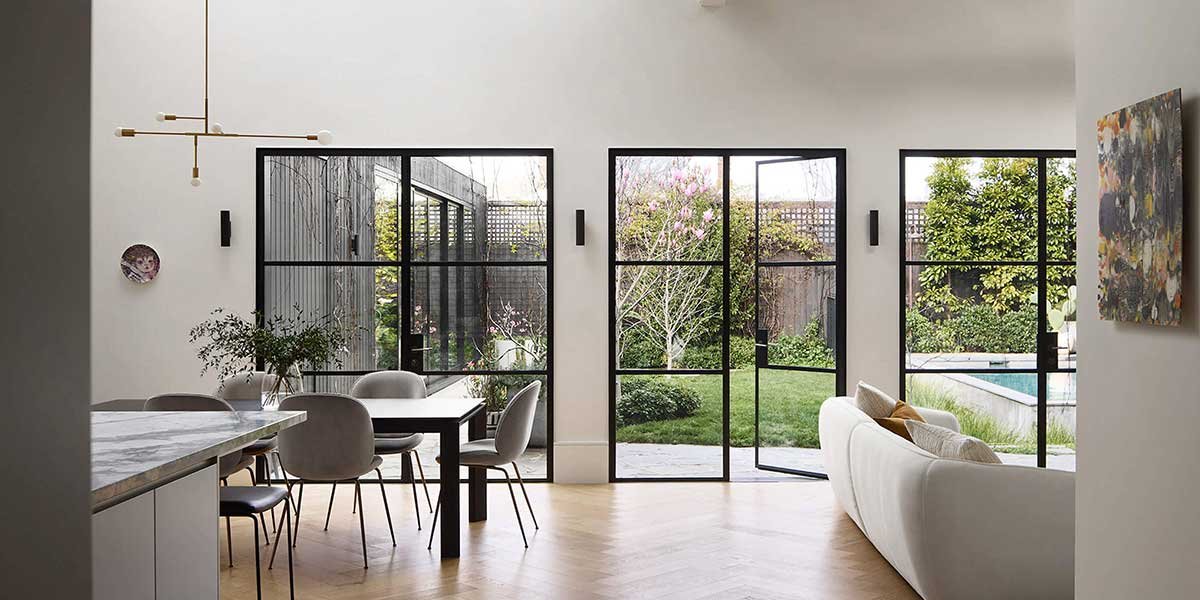
The transformation takes shape through a redefinition of the indoor spaces and the addition of an architectural body at the rear, designed to open the house further towards the garden and the swimming pool. The design is guided by light, a constant and silent element, which passes through the rooms and connects them, restoring depth and measure to the domestic space.
The façade retains its historic character, showcasing original details such as the veranda, while the entrance opens onto a space that interacts with the new extension, previewing the elegant fusion of past and present.
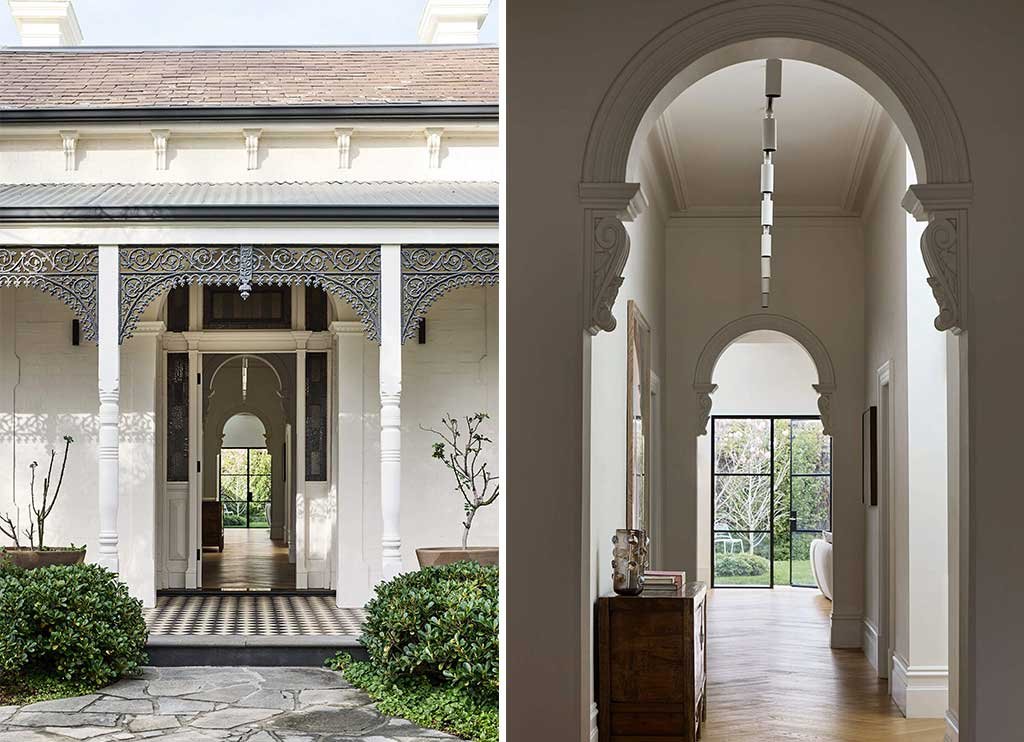
The original structure, an expression of 19th-century Australian architecture, has been treated with care and respect. The entire intervention was not a simple conservation, but a sensitive integration that looks to the future without losing contact with the historical identity of the residence.. The facade, veranda, and interior decorative elements have been restored to their former glory, while the new part of the building introduces a more relaxed and informal dimension. A visible and marked balance, already crossing the main entrance.
The entrance features striking stained-glass windows that delicately filter the light; to the right, the formal living room welcomes you with an intimate atmosphere, where historic details blend seamlessly with the contemporary interior.
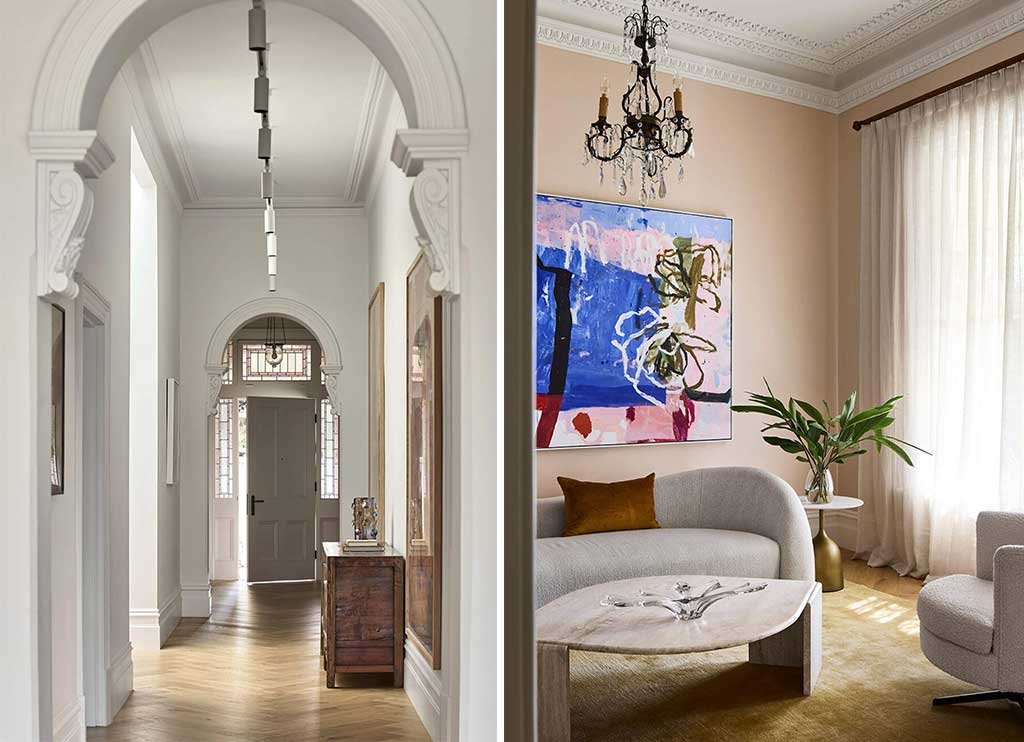
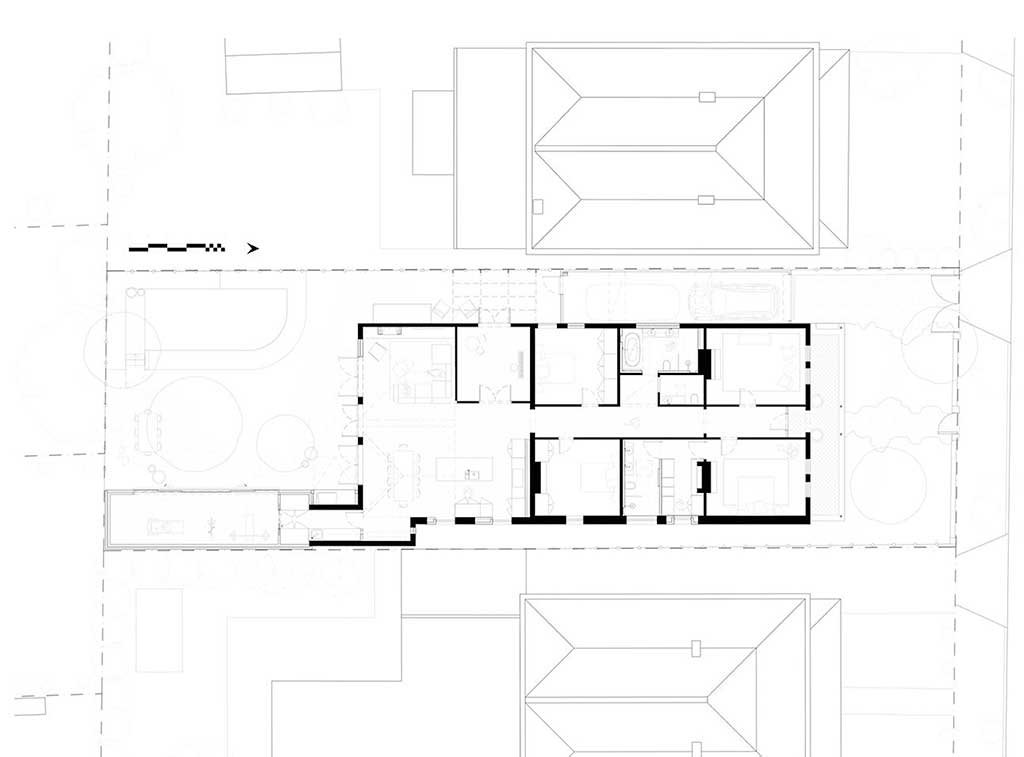
Once past the threshold, the space opens up towards the new wing and the rear garden, through carefully orchestrated glimpses. The herringbone wooden floor establishes a visual and material continuity between past and present, guiding the gaze and harmonizing the interior proportions with understated elegance. The interior layout reflects a precise living logic: on one side of the entrance is the master suite, with a large bathroom and walk-in closet; on the other, a formal living room, two bedrooms, a master bathroom, and a guest bathroom: the most intimate heart of the home.
The spacious living area unfolds in a single, flowing space, where the dining area elegantly integrates with the living room and kitchen, punctuated by a neutral palette that enhances the natural light and the chosen materials.
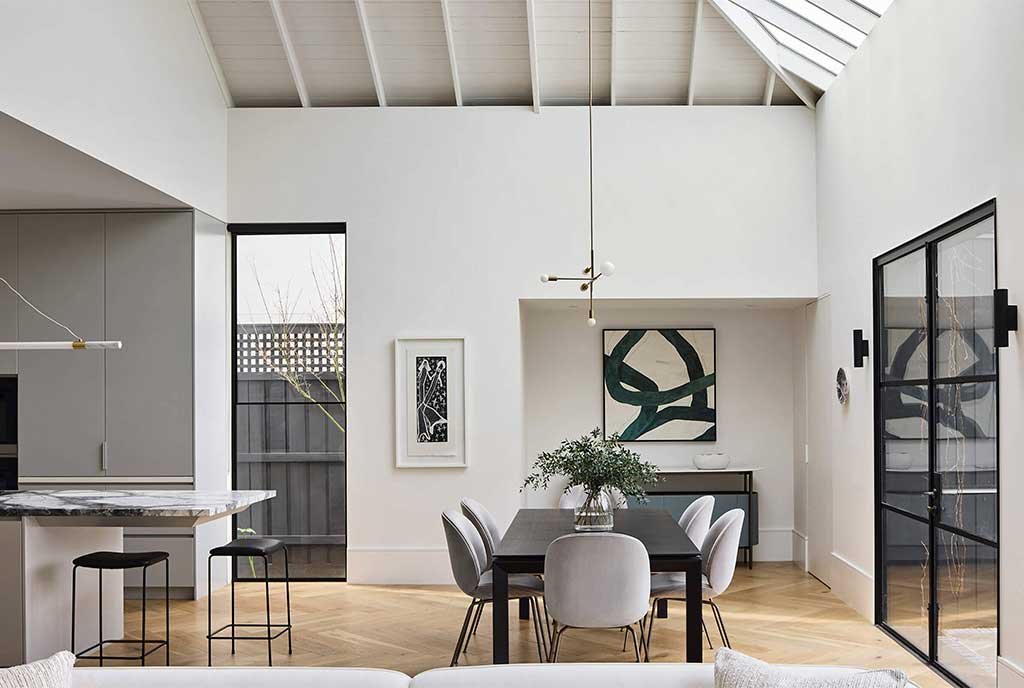
The existing extension has been redesigned in a more essential way. The volume is maintained, but its role evolves: here, a new central space takes shape, open and bright, which can also be accessed from a second entrance. The double-pitched roof and skylight have been enhanced through a clean language, while new steel windows with dark frames, positioned on white walls, frame the external landscape, creating true paintings of greenery.
The living room presents itself as a large open space where the living room, kitchen and dining area merge in a functional and aesthetic balance. The neutral, material palette provides the backdrop for carefully selected furniture and artwork that integrates with studied discretion.
From the second entrance, the gaze shifts to the living room, where the minimalist fireplace combines fine materials and luxurious surfaces, evoking an atmosphere of refined tranquility.
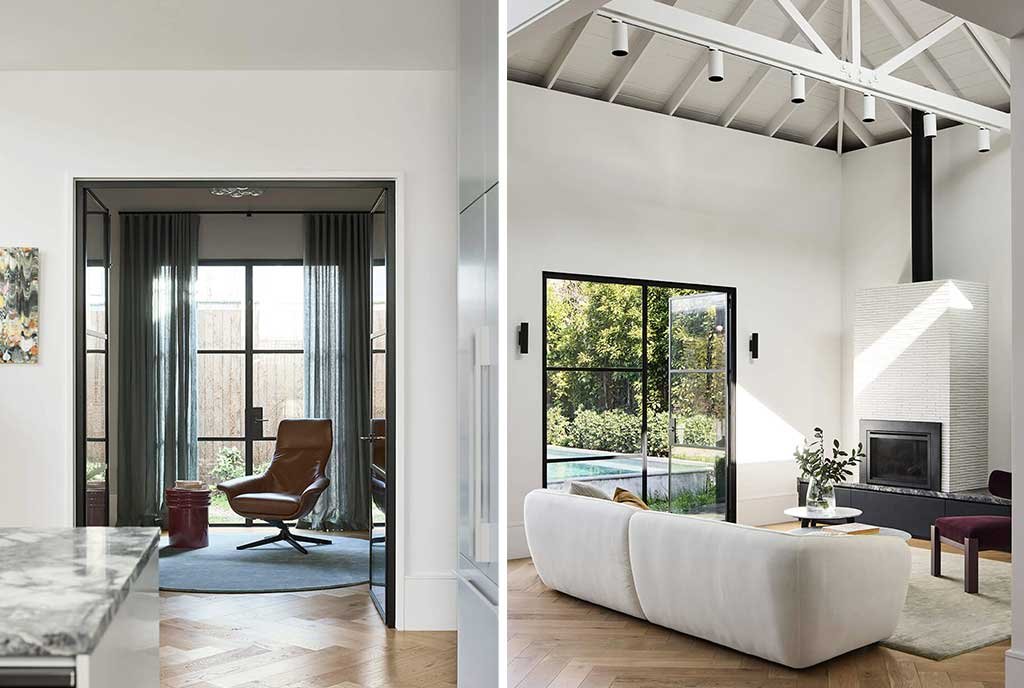
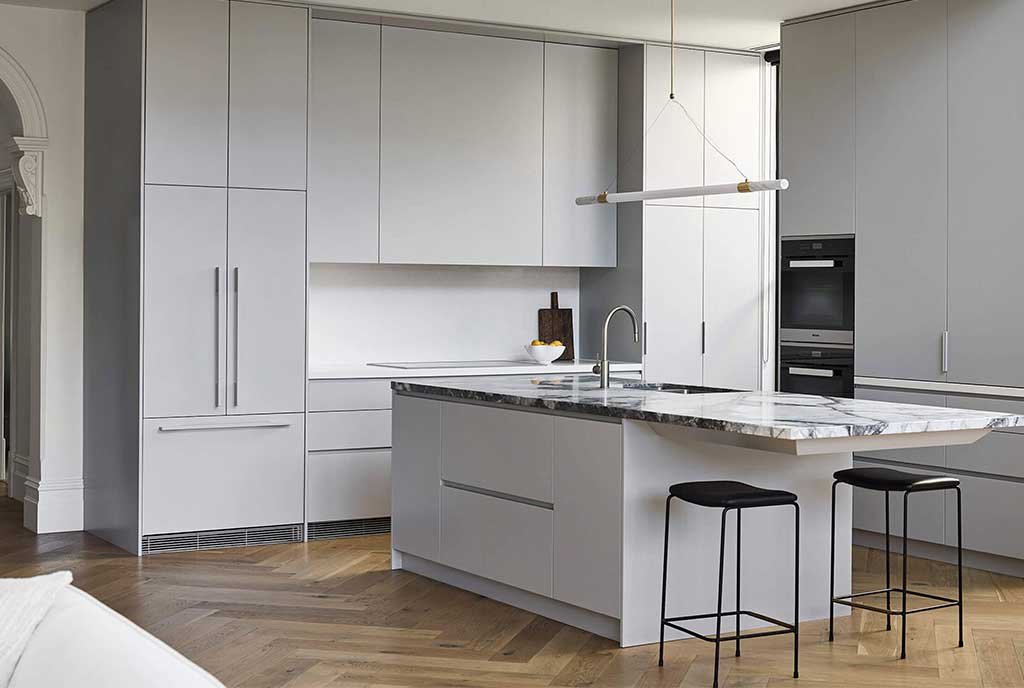
In the living room, the fireplace stands out with a measured presence, defined by essential, material lines: the stone and Japanese ceramic tiles, with their vibrant surfaces, create a contemporary, unforced focal point. At the center of the kitchen stands a large cantilevered island, a true visual and practical fulcrum, flanked by a hidden utility compartment that preserves its formal cleanliness. The brass and marble suspensions add a refined detail, giving warmth and lightness to the whole.
The kitchen, the functional heart of the home, features a large stone counter with a cantilevered bar: clean and rigorous, it leads into the more modern area of the house.
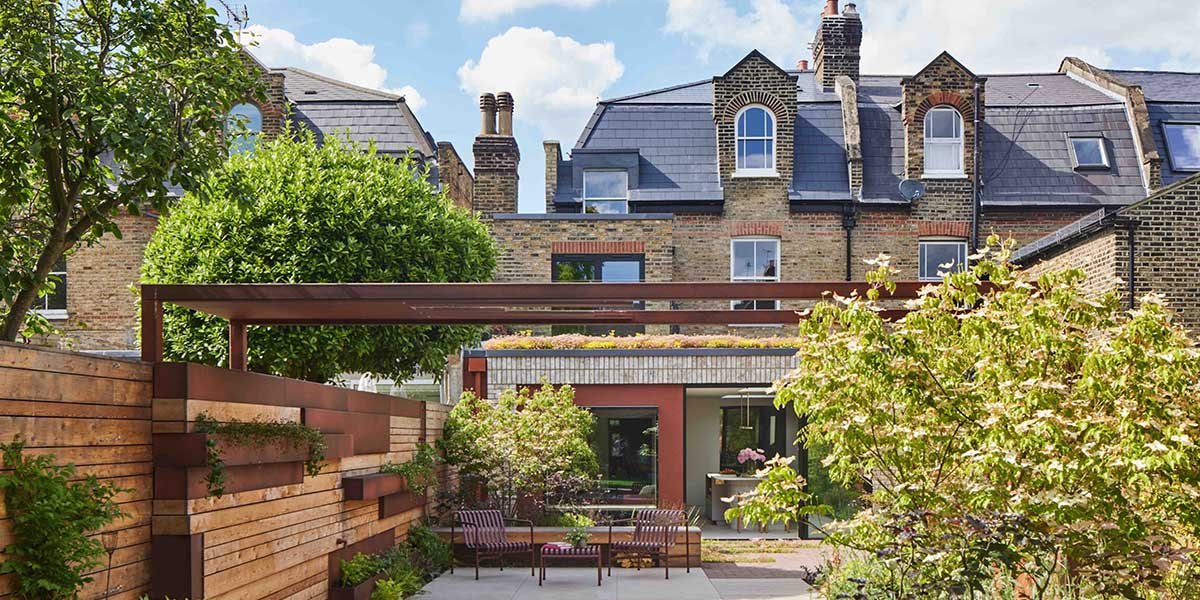
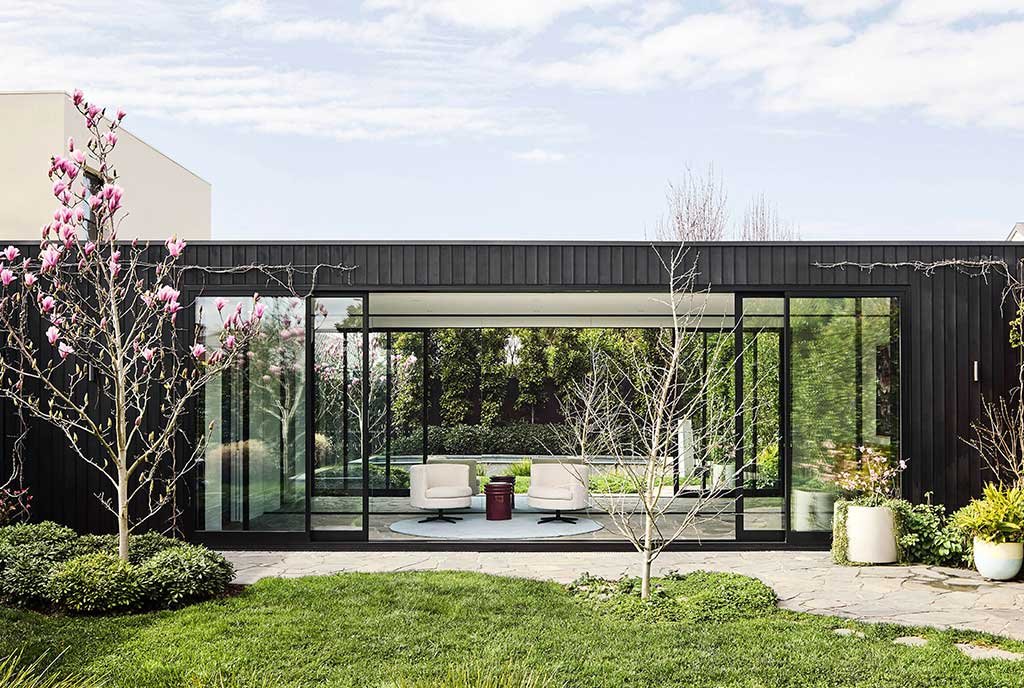
The new wing, clad in dark wood, stands out for its attention to functional details such as the retractable barbecue, which contributes to a clean aesthetic that integrates into the context.
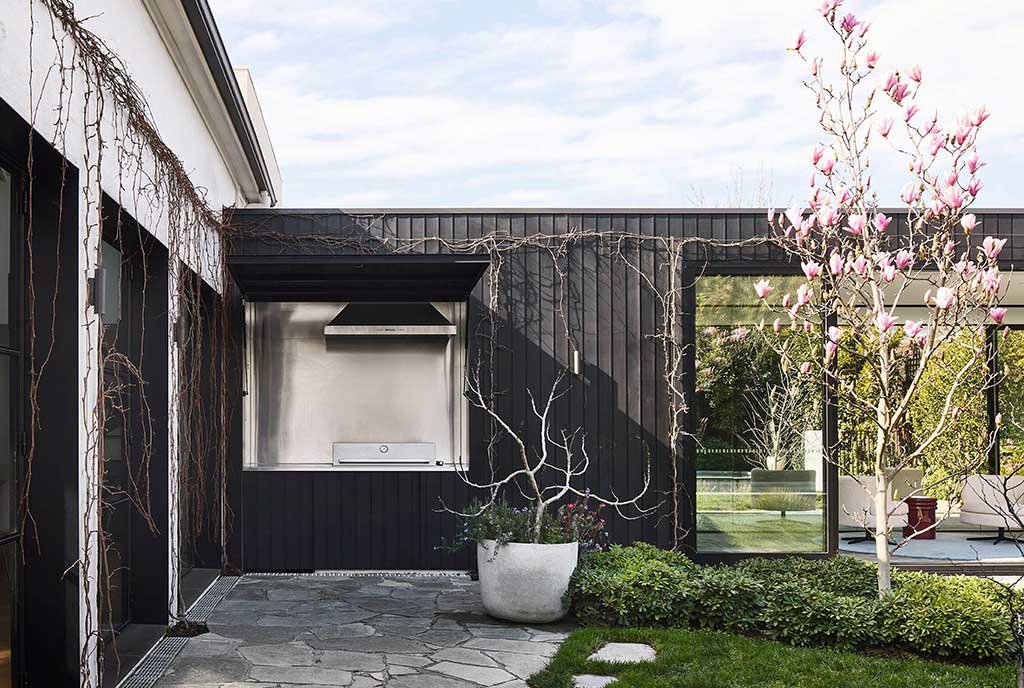
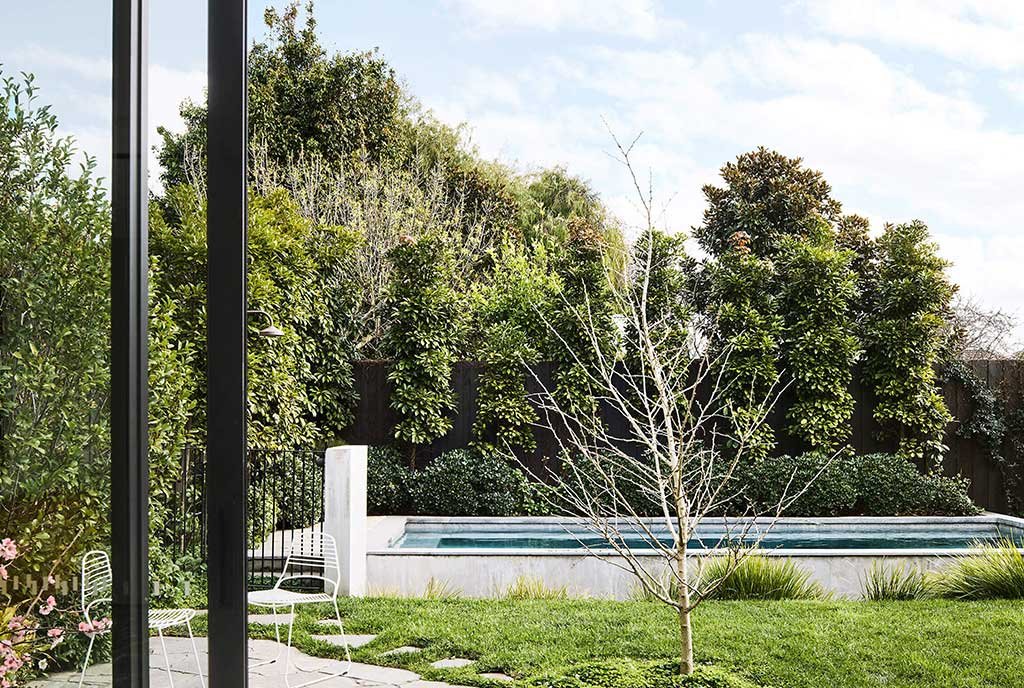
The new wing is configured as an autonomous architectural body, used as a hobby room, yet capable of communicating with the context. The language is decidedly modern, yet balanced: compact volumes clad in dark stained wood, oriented to maximize light and intensify the relationship with the garden. Customized solutions, such as the retractable barbecue, demonstrate refined attention to detail, while large glass surfaces establish a constant connection between inside and outside. The continuous paving leads towards the swimming pool, harmoniously inserted into a deliberately organic landscape.
The pool opens onto the surrounding garden, connected to the interior spaces by a flowing paving that enhances the relationship between nature and architecture.
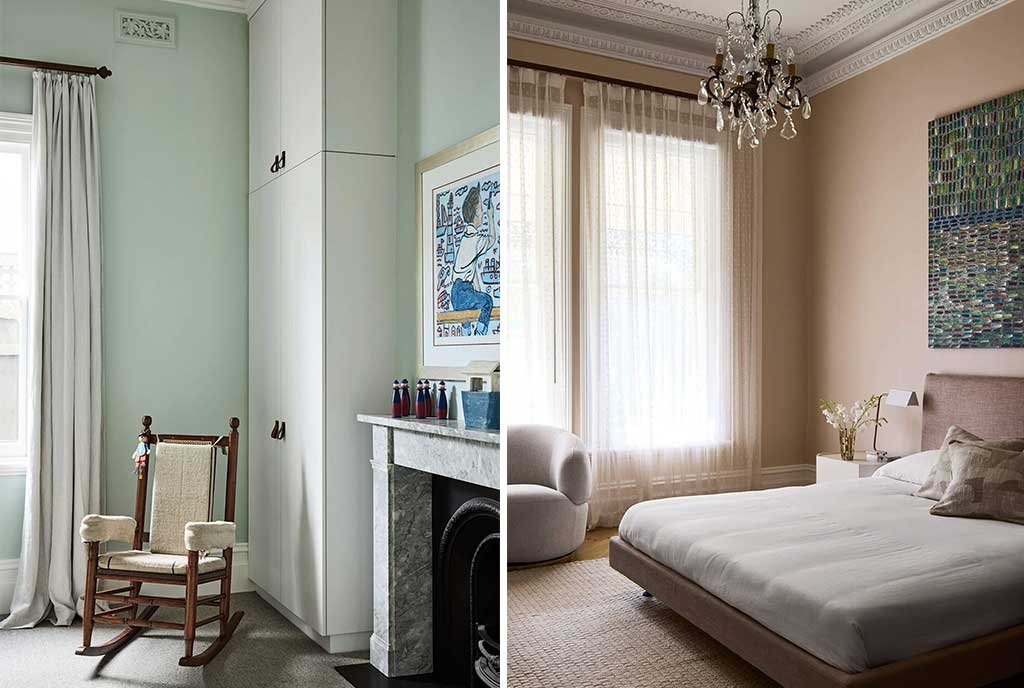
In the sleeping area, the color choices become more intimate and distinctive. The children’s bedrooms are decorated in soft shades of green, and one of them features a period marble fireplace, integrated into the original structure, which in this part of the house still retains its historic finishes.
The sleeping areas are characterized by delicate and harmonious palettes: green envelops the children’s bedrooms, while the master bedroom suite stands out for its pink hues, striking a balance between tradition and modernity.
Australian marble, with its coppery veins and warm tones, lends refinement and continuity to the master bathroom furnishings.
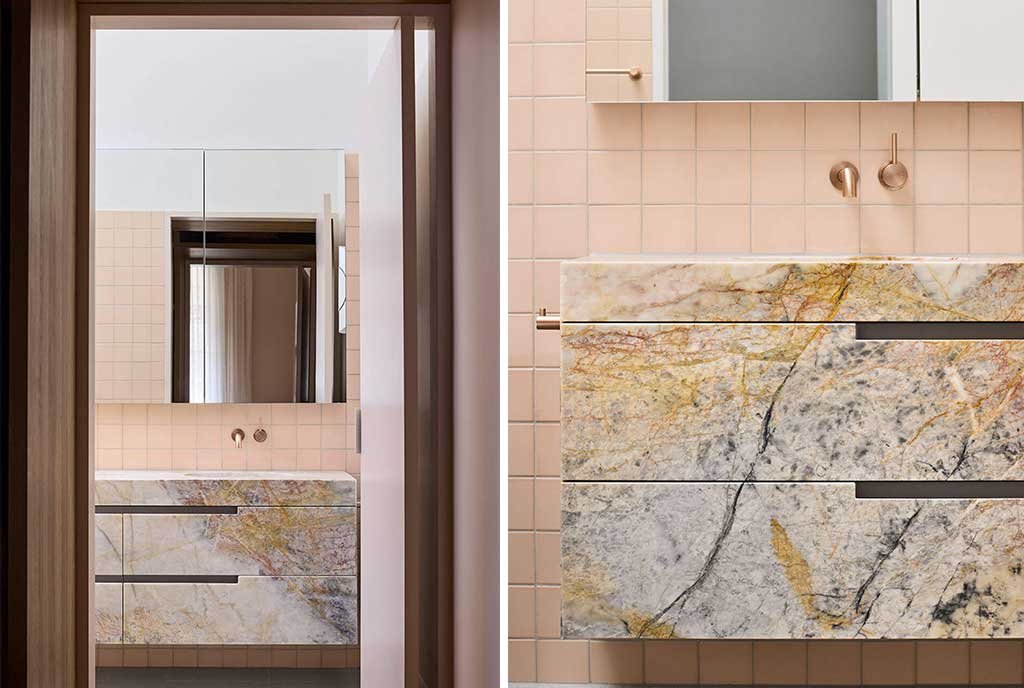
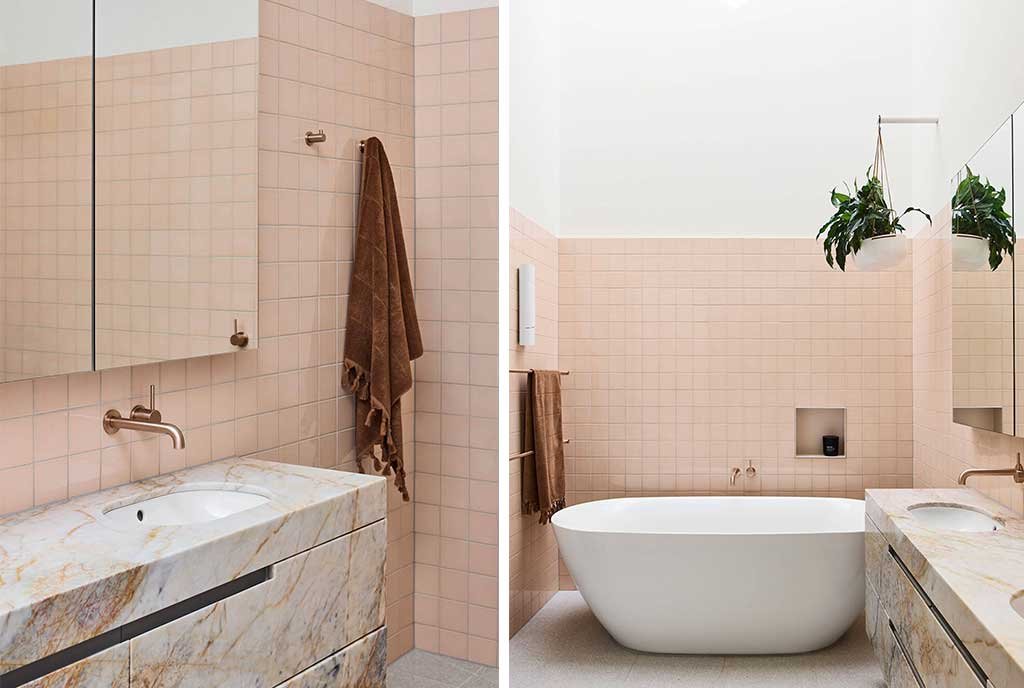
The master bedroom and en-suite bathroom are distinguished by a palette of pale pink tones, which complements the nuances of the original leaded glass. In these spaces, the Australian marble with copper, apricot, and gray veining—used for the sink unit—becomes a guiding element in the choice of coverings, taps, and furnishings, helping to define a refined and welcoming atmosphere.
The master bathroom combines elegance and comfort, with refined finishes and details that recall the delicate tones of the suite.
Day House represents the outcome of a profound and conscious intervention, where the dialogue between past and present develops with measure, without conflicts or forced overlaps. A project that restores a renewed centrality to the home, stitching together memory and contemporary language into a living narrative that demonstrates authenticity.
Project by IF Architecture – ifarchitecture.com.au
Photo © Sharyn Cairns
The new extension stands out for its contemporary design and dark wood surfaces, harmonizing its modernity with the surrounding landscape.
The floor plan of Day House © IF Architecture
In copertina, il living si apre sul giardino grazie alle grandi vetrate, che fondono interno ed esterno in un continuum di luce e natura.