

Craftsmanship gazes at the magic of transparency with a child's curiosity and finds its most charming expression in the skills of two true artists: Laurence Brabant and Alain Villechange . Through their works, they encapsulate the visible and the invisible, shaping one of the most dreamy and delicate materials, always synonymous with the highest level of craftsmanship. A handmade design characterized by vivacity and grace, a serious and elegant "play": welcome to the kingdom of glass. Laurence Brabant answers our questions about such a poetic production.
Why did you choose to use glass?
In reality, my original choice had nothing to do with glass. It began by chance. As a young man, I was on vacation in northern France, and while playing, some pieces of fabric hanging out in the sun and wind caught my attention. I was fascinated by the way the fabric, when wet, appeared almost transparent, and then, thanks to the sun and air, became increasingly opaque as it dried. Then, when wet again, the magic began all over again.
This transformation between visible and invisible, brought about by the surrounding elements that had so captivated me, could be recreated by only one material: glass. It can become absent, change, and reveal everything, every detail, in an extremely dynamic way, just like those clothes blowing in the wind. It is a material that by its very nature encourages us to transform it and use its malleability to find new solutions. These characteristics contribute to the aesthetics and ingenuity of our objects. A "game," like fabric soaked in the sun: let's play with glass.
Decals Glasses.

What is your inspiration, the soul of your work?
Definitely the landscapes where I grew up, those of the Opal Coast on the North Sea. Rain, wind, the shifting sea, and the varying lights: elements always in motion. In those places, there's movement that forces change, adaptation, and observation of what surrounds us. Movement is life, pure life. So, although I've experimented with paper and fabric—soft materials—in the past, the encounter with glass was the decisive one. Some of my first projects were also inspired by laboratory equipment. This is because I really enjoy observing those tools, given that their use is tied to specific uses and manipulations and always evokes the idea, fundamental to me, of transformation.
But they also refer to the chemical and physical properties of glass, its resistance to chemicals and direct flame, or rather, its heat resistance, which makes it particularly suitable for objects such as teapots. Movement, transformation, and glass itself as a material and its properties: this is the soul of my work, stormy and resistant.
From left to right: decanter with optical effect O, bottle with pipette for serving vinegar or soy sauce Sans Piper Mot, salt shaker En Coulisses, stopper Entracte, bottle with sphere for measuring 3cl X 3cl, carafe Manche a eau.

For which objects do you think glass is best suited?
In my opinion, the smooth, colorless quality of the material particularly favors the interaction between the container and its contents. Thanks to its transparency, the contents are visible and, at the same time, the shape of the container itself is highlighted, as in the case of the Bavarde carafe.
This carafe is, in fact, an object that is simultaneously functional, recreational, and educational: it clearly and playfully demonstrates the principle of communicating vessels. In this type of project, the design almost seems to disappear: colorless, unobtrusive, and almost borderless, it reveals itself when used. It is both silent and expressive, both material and immaterial, both content and container.
Bavarde carafe.

What is a work you are particularly proud of?
I'd say the Bol Noir bowls, because they demonstrate a very important aspect of glassmaking: technique. It's always stimulating to question this. These bowls, unique pieces, demonstrate a reworking of glass's heritage. Alain and I were invited to the Glass Art Society of Murano in 2018 for a demonstration of this aspect of our work: we create breaks in the regular, continuous rhythm of the glass, and this way of modifying the model offers infinite possible variations, playing with light and the geometry of the glass.
Making a Bol Noir bowl by Alain Villechange.

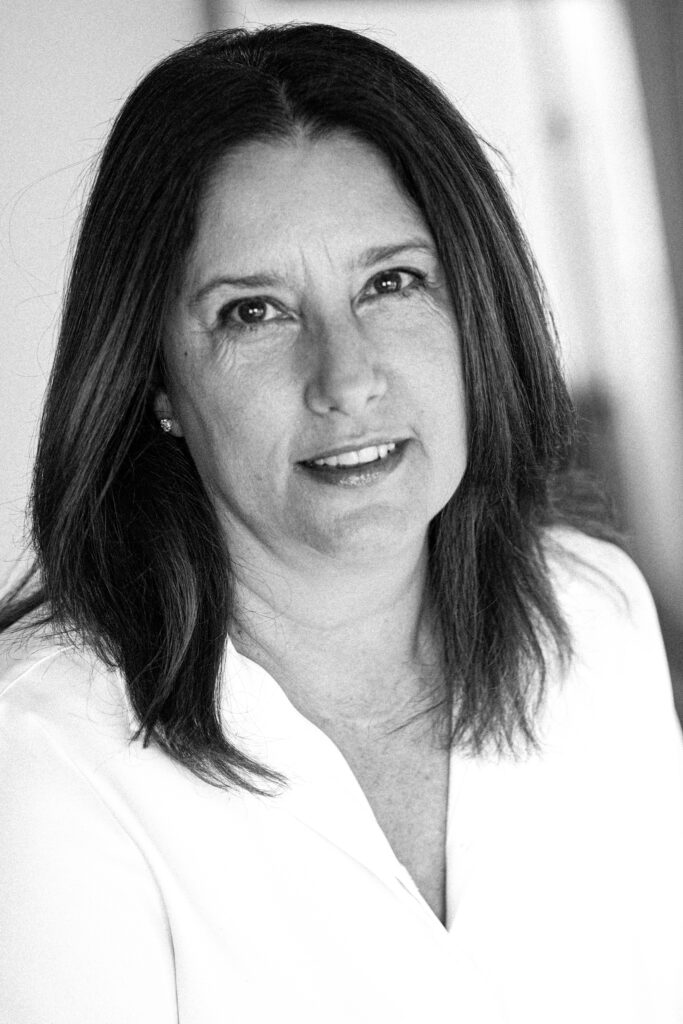
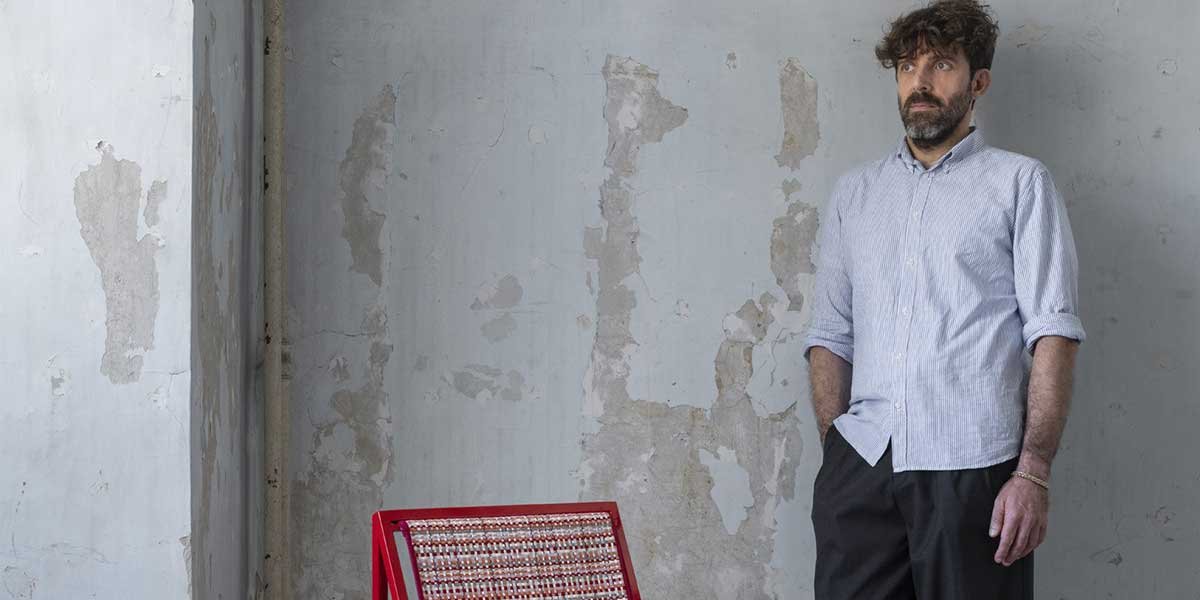
Laurence Brabant and Alain Villechange.

On the cover, an ensemble of creations by Laurence Brabant and Alain Villechange.